Engineering
2026 Formula 1: The Convergence of Hybrid Power and Cognitive Strategy
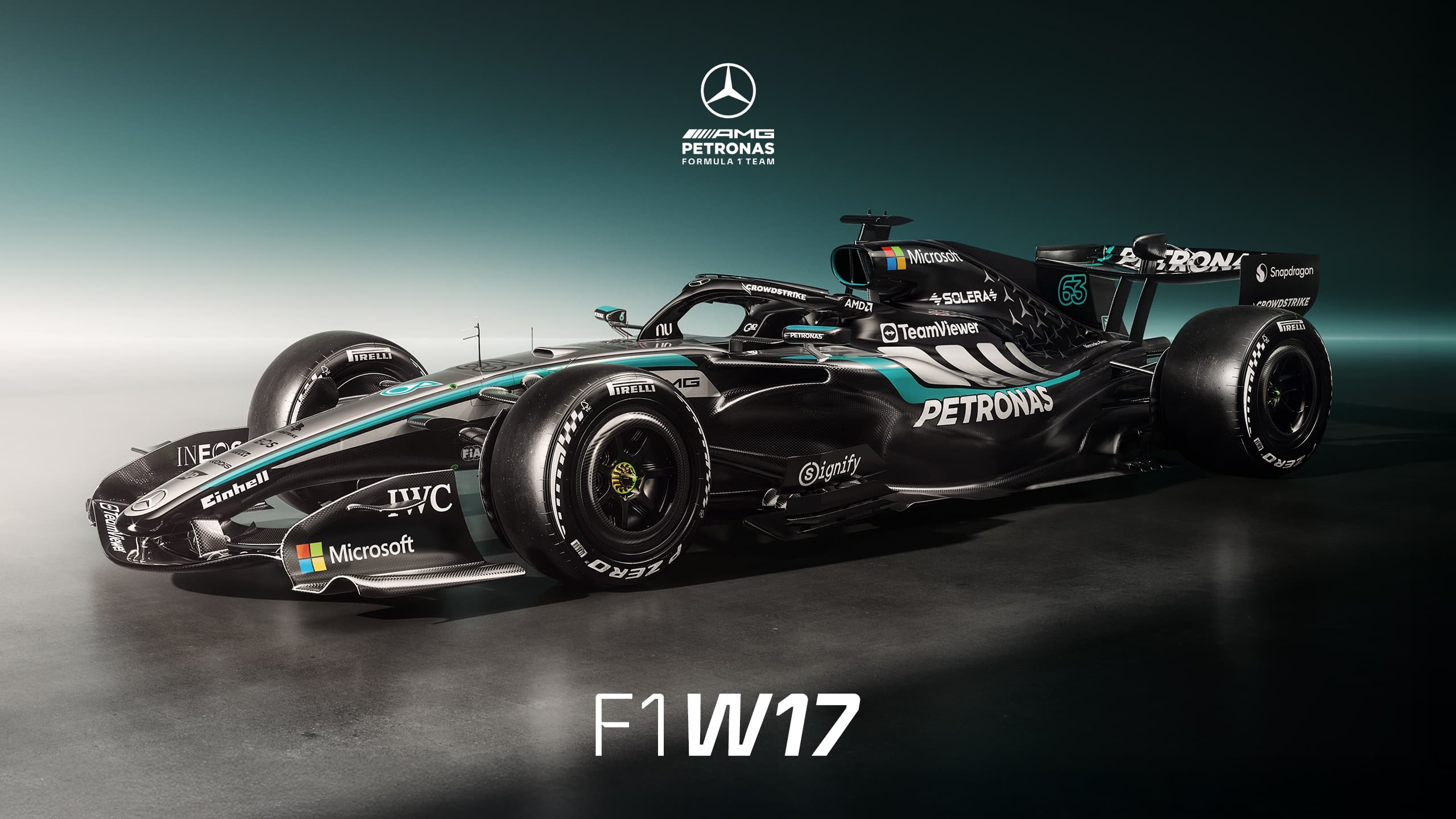
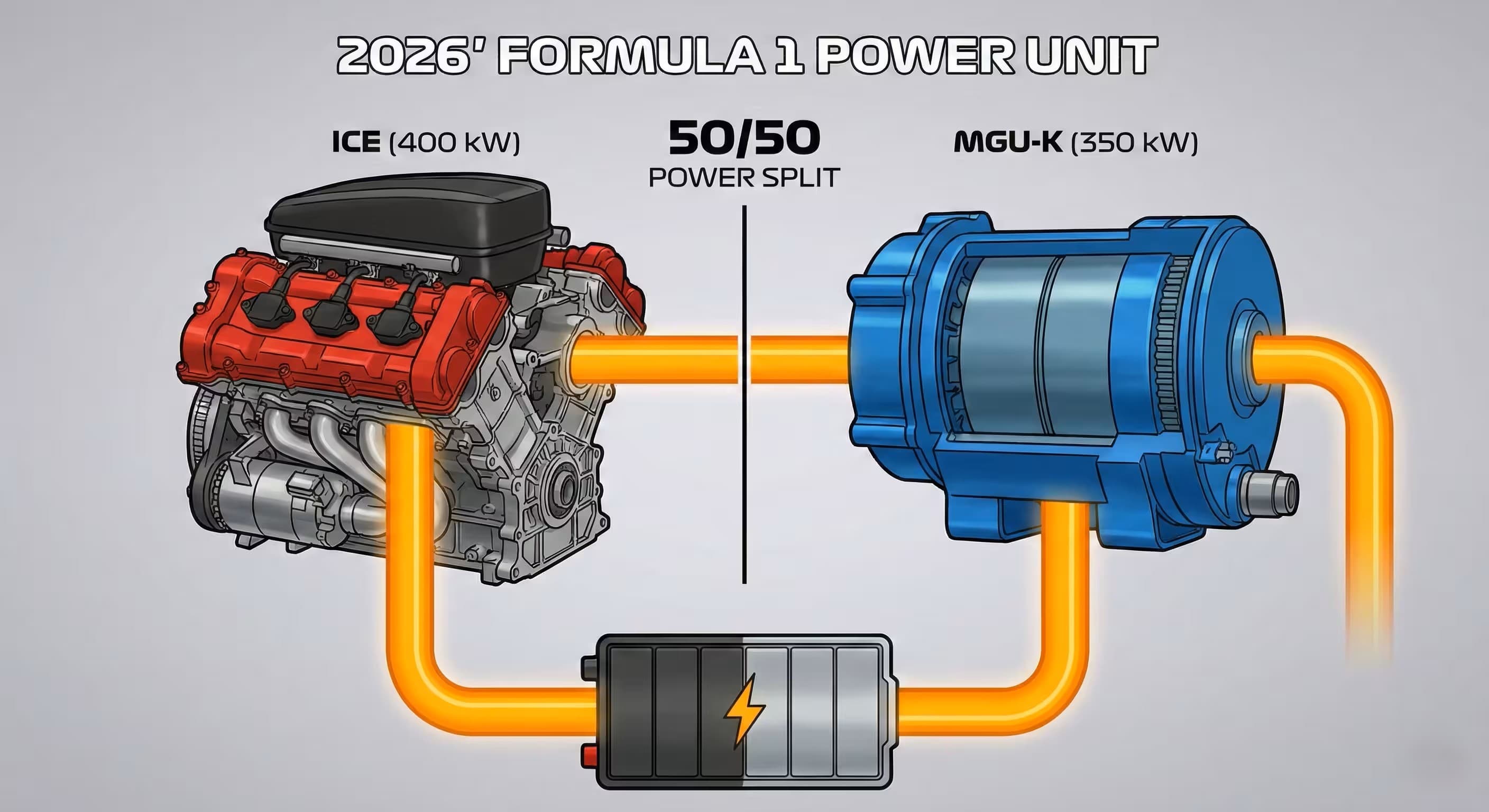
The 2026 Formula 1 technical overhaul represents more than just a change in engine architecture; it is a fundamental redefinition of the "fastest" car. For decades, the sport was a pursuit of raw horsepower. However, the 2026 regulations mandate a 50/50 power split between the Internal Combustion Engine (ICE) and the Energy Recovery System (ERS), shifting the competitive advantage from those with the most powerful fuel-burning engines to those who master energy management, rapid adaptation, and software-driven strategy.
1.0 The Engineering Pivot: Hybrid Supremacy over Raw ICE Power
The era of the "power-unit-dominant" season—where a superior combustion engine could mask aerodynamic or strategic flaws is coming to an end. By removing the MGU-H (Motor Generator Unit - Heat), F1 has removed the ability to harvest energy infinitely from exhaust heat.
1.1 The New Power Balance In 2026, the MGU-K (Motor Generator Unit - Kinetic) must provide 350 kW (470 hp), nearly triple its current output. Because the ICE is capped at roughly 400 kW, the electrical system is no longer a "boost" it is a primary propulsion source.
- The Strategic Risk: If a team fails to harvest enough energy during braking, they will hit a "thermal ceiling" where the car loses nearly half its power on long straights.
- Raw Power vs. Efficiency: A slightly more powerful ICE is now less valuable than a highly efficient ERS that can sustain peak deployment for an entire lap.
2.0 Driver’s Skill: From Reflexes to Real-Time Resource Management
The 2026 car is a "morphing" machine. While drivers have always managed tires and fuel, they must now manage the physical shape of the car and the state of its battery with every shift.
2.1 Mastery of Active Aerodynamics
The introduction of "X-Mode" (Low Drag) and "Z-Mode" (High Downforce) means the car's balance will change multiple times per lap as the front and rear wings adjust their angles automatically or via driver input.
Adaptation: Drivers must adapt to a car that feels different in every corner depending on the aero state.
The "Manual Override" Game: Instead of the simple DRS flap, the Manual Override Mode provides a specific energy boost to the trailing car. Knowing exactly when to deploy this 350 kW surge and when to save it to defend requires a level of strategic foresight previously handled by engineers on the pit wall.
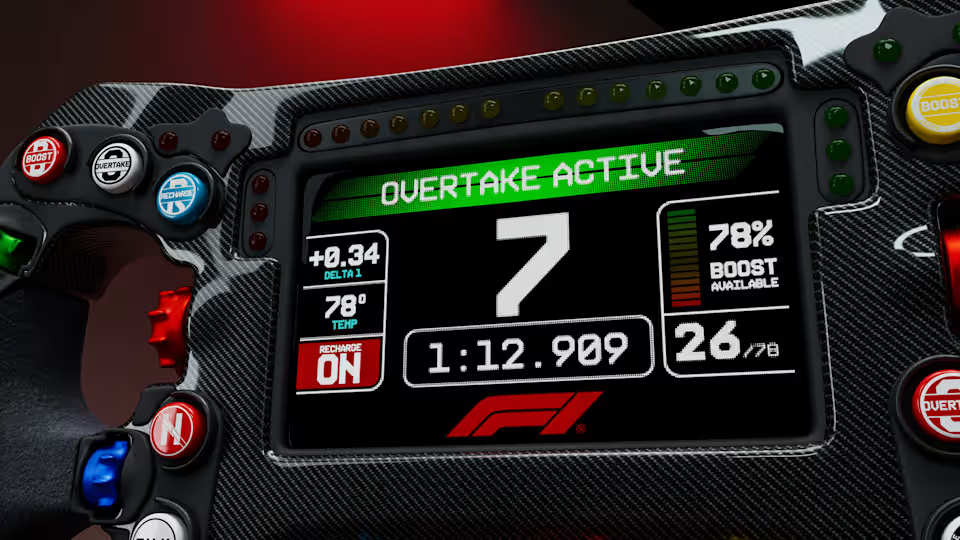
3.0 The Team Strategy: Software as the New "Super-Engine"
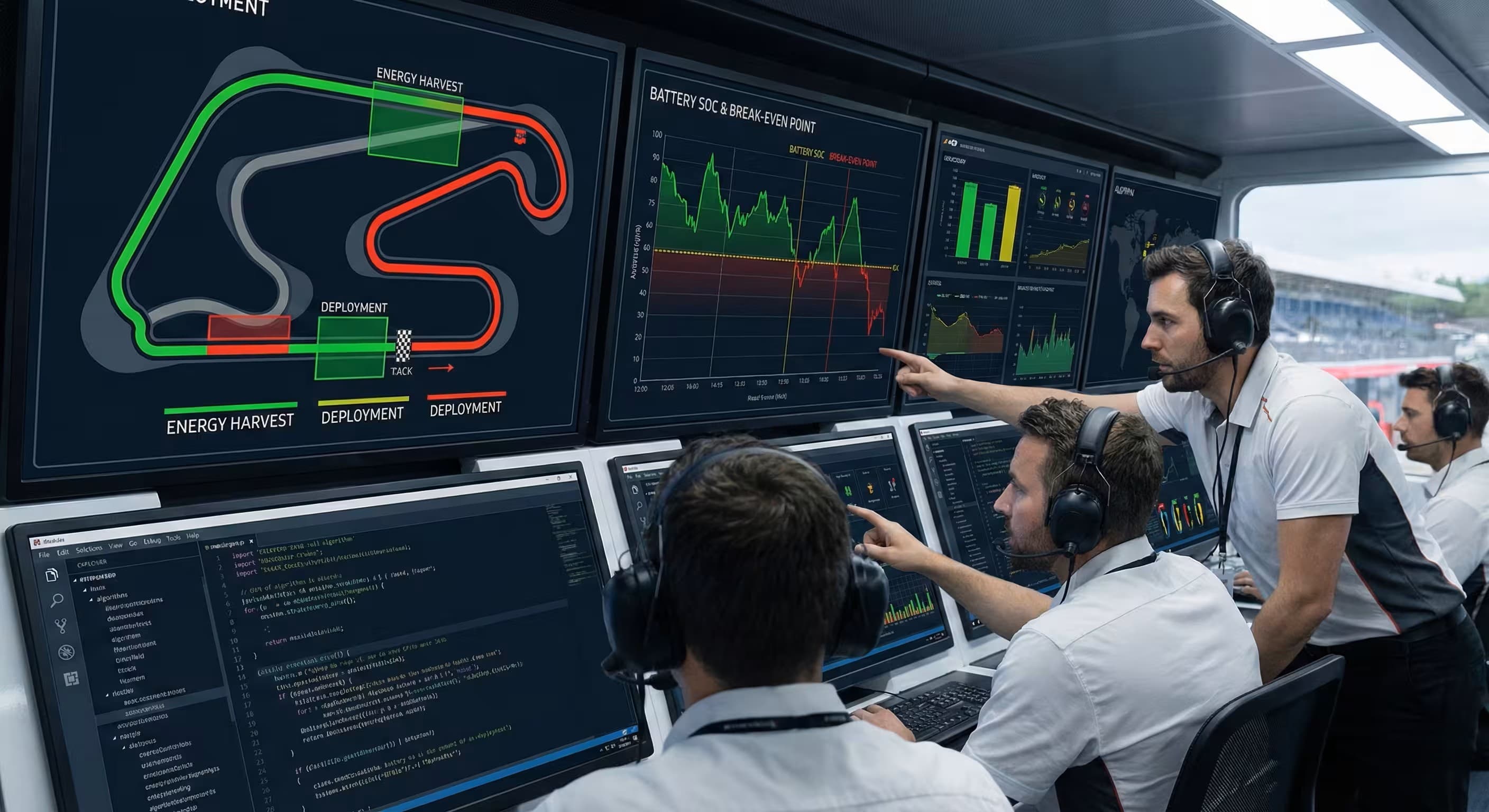
In a 50/50 power environment, the most critical "part" of the car isn't made of carbon fiber or titanium; it is the Energy Deployment Algorithm.
3.1 Energy Chess Teams are now playing a high-speed game of "Energy Chess".
- Harvesting vs. Deployment: Engineers must calculate the exact "Break-Even Point" for energy recovery. Harvesting too much slows the car down; harvesting too little leaves the driver defenseless.
- Sustainability Integration: With the transition to 100% sustainable fuels, the combustion characteristics of the ICE will change. Teams must calibrate their software to extract the maximum energy from these new fuels while balancing the battery's state of charge.
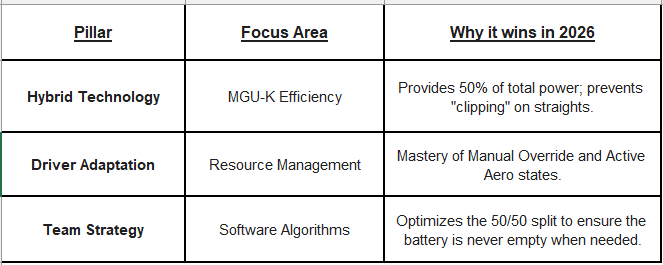
4.0 Summary: The 2026 Competitive Hierarchy
The 2026 reset levels the playing field, making the following three pillars the new requirements for victory:
5.0 Conclusion: The Logic of Intelligence
Formula 1 is evolving into a contest of Applied Intelligence. While "Raw Power" will always have a place in racing, the 2026 regulations ensure that the world championship will be won by the team and driver who best navigate the complex science of energy, aerodynamics, and digital strategy. The fastest car will no longer be the one with the loudest engine, but the one with the most intelligent system.
6.0 Bibliography (Harvard Style)
F1 Official. (2026). 2026 Formula 1 Technical Regulations: Power Unit and Chassis Explained. [online] Available at: https://www.formula1.com/en/latest/article.2026-regulations-explained.html [Accessed 8 Feb. 2026].
FIA. (2024). FIA Formula One World Championship: 2026 Technical Regulations Issue 2. Paris: Federation Internationale de l'Automobile.
Noble, J. (2025). Why Active Aero is the Secret Weapon of 2026. Motorsport.com. [online] Available at: https://www.motorsport.com/f1/news/2026-active-aero-explained/ [Accessed 8 Feb. 2026].
Scarborough, C. (2026). The Science of MGU-K Deployment in the 50/50 Hybrid Era. Journal of Automotive Engineering, 14(2), pp. 88-95.
Somerville, N. (2025). Sustainable Fuels: The Drop-in Revolution in Grand Prix Racing. London: Engineering Press.
The Race. (2026). Red Bull-Ford vs. Audi: The Battle of the 2026 Newcomers. [online] Available at: https://www.the-race.com/formula-1/2026-engine-war-explained/ [Accessed 8 Feb. 2026].
Test Your Knowledge!
Click the button below to generate an AI-powered quiz based on this article.
Did you enjoy this article?
Show your appreciation by giving it a like!
Conversation (0)
Cite This Article
Generating...