Technology
From 1s and 0s to AI
The Evolution of Modern Programming Languages
Computers are so clever and at the same time, they are so literal. They can simply know two things at their heart, that is, electricity on (1) or electricity off (0). In the case of human beings, binary speech is not possible. We needed a translator. History Programming languages The history of programming languages is the history of that translation--to get further and further out of the bare hardware and towards human language. It is a tale of abstractness, productivity and solving problems.
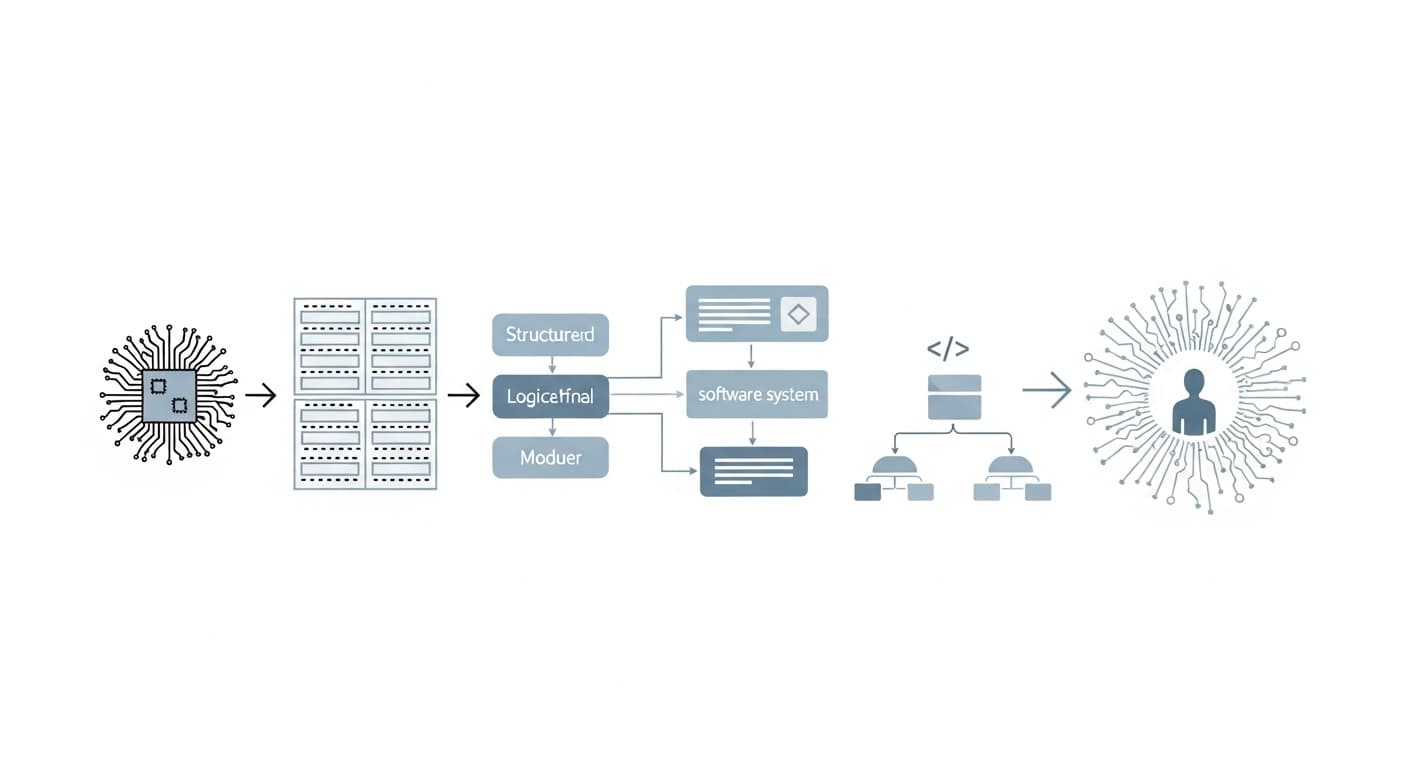
We can follow the history of the evolution of the punch cards and the current AI-assisted coding.
1. The Machine Age (1940s1950s) - Speaking Hardware.
Initially, the term of programming referred to rewiring the circuits or punching holes in paper cards. Machine Code - The binary representation of the raw binary (e.g., 10110000 01100001). It was quick but very challenging and prone to mistakes. Assembly - It was the initial baby step up. The developers did not use binary but used mnemonics such as ADD or MOV. It could be read, and had to be decoded and every single byte of memory by hand.
2. The High-Level Revolution (1950s1970s) - Logic over Hardware.
With the increase in the power of computers, we had to do more than solve math equations. Languages were required that could be used to describe logic.
- FORTRAN (1957) - Made in science and mathematics.
- COBOL (1959) - Business and financial.
- C (1972) - The grandfather of modern coding.
- C was the right balance - high enough to be readable, and low enough to operate hardware. The majority of current languages (C++, Java, Python) are an offshoot of C.
3. Object-Oriented Boom (1980s1990s) - Coping with Complexity.
With the increasing sophistication of software as basic scripts began to become huge operating systems, code became a spaghetti mess. It was Object-Oriented Programming (OOP). C++ and Java - These are the languages that added the concept of coding into Objects (data + behavior). Java revolution Java has introduced the Virtual Machine (JVM) whereby code can be written once and run anywhere. You did not have to re-write your application individually to Windows, Mac and Linux.
4. The Web and Dynamic Age (1995 - 2010) - The Internet Explodes.
With the emergence of the World Wide Web, everything was different. We required the languages that were versatile, quick to write and browser-based.
- JavaScript - The language was originally developed in 10 days and became the monopoly language of the web browser.
- Python - Python gained momentum during this period due to its simplicity though older than usual. It put developer happiness and readability first in importance rather than raw execution speed.
5. The Modern Era (2010) to the Present - Safety and Concurrency.
Nowadays, computers contain dozens of CPU cores and applications are run on the cloud. This scale was threatening to be unsafe in the old languages.
- Rust was born at Mozilla and it is as fast as C++, but memory safe. It eliminates general bugs (such as buffer overflows) that cause security hacks.
- Go (Golang) - Google-created Go had made concurrency easy Go made it obscenely easy to write software that does a myriad of things simultaneously (perfect to cloud servers).
- TypeScript - TypeScript is a JavaScript superset with safety and structure added to it, addressing the early web as something chaotic.
Conclusion
Future Is Intent. We are moving to another stage AI-Assisted Programming. The language is once more taking a different form, with the syntax giving way to the intent description, using such tools as GitHub Copilot.
We began by switching switches. Then we wrote words. Now we are just going to start talking. The syntax is modified, however, the purpose is the same, to instruct the machine on how to construct the future.
Test Your Knowledge!
Click the button below to generate an AI-powered quiz based on this article.
Did you enjoy this article?
Show your appreciation by giving it a like!
Conversation (0)
Cite This Article
Generating...