Science
Stress, Cognition, and Learning: Psychological and Neurobiological Mechanisms
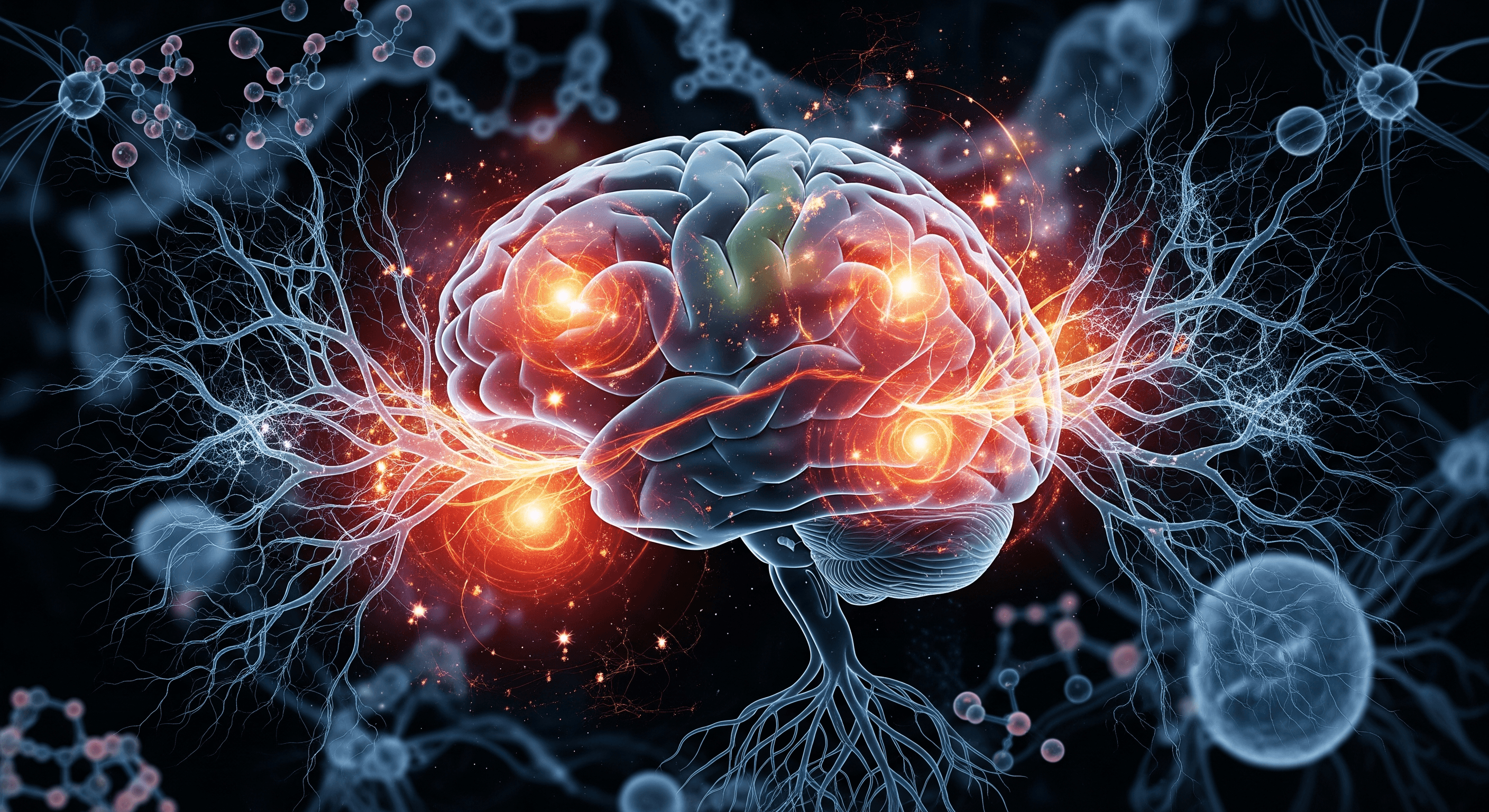
Stress is a pervasive feature of modern life and prolonged exposure influences mental health, cognitive functioning, and learning. Stress-related mechanisms contribute to disorders including depression, generalized anxiety disorder, obsessive–compulsive disorder, post-traumatic stress disorder, and addictive behaviours (Adams et al., 2018; Maeng & Milad, 2017; Sinha, 2008). Evidence also shows consistent impairments in working memory, cognitive flexibility, and inhibitory control across these conditions (Millan et al., 2012; Snyder, 2013).
Understanding these mechanisms clarifies why learning often deteriorates under chronic pressure.
The Stress Response: Allostasis and Allostatic Load
The neuroendocrine stress response is an evolutionarily conserved system across species (Sapolsky, 2021). When a stressor is encountered, the body reallocates resources to maintain stability. This adaptive adjustment is known as allostasis (Sterling & Eyer, 1988). When stress becomes persistent or unpredictable, the biological cost accumulates. This cumulative strain is referred to as allostatic load (McEwen, 1998).
Prolonged activation of the hypothalamic–pituitary–adrenal (HPA) axis maintains elevated cortisol levels, which disrupt immune function, mood regulation, metabolism, and cognition. Humans can activate this response through memory, anticipation, or perceived lack of control, linking psychological appraisals directly to biological outcomes.
Stress, Cognitive Functioning, and Mental Health
Stress influences mental health partly through its impact on cognition. Research shows consistent alterations in learning, memory, attention, and executive functioning. These impairments increase stress reactivity, creating a cycle where reduced cognitive efficiency heightens psychological vulnerability.
Repeated stress also affects memory systems involved in fear learning, decision making, and behavioural inhibition. These mechanisms are central to disorders such as depression, PTSD, and substance use disorders (Ramey & Regier, 2019; Dossi et al., 2020).
Emotions, Stress, and the Learning Environment
Emotions shape attention, processing, motivation, and memory retrieval. Moderate stress can support performance, but excessive or chronic stress restricts cognitive resources and weakens learning (Lupien et al., 2009). The COVID-19 pandemic made this visible. University students reported heightened stress, fear, and isolation, which reduced concentration and academic performance (COVID-related studies: Šrol et al., 2021; Othman et al., 2019; Chernomas & Shapiro, 2013; Crary, 2013).
The Neurobiology of Stress and Learning
Two major systems mediate the stress response:
- Sympathetic–adrenal–medullary (SAM) system
- Hypothalamic–pituitary–adrenal (HPA) axis
Short-term activation enhances alertness. Long-term activation reduces hippocampal plasticity, weakens prefrontal cortex functioning, and heightens amygdala reactivity. These changes align with the concentration difficulties and memory lapses commonly observed during high-stress academic periods.
How Stress Affects Memory and Learning
Stress influences learning through multiple pathways:
1. Memory Encoding
Findings are mixed. Moderate, controllable stress can enhance encoding. Uncontrollable or chronic stress impairs it. Timing, intensity, and perceived control are key moderators.
2. Memory Retrieval
Stress consistently impairs retrieval. This is why students forget information during exams, even when they have mastered the material.
3. Attention and Executive Function
High stress reduces the brain’s ability to sustain attention and engage in:
- complex reasoning
- critical thinking
- problem-solving
- planning
4. Chronic Stress and Academic Performance
Long-term stress is associated with:
- reduced academic motivation
- burnout
- impaired working memory
- increased dropout risk
Students in early university years are particularly vulnerable due to new academic pressures, competition, and balancing personal responsibilities (Labrague, McEnroe-Petitte et al., 2017; Sullivan et al., 2022).
Stress in Gifted and High-Performing Learners
Individuals with exceptional learning abilities process information more efficiently (Drobnic & Figueroa, 2007; Newell & Rosembloom, 1981; Simon & Chase, 1973). However, they may also experience:
- heightened sensitivity to stress
- increased perfectionism
- fear of failure
- cognitive overload
Supporting these learners requires attention to emotional and stress-management strategies, not only cognitive enrichment.
Improving Learning and Memory Under Stress: Evidence-Based Practices
Individual stress responses vary, but research highlights several effective strategies.
- Mindfulness and Breathing Practices
- Reduce cortisol and improve attention regulation.
- Adequate Sleep
- Enhances memory consolidation and emotional regulation.
- Physical Activity
- Reduces stress hormones and enhances neuroplasticity.
- Controlled Study Environments
- A tidy, structured workspace decreases cognitive load.
- Structured Study Plans
- Breaking content into smaller chunks reduces overwhelm and improves focus.
- Active Learning Techniques
- Self-quizzing, peer teaching, and applying concepts to real-world scenarios strengthen encoding and retention.
A Simple Relaxation Technique (Evidence-Based)
Box Breathing (4–4–4–4 Method)
- Inhale for 4 seconds
- Hold for 4 seconds
- Exhale for 4 seconds
- Hold for 4 seconds
- Repeat for 2–3 minutes.
This technique lowers heart rate, activates the parasympathetic nervous system, and improves cognitive clarity.
Conclusion
Stress, cognition, and learning are interconnected. Moderate stress can support performance, but chronic stress impairs attention, memory, and executive functioning. Understanding these mechanisms helps students and educators design conditions that support learning, emotional well-being, and long-term academic success.
References
- Adams, T. G., Kelmendi, B., Brake, C. A., Gruner, P., Badour, C. L., & Pittenger, C. (2018). The role of stress in the pathogenesis and maintenance of obsessive-compulsive disorder. Chronic Stress, 2, 1–10. https://doi.org/10.1177/2470547018758043
- Chernomas, W. M., & Shapiro, C. (2013). Stress, depression, and anxiety among undergraduate nursing students. International Journal of Nursing Education Scholarship, 10, 255–266. https://doi.org/10.1515/ijnes-2012-0032
- Crary, P. (2013). Beliefs, behaviors, and health of undergraduate nursing students. Holistic Nursing Practice, 27, 74–88. https://doi.org/10.1097/HNP.0b013e31827f1d4c
- Dossi, G., Delvecchio, G., Prunas, C., Soares, J. C., & Brambilla, P. (2020). Neural bases of cognitive impairments in post-traumatic stress disorders: A mini-review of functional magnetic resonance imaging findings. Frontiers in Psychiatry, 11, 176. https://doi.org/10.3389/fpsyt.2020.00176
- Drobnic, F., & Figueroa, J. (2007). Talented, expertise, or both? Apunts: Medicina de l’Esport, 42, 186–195. https://doi.org/10.1016/S1886-6581(07)70044-9
- Girotti, M., Bulin, S. E., & Carreno, F. R. (2024). Effects of chronic stress on cognitive function – From neurobiology to intervention. Neurobiology of Stress, 33, 100670. https://doi.org/10.1016/j.ynstr.2024.100670
- Labrague, L. J., McEnroe-Petitte, D. M., Gloe, D., Thomas, L., Papathanasiou, I. V., & Tsaras, K. (2017). A literature review on stress and coping strategies in nursing students. Journal of Mental Health, 26, 471–480. https://doi.org/10.1080/09638237.2016.1244721
- Lupien, S. J., McEwen, B. S., Gunnar, M. R., & Heim, C. (2009). Effects of stress throughout the lifespan on the brain, behaviour and cognition. Nature Reviews Neuroscience, 10, 434–445. https://doi.org/10.1038/nrn2639
- Maeng, L. Y., & Milad, M. R. (2017). Post-traumatic stress disorder: The relationship between the fear response and chronic stress. Chronic Stress, 1, 1–10. https://doi.org/10.1177/2470547017713290
- McEwen, B. S. (1998). Stress, adaptation, and disease. Allostasis and allostatic load. Annals of the New York Academy of Sciences, 840, 33–44. https://doi.org/10.1111/j.1749-6632.1998.tb09546.x
- Millan, M. J., Agid, Y., Brune, M., Bullmore, E. T., Carter, C. S., et al. (2012). Cognitive dysfunction in psychiatric disorders: Characteristics, causes and the quest for improved therapy. Nature Reviews Drug Discovery, 11, 141–168. https://doi.org/10.1038/nrd3628
- Newell, A., & Rosembloom, P. S. (1981). Mechanisms of skill acquisition and the law of practice. In J. Anderson (Ed.), Cognitive skills and their acquisition (pp. 1–55). Erlbaum.
- Othman, N., Ahmad, F., El Morr, C., & Ritvo, P. (2019). Perceived impact of contextual determinants on depression, anxiety and stress: A survey with university students. International Journal of Mental Health Systems, 13, 17. https://doi.org/10.1186/s13033-019-0275-9
- Ramey, T., & Regier, P. S. (2019). Cognitive impairment in substance use disorders. CNS Spectrums, 24(1), 102–113. https://doi.org/10.1017/S1092852918001249
- Sapolsky, R. M. (2021). Glucocorticoids, the evolution of the stress-response, and the primate predicament. Neurobiology of Stress, 14, 100320. https://doi.org/10.1016/j.ynstr.2021.100320
- Simon, H. A., & Chase, W. G. (1973). Skill in chess. American Scientist, 61, 394–403.
- Sinha, R. (2008). Chronic stress, drug use, and vulnerability to addiction. Annals of the New York Academy of Sciences, 1141, 105–130. https://doi.org/10.1196/annals.1441.030
- Snyder, H. R. (2013). Major depressive disorder is associated with broad impairments on neuropsychological measures of executive function: A meta-analysis and review. Psychological Bulletin, 139(1), 81–132. https://doi.org/10.1037/a0028727
- Šrol, J., Ballová Mikušková, E., & Čavojová, V. (2021). When we are worried, what are we thinking? Anxiety, lack of control, and conspiracy beliefs amidst the COVID-19 pandemic. Applied Cognitive Psychology, 35, 720–729. https://doi.org/10.1002/acp.3798
- Sterling, P., & Eyer, J. (1988). Allostasis: A new paradigm to explain arousal pathology. In S. Fisher & J. Reason (Eds.), Handbook of life stress, cognition and health (pp. 629–649). John Wiley & Sons.
- Sullivan, V., Hughes, V., & Wilson, D. R. (2022). Nursing burnout and its impact on health. Nursing Clinics of North America, 57, 153–169. https://doi.org/10.1016/j.cnur.2021.11.002
Test Your Knowledge!
Click the button below to generate an AI-powered quiz based on this article.
Did you enjoy this article?
Show your appreciation by giving it a like!
Conversation (0)
Cite This Article
Generating...