Technology
The AI Model Wars Are Over - And Nobody Won: How to Actually Choose the Right AI Model in 2026
Something extraordinary happened in the spring of 2026 that most people missed because it happened too fast to follow.
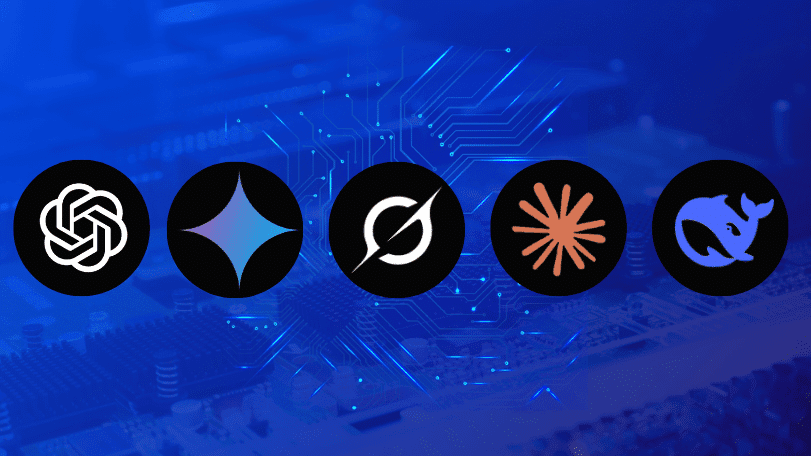
Within roughly thirty days, OpenAI shipped GPT-5.5, Anthropic released Claude Opus 4.8, Google announced Gemini 3.5 Flash at its annual I/O conference, DeepSeek dropped V4 Pro with a 75% price cut and an open licence, and Alibaba unveiled Qwen 3.7 Max with benchmark results that surprised even the most seasoned observers of the field. Five major model releases. Thirty days. Simultaneously.
If you were expecting a clear winner to emerge from all of this one model to rule them all, a definitive answer to the question of which AI is best you are going to be disappointed. And also, paradoxically, relieved. Because the honest answer is that no single model won. And that turns out to be excellent news for everyone who actually needs to use these tools.
The AI model wars, as they were framed in the media, are effectively over. Not because one side won. But because the question itself has changed. The useful question is no longer "which AI is the most powerful?" It is "which AI is right for what I am trying to do?" And that question has a clear, practical, accessible answer which is exactly what this article provides.
Why Everyone Is Confused and Why That Is Understandable
Before explaining how to choose, it is worth explaining why choosing feels so difficult right now.
The AI landscape of mid-2026 is genuinely more complex than it was two years ago not because the technology is harder to understand, but because there are more serious, capable options than at any previous point in the field's history. In 2023, the choice was essentially between using ChatGPT or not. In 2024, Claude and Gemini entered the conversation as genuine alternatives. In 2025, open-source models caught up to a degree that had seemed implausible a year earlier. And in 2026, the field has fragmented into a genuine ecosystem of models, each with distinct strengths, pricing structures, and optimal use cases.
The benchmarks that are supposed to help people navigate this have become part of the problem. Every model release is accompanied by a cascade of scores on tests with names like SWE-Bench, MMMU, GPQA, and MATH-500 and almost every new model claims to lead on at least one of them. The scores are real. The comparisons are legitimate. But they are almost entirely useless to someone who simply wants to know: "Should I use this for my work?"
As one analysis of the June 2026 model landscape noted, the real news is not which model scores highest on a benchmark at launch it is which model survives contact with messy business reality (Mean CEO, 2026). The distance between benchmark performance and practical usefulness is, in many cases, vast.
There is also the cost confusion. Frontier models in 2026 range from free consumer tiers to $180 per million output tokens for enterprise API access. For individuals, this is mostly invisible subscription products absorb the pricing complexity. For developers and businesses, it is a significant decision with real financial implications.
This article cuts through all of it.
The Lay of the Land: The Major Models in June 2026
A clear picture of the current landscape is the foundation for any useful guidance. Here is who the major players are and what they are actually known for, in plain language.
GPT-5.5 OpenAI
OpenAI's current flagship is GPT-5.5, the latest in a rapid succession of releases from the company that brought large language models to mainstream attention. GPT-5.5 is the broadest-purpose model in the current landscape the one that handles the widest range of tasks with the highest consistent baseline quality across all of them. It is not the undisputed leader in any single category, but it is rarely far from the top in any category either.
Its particular strengths are creative writing, general-purpose conversation, coding assistance, and broad tool use in agentic workflows. Its ecosystem advantage is significant: more third-party applications, integrations, and developer tools are built for GPT than for any other model, simply because of OpenAI's head start in the market (AI/ML API, 2026).
The honest weakness is pricing at the frontier level GPT-5.5 Pro at the API tier is expensive for high-volume use and a tendency toward confident-sounding outputs that occasionally sacrifice nuance for fluency.
Claude Opus 4.8 Anthropic
As of June 2026, Claude Opus 4.8 is leading the Artificial Analysis Intelligence Index the most comprehensive independent evaluation of frontier AI models and topping the coding benchmarks (AI Hub, 2026). This is a significant shift: Claude was long regarded as the most thoughtful and well-written model but not necessarily the most technically capable. That perception has been overtaken by the evidence.
Opus 4.8's particular strengths are extended reasoning, coding and software engineering, instruction-following accuracy, and the quality and naturalness of its prose. It is the model most consistently praised by professional writers, lawyers, and researchers for producing outputs that sound genuinely considered rather than generated.
It also powers the most widely used AI coding tools in the developer ecosystem, including Cursor and Claude Code (Gurusup, 2026). For anyone doing serious software engineering work or long-form analytical writing, it is currently the model to beat.
The honest weakness is cost Opus 4.8 is priced at the premium end of the market and context window size relative to Gemini's offering.
Gemini 3.5 Flash and Gemini 3.1 Pro Google DeepMind
Google's Gemini family has had a remarkable 2026. Gemini 3.1 Pro, released in February 2026, established itself as the benchmark leader for complex multi-step reasoning and data analysis. Its one-million-token context window meaning it can process roughly three thousand pages of text in a single session remains one of the most practically significant technical capabilities in the market (Pluralsight, 2026).
Then, at Google I/O 2026, the company announced Gemini 3.5 Flash a model that outperforms Gemini 3.1 Pro on nearly every coding and agentic benchmark while running approximately four times faster and at substantially lower cost (AI/ML API, 2026). This combination of speed, context length, capability, and price makes Gemini the dominant choice for organisations processing large volumes of long documents legal discovery, financial analysis, research synthesis, medical records review.
The honest weakness is that human preference evaluations tests where people rate which model they prefer the outputs of have historically favoured GPT and Claude for conversational quality and naturalness. Gemini's outputs are often technically excellent but occasionally feel less natural in pure conversational contexts.
DeepSeek V4 Pro DeepSeek
DeepSeek's V4 Pro release in spring 2026 was the most disruptive pricing event in the history of commercial AI. The model which delivers performance comparable to the leading closed models on most benchmarks was released with MIT licensing and at a price point approximately 75% lower than equivalent closed-model alternatives (Mean CEO, 2026).
For developers, researchers, and organisations with budget constraints or data sovereignty requirements, DeepSeek V4 Pro changed the calculation entirely. You no longer need to pay frontier prices to get frontier-adjacent performance. You can run DeepSeek models self-hosted, on your own infrastructure, with no data leaving your systems a compliance and privacy advantage that no closed-model competitor can match.
The honest weakness is that DeepSeek trails the closed-model leaders on the most demanding agentic and multimodal tasks, and its training data and safety evaluation practices have received less independent scrutiny than those of the major Western labs.
Grok 4.3 xAI
Grok 4.3 currently leads raw performance on SWE-Bench one of the most respected software engineering benchmarks with a score of 75%, marginally ahead of GPT-5.5 at 74.9% and Claude Opus 4.6 at 74% (AI/ML API, 2026). For pure coding performance measured by benchmark, it is at or near the top of the field.
Grok's integration with the X platform gives it real-time access to current information a meaningful advantage for tasks involving current events, social media analysis, and time-sensitive research. Its pricing is positioned as the value option among the major closed-model providers.
The honest weakness is that Grok's safety practices and governance documentation are less transparent than those of Anthropic, OpenAI, and Google, and its performance on tasks outside of coding and real-time information retrieval is less consistently strong.
Llama 4 and the Open-Source Ecosystem Meta and Others
Meta's Llama 4 available in multiple sizes including the Scout variant with a ten-million-token context window has established that open-weight models can compete with closed-model leaders on a meaningful range of tasks (Medium, 2026). Mistral, Qwen 3.7, and several other open-weight models round out an ecosystem that offers genuine capability at zero or near-zero marginal cost.
For organisations that can manage the technical infrastructure of self-hosting and for which data privacy, cost control, and customisation are priorities the open-source ecosystem in 2026 is not a compromise. It is a serious option that the closed-model providers can no longer afford to dismiss.
The Framework: How to Actually Choose
Here is the practical decision framework. It has four steps, and it works regardless of your technical background.
Step One: Know What You Are Actually Trying to Do
The single most important input to model selection is task clarity. The reason most people struggle to choose a model is that they are asking "which AI is best?" rather than "which AI is best for this specific thing I need to do?"
These are the main task categories, and they have meaningfully different optimal answers:
Writing and communication drafting emails, reports, articles, creative content, professional documents. Claude Opus 4.8 consistently produces the most natural, carefully considered prose. GPT-5.5 is a close second with a broader stylistic range. For most writing tasks, either is excellent.
Coding and software engineering writing, reviewing, debugging, and refactoring code. Claude Opus 4.8 leads on complex, multi-file engineering work and long-horizon agentic coding sessions. Grok 4.3 leads on raw benchmark scores. GPT-5.5 offers the broadest ecosystem of coding tools and integrations.
Research and analysis synthesising information from large volumes of sources, answering complex questions, producing structured analytical outputs. Gemini 3.1 Pro's one-million-token context window makes it uniquely capable for tasks requiring the simultaneous processing of very large document sets. Claude is preferred by many researchers for the quality of its reasoning.
Long document processing contracts, research papers, legal filings, financial reports, technical manuals. Gemini is the clear leader here, both for context window size and for speed and cost at high volume.
Real-time information tasks requiring access to current events, recent news, or live data. Grok's integration with X and OpenAI's browsing capabilities both provide current information access. Gemini also has strong real-time search integration through Google.
Privacy-sensitive work anything involving confidential documents, personal data, or information you cannot send to an external server. DeepSeek V4 Pro (self-hosted) or other open-weight models running on your own infrastructure are the only options that genuinely address this requirement. On-device small models are another option for individual use.
Budget-constrained high-volume use processing large numbers of queries at minimal cost. DeepSeek V4 Pro and Gemini 3.5 Flash are the current leaders on cost-efficiency at scale. Both deliver substantially better price-to-performance ratios than the premium closed-model options.
Step Two: Understand That the Agent Layer Matters More Than the Model
This is the insight that most model comparison articles miss, and it is the most important thing to understand about AI in 2026.
As one thorough analysis of the current landscape concluded: the same model scores differently on benchmarks depending entirely on the scaffold it runs through build the system, not just the model choice (Medium, 2026).
An agent scaffold is the software architecture that surrounds a model the memory system that lets it retain context across a task, the tool integrations that let it browse the web or execute code, the planning logic that lets it break a goal into sub-tasks, and the guardrails that prevent it from taking unwanted actions. Two implementations of the same underlying model, with different scaffolds, can perform very differently on the same task.
This means that when you are evaluating AI tools rather than raw models the question is not just "which model is underneath this?" but "how well is this model being used by the product built around it?" A well-designed product built on a second-tier model will consistently outperform a poorly designed product built on the best model in the world.
Step Three: Test on Your Actual Tasks, Not on Benchmarks
Benchmarks are designed to be comparable across models and researchers. Your tasks are not benchmark tasks. The only reliable way to know which model works best for your specific needs is to run your specific tasks through multiple models and compare the outputs directly.
This is now easier than it has ever been. Most major models offer free or low-cost trial tiers. Tools like Overchat AI allow access to multiple frontier models on a single subscription. And the practice of running the same prompt through several models and comparing outputs sometimes called prompt comparison takes minutes and provides far more useful signal than any benchmark chart.
The test should be on your most representative and most demanding tasks not the easy ones where any capable model will perform acceptably, but the difficult ones where the differences between models are most visible.
Step Four: Consider the Total Cost, Not Just the Model Price
The price of a model at the API level is one component of the total cost of using AI at any meaningful scale. The others include:
Integration cost how much engineering effort is required to connect the model to your existing systems and workflows. Models with richer ecosystems of existing integrations have a meaningful advantage here.
Error cost what is the consequence of a wrong output in your use case? A model that is 5% more accurate on a task where errors have expensive consequences may be worth a significant price premium over a cheaper but less reliable alternative.
Maintenance cost models change. APIs update. Behaviours shift between versions. The cost of maintaining an AI integration over time is real and often underestimated.
Switching cost how difficult would it be to change models if a better option emerges? Architectures that are tightly coupled to a specific model's API are expensive to change. Architectures that abstract the model layer cleanly can switch models in days.
The Questions You Should Be Asking Instead of "Which Is Best?"
Here is the practical set of questions that should drive your model choice:
What is the specific output I need from this model? Text, code, analysis, image understanding, structured data? Different modalities have different leaders.
What is the volume of my usage? Light personal use, moderate professional use, or high-volume enterprise deployment? The economics are very different at each scale.
Where does my data need to stay? If the answer is "on my hardware" or "within my country," open-weight models are the only serious option.
What is my tolerance for errors? Low tolerance means you need the highest-reliability models and human review at critical steps. High tolerance means you can optimise for cost and speed.
Am I choosing a model or a product? For most people, the choice is not between raw models but between products built on those models ChatGPT, Claude.ai, Gemini, Copilot, Perplexity. The product experience, the integrations, the pricing, and the interface matter as much as the underlying model.
Do I need the frontier, or will a smaller model do? McKinsey research found that 78% of organisations using AI in at least one business function could handle the majority of their use cases with models that are significantly cheaper than the current frontier (Phaedra Solutions, 2026). The temptation to default to the most powerful and most expensive model for every task is real and frequently unnecessary.
What This Means for Different Types of Users
If you are an individual using AI for personal productivity writing, research, learning, creative work the practical answer is to use Claude or ChatGPT at the consumer subscription tier and experiment with both. The differences at this level of use are subtle, and either will serve you well. Pick the interface you find most comfortable.
If you are a professional a writer, lawyer, analyst, researcher, or consultant invest time in testing models on your most demanding, most representative professional tasks. Claude's precision and writing quality make it the frequent first choice for knowledge workers, but your specific domain may have different optimal answers. Gemini's document processing capability is a meaningful advantage for document-heavy professional workflows.
If you are a developer or data scientist the choice is more consequential and more nuanced. Claude dominates the coding tooling ecosystem. Gemini's context window is transformative for code repository analysis. DeepSeek offers open-weight capability at a price point that changes the economics of AI-powered products. You likely need experience with at least three of the major options to make informed decisions for specific projects.
If you are a business leader or decision-maker the most important thing to understand is that model selection is a system design decision, not a product purchase decision. The value your organisation extracts from AI depends far more on how AI is integrated into your workflows, how your data is managed, and how your people are trained to work with it than on which specific model sits at the centre of that system.
If you are a student or someone new to AI start with the free tiers of ChatGPT and Claude. Use both for a few weeks on your real tasks. Notice where each one serves you well and where it frustrates you. Your own experience is more reliable than any benchmark chart or media comparison.
The Honest Forecast: What Comes Next
The pace of model development in 2026 shows no sign of slowing. Google has already teased a Gemini 3.5 Pro. OpenAI's roadmap implies further GPT-5 family releases. Anthropic's rapid iteration on the Opus line suggests continued improvement. And the open-source community continues to close the gap on closed-model leaders with each passing month.
What this means practically is that any specific model comparison will be partially outdated within months of being written. The framework for choosing task clarity, agent layer quality, direct testing, total cost analysis will not.
The more durable forecast is that the frontier of AI capability will continue to advance faster than most applications require. The gap between what the best models can do and what most users need them to do will continue to widen. And the competitive advantage will increasingly accrue not to organisations that have access to the most powerful model, but to those that have figured out how to deploy AI effectively, safely, and at scale regardless of which specific model is underneath.
The model is the engine. The workflow, the governance, the data, and the people are the vehicle. In 2026, everyone has access to extraordinary engines. The organisations winning are the ones that have figured out how to drive.
The Bottom Line
The AI model wars generated enormous media coverage, extraordinary benchmark scores, and a genuine sense of competitive drama. They also produced something more useful: a diverse, competitive ecosystem of genuinely capable models, each with distinct strengths, available at a range of price points, for a range of use cases.
No single model won. Which means you do not have to wait for a winner to be declared before making practical choices. The tools are available. The framework for choosing is clear. And the honest truth is that for most tasks most people actually need to accomplish, multiple models will serve you well and the differences between them matter far less than the clarity with which you define what you need and the discipline with which you evaluate what you get.
Stop asking which AI is best. Start asking what you need it to do. The answer becomes much simpler after that.
Cover image by RedBlink (https://redblink.com/)
References
AI Hub (2026) What is the best AI model? June 2026 rankings and comparison. Available at: https://overchat.ai/ai-hub/the-best-ai-model (Accessed: 5 June 2026).
AI/ML API (2026) Top LLM models in 2026: the best AI models for reasoning, coding and multimodal tasks. Available at: https://aimlapi.com/blog/top-llm-models-in-2026-the-best-ai-models-for-reasoning-coding-multimodal-tasks (Accessed: 5 June 2026).
Anthropic (2026) Claude Opus 4.8: model overview and capabilities. San Francisco, CA: Anthropic. Available at: https://www.anthropic.com/claude (Accessed: 5 June 2026).
Artificial Analysis (2026) AI model intelligence index: June 2026 rankings. Available at: https://artificialanalysis.ai (Accessed: 5 June 2026).
Bommasani, R., Hudson, D.A., Adeli, E., Altman, R., Arora, S., von Arx, S., Bernstein, M.S., Bohg, J., Bosselut, A., Brunskill, E., Brynjolfsson, E., Buch, S., Card, D., Castellon, R., Chatterji, N., Chen, A., Creel, K., Davis, J.Q., Demszky, D., Donahue, C., Doumbouya, M., Durmus, E., Ermon, S., Etchemendy, J., Ethayarajh, K., Fei-Fei, L., Finn, C., Gale, T., Gillies, L., Goel, K., Goodman, N., Grossman, S., Guha, N., Hashimoto, T., Henderson, P., Hewitt, J., Ho, D.E., Hong, J., Hsu, K., Huang, J., Icard, T., Jain, S., Jurafsky, D., Kalluri, P., Karamcheti, S., Keeling, G., Khani, F., Khattab, O., Koh, P.W., Krass, M., Krishna, R., Kuditipudi, R. and Liang, P. (2021) 'On the opportunities and risks of foundation models', arXiv preprint arXiv:2108.07258. Available at: https://arxiv.org/abs/2108.07258 (Accessed: 3 June 2026).
DeepSeek (2026) DeepSeek V4 Pro: model card and technical documentation. Available at: https://www.deepseek.com (Accessed: 5 June 2026).
Google DeepMind (2026) Gemini 3.5 Flash: model overview. Mountain View, CA: Google DeepMind. Available at: https://deepmind.google/technologies/gemini/ (Accessed: 5 June 2026).
Gurusup (2026) AI models in 2026: which one should you actually use? Available at: https://gurusup.com/blog/ai-comparisons (Accessed: 5 June 2026).
Jimenez, C.E., Yang, J., Wettig, A., Yao, S., Pei, K., Press, O. and Narasimhan, K. (2024) 'SWE-bench: can language models resolve real-world GitHub issues?', in Proceedings of the International Conference on Learning Representations (ICLR) 2024. Available at: https://arxiv.org/abs/2310.06770 (Accessed: 3 June 2026).
McKinsey & Company (2026) The state of AI in early 2026: adoption, value, and the road ahead. New York: McKinsey & Company. Available at: https://www.mckinsey.com/capabilities/quantumblack/our-insights/the-state-of-ai (Accessed: 4 June 2026).
Mean CEO (2026) New AI model releases news: June 2026 startup edition. Available at: https://blog.mean.ceo/new-ai-model-releases-news-june-2026/ (Accessed: 5 June 2026).
Medium Patel, S. (2026) Best AI models in 2026: GPT-5.5 vs Claude vs Gemini complete ranking. Available at: https://medium.com/@sanjeevpatel3007/best-ai-models-in-2026-the-complete-honest-ranking-d67b63cf3543 (Accessed: 5 June 2026).
Meta AI (2026) Llama 4: open foundation and fine-tuned models. Menlo Park, CA: Meta Platforms Inc. Available at: https://ai.meta.com/llama/ (Accessed: 4 June 2026).
OpenAI (2026) GPT-5.5: model overview and capabilities. San Francisco, CA: OpenAI. Available at: https://openai.com/gpt-5 (Accessed: 5 June 2026).
Phaedra Solutions (2026) Top AI and machine learning trends for 2026. Available at: https://www.phaedrasolutions.com/blog/ai-and-machine-learning-trends (Accessed: 4 June 2026).
Pluralsight (2026) The best AI models in 2026: what model to pick for your use case. Available at: https://www.pluralsight.com/resources/blog/ai-and-data/best-ai-models-2026-list (Accessed: 5 June 2026).
TechTarget (2026) 10 AI and machine learning trends to watch in 2026. Available at: https://www.techtarget.com/searchenterpriseai/tip/9-top-AI-and-machine-learning-trends (Accessed: 4 June 2026).
xAI (2026) Grok 4.3: capabilities and benchmarks. San Francisco, CA: xAI. Available at: https://x.ai/grok (Accessed: 5 June 2026).
Test Your Knowledge!
Click the button below to generate an AI-powered quiz based on this article.
Did you enjoy this article?
Show your appreciation by giving it a like!
Conversation (0)
Cite This Article
Generating...