Technology
The Airbus A321XLR: How a Narrowbody Changed Everything
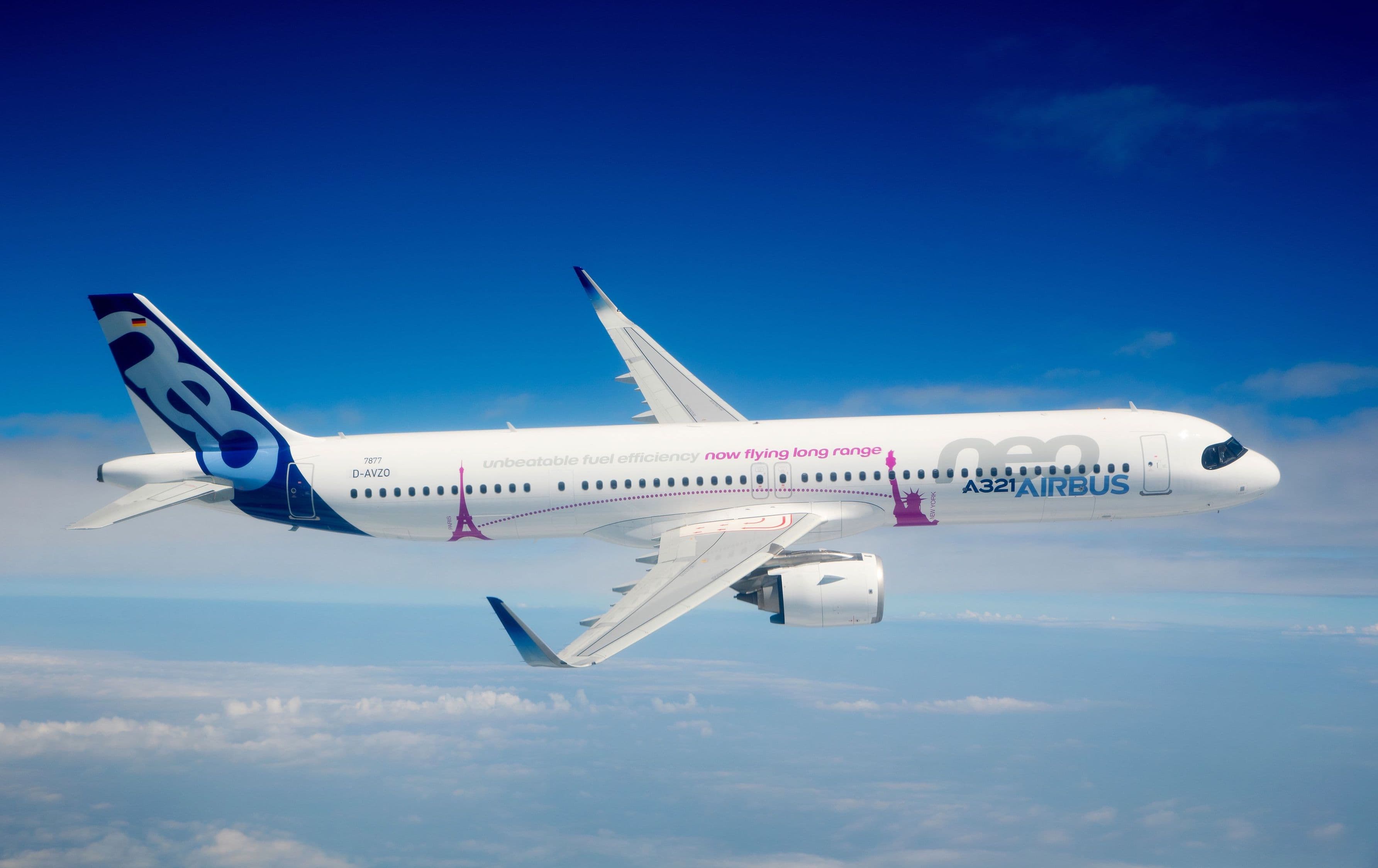
A single aircraft is quietly rewriting the rules of long-haul travel — connecting cities that widebody jets could never justify, at a fraction of the operating cost. Here's everything you need to know about the plane that is reshaping global aviation.
1. What is the A321XLR?
The Airbus A321XLR — where XLR stands for Xtra Long Range — is the most capable single-aisle commercial aircraft ever built. It is the latest and most advanced member of the iconic A320neo family, stretched and re-engineered to reach destinations that no narrowbody jet has ever flown nonstop.
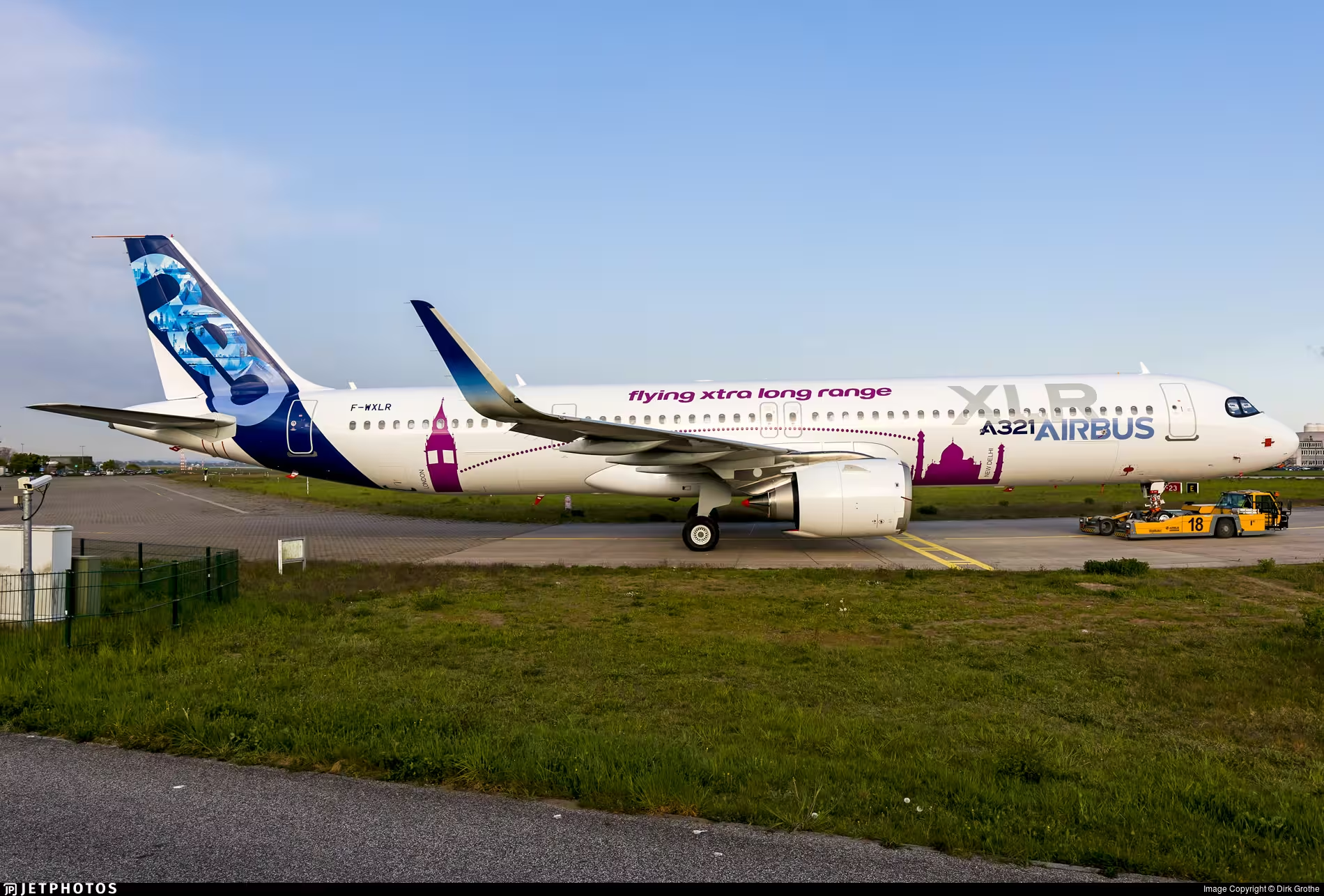
Think of it this way: before the XLR, if an airline wanted to connect a mid-sized European city with the East Coast of the United States, it needed a widebody jet — a 250-seat behemoth that was expensive to operate and required near-full loads to be profitable. The A321XLR changes that equation entirely. With up to 180 seats and a range of 4,700 nautical miles, it can fly those same routes at a cost structure that makes thin markets viable for the first time.
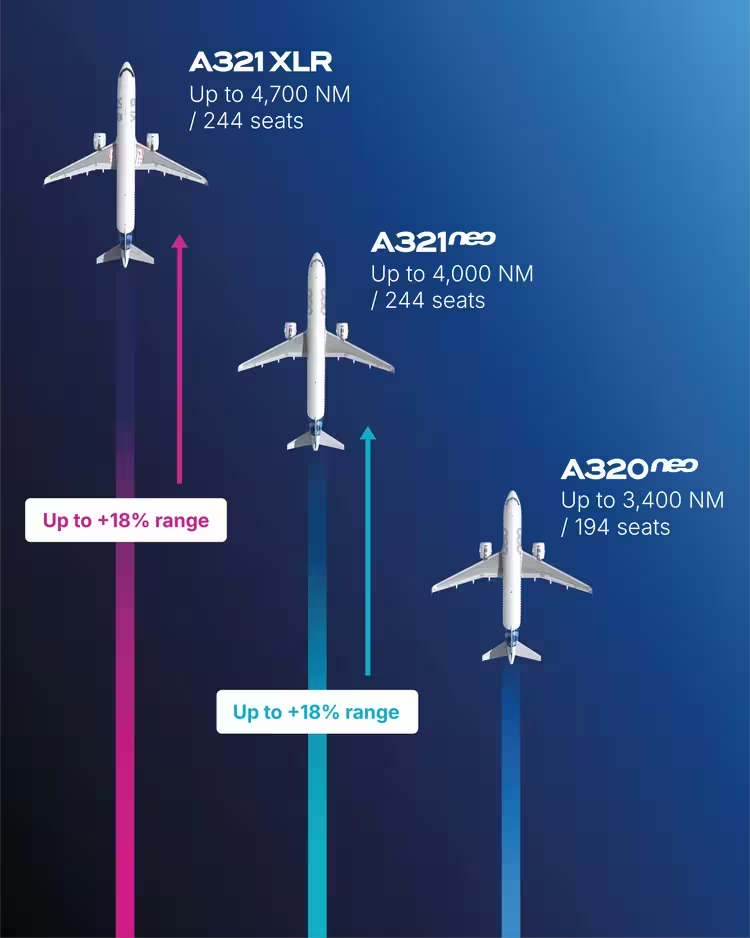
"Xtra Long Range" is not marketing hyperbole. The XLR extends the range of its predecessor, the A321LR, by 15% enough to add entirely new continent-spanning city pairs to the world's airline route maps.
2. Key specifications at a glance
- Maximum range- 4,700 nautical miles (8,700 km)
- Maximum flight time- Up to 11 hours
- Typical seating capacity- 180–220 passengers (single-class); 155 in typical two-class layout
- Cruising speed- Mach 0.78
- Engine options- CFM LEAP-1A or Pratt & Whitney GTF (PW1100G-JM)
- Fuel burn improvement- 30% less per seat vs. previous-generation narrowbodies
- Range vs. A321LR- +15% (4,700nm vs. 4,000nm)
- SAF compatibility- Up to 50% now; 100% targeted by 2030
- EASA type certificate- July 19, 2024 (LEAP-1A); February 21, 2025 (PW1100G)
- FAA certification- October 2, 2024
3. Development and certification timeline
Airbus launched the A321XLR program at the Paris Airshow in 2019, responding to airline demand for a longer-range narrowbody that could open new point-to-point markets without the economics of a widebody. The concept was straightforward in theory but demanding in execution: squeeze more range out of an already mature airframe while keeping costs and complexity under control.
A) The key innovation: a new rear fuel tank
The single most important engineering change is the addition of a new rear centre tank (RCT) — a conformally shaped fuel tank integrated into the belly of the fuselage. Unlike the bolt-on auxiliary tanks used in the A321LR, the RCT is a permanent structural element that holds significantly more fuel while adding minimal weight and drag. This tank, combined with aerodynamic refinements and the efficiency of the new-generation engines, is what unlocks the XLR's extraordinary range.
The maiden flight took place in June 2022, followed by an intensive certification programme involving three dedicated test aircraft. EASA issued the type certificate in July 2024 for the CFM LEAP-1A powered variant, and the FAA followed in October 2024. The Pratt & Whitney GTF variant received its EASA certification in February 2025, opening the door for operators who had selected that engine option.

4. Routes it makes possible
The XLR's 4,700-nautical-mile range is not just a number it is a key that unlocks city pairs that have never seen nonstop service. With a flight time of up to 11 hours, the aircraft can connect distant destinations that previously required a stopover or a costly widebody deployment.
- New York (JFK / EWR) → Rome (FCO)- nonstop
- London (LHR / LGW) → Vancouver (YVR) - nonstop
- Madrid (MAD) → Boston (BOS) — inaugural XLR route, Nov 2024
- Montreal (YUL) → Palma de Mallorca (PMI) — Air Canada, June 2026



These are not hypothetical routes. They are either already operating or firmly scheduled. The XLR is also enabling domestic premium routes — American Airlines launched it on the transcontinental JFK-to-Los Angeles route in December 2025, prioritising premium passengers in a densely configured cabin.
5. Airlines operating the A321XLR
The order book for the A321XLR extends well into the 2030s, with over 500 firm orders from carriers across every market segment — from flag carriers to ultra-low-cost operators.
1. Iberia- Launch operator. First delivery Oct 30, 2024. Operating Madrid–Boston and expanding across North America and Latin America.
2. Aer Lingus- Part of IAG alongside Iberia. Took delivery Dec 2024. Expanding transatlantic network from Dublin.
3. American Airlines- First US operator. Launched service Dec 18, 2025 on JFK–LAX. JFK–Edinburgh added March 2026.
4. Air Canada- 30 XLRs on order. First deliveries in Q1 2026. Launching Montreal–Mallorca June 2026.
5. Qantas- Using XLR to open new intercontinental routes previously impractical for narrowbodies.
6. United Airlines- On order. Expected to use XLR to densify transatlantic network from East Coast hubs.
7. Wizz Air- Ultra-low-cost operator targeting high-density single-class configuration for long thin routes.
8. IndiGo - India's largest carrier. Plans to open new long-haul point-to-point markets from secondary Indian cities.
6. What is it like inside?
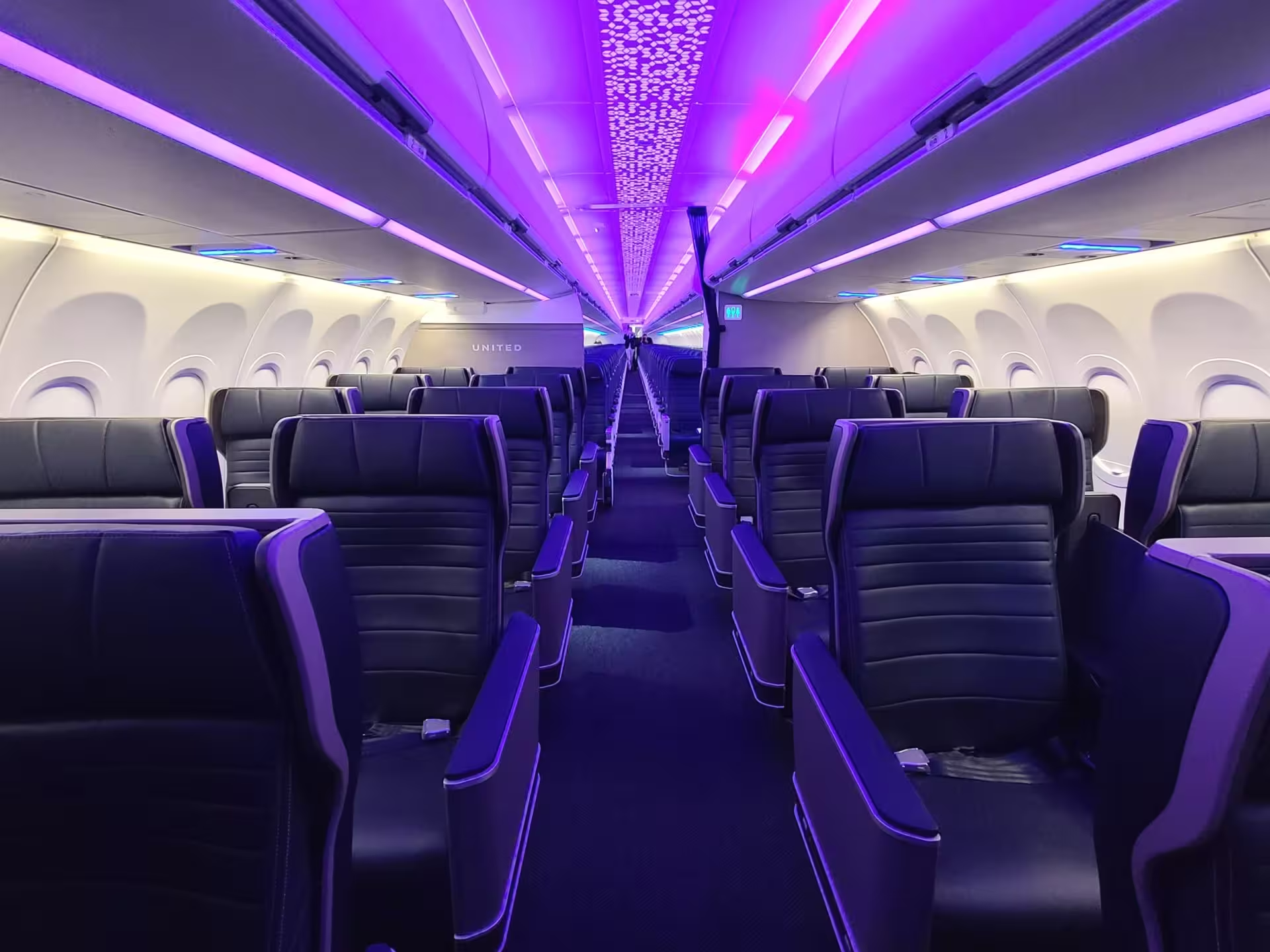
The passenger experience on the A321XLR varies dramatically depending on which airline operates it and how they configure the cabin. This flexibility is one of the aircraft's greatest commercial strengths.
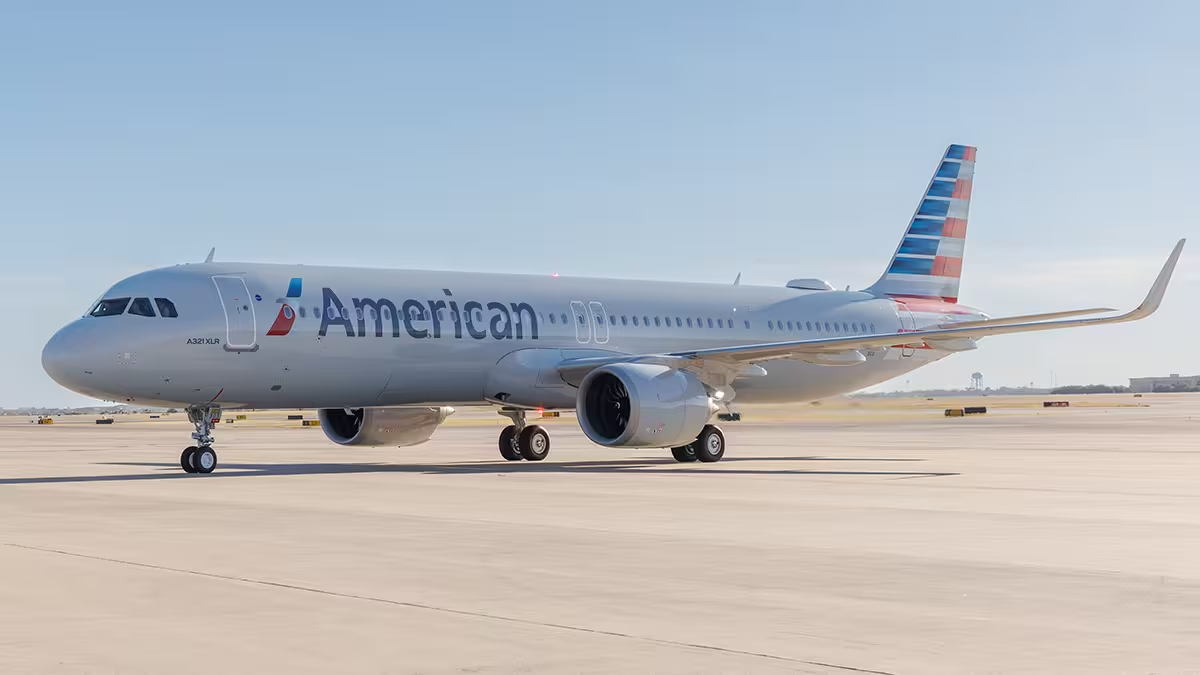
1. Full-service configuration (American Airlines) American Airlines' XLR features a 155-seat cabin that punches well above its narrowbody weight class. The layout includes 20 Flagship Suite business class seats with lie-flat beds and direct aisle access, 12 premium economy seats, and 123 main cabin seats. This is a widebody-class premium experience on a narrowbody fuselage — a genuine first for US domestic aviation.
2. Full-service configuration (Air Canada) Air Canada's 182-seat layout offers 14 lie-flat business class seats in a 1-1 arrangement — ensuring every business passenger has direct aisle access — alongside 168 economy seats, including 36 extra-legroom "preferred" seats. The airline has also promised a new design standard for the cabin experience on its XLRs.
3. Low-cost configuration
Airlines like Wizz Air will squeeze the XLR to its maximum single-class density — potentially over 220 seats — to minimise cost per passenger on long thin routes. On these airlines, the experience will be familiar narrowbody economy, but the destination will be anything but ordinary.
7. Will the A321XLR replace widebody jets?
This is the most debated question in commercial aviation right now — and the answer is nuanced.
The XLR is not replacing aircraft like the Boeing 787 Dreamliner or the Airbus A350 on high-demand trunk routes. A flight between London Heathrow and New York JFK carrying 300+ daily passengers still needs a widebody. The XLR cannot match the capacity, the cargo capability, or the sheer passenger volume of these jets.
What the XLR does is open an entirely new category of routes — markets where 100 to 180 daily passengers exist, but where a 250-seat widebody would fly chronically half-empty. On these routes, a widebody is not just expensive; it is commercially unviable. The XLR steps into that gap and creates profitable nonstop services where previously only connections through a hub were possible.
The XLR is a market creator, not a market taker. It generates new nonstop routes that did not exist rather than directly cannibalising widebody operations. The result is more choice, more competition, and — ultimately — lower fares for passengers flying between secondary cities.
Airbus itself describes it as a "network opener." Airlines are using it to reach cities where the demand is real but fragile — enough for a daily narrowbody, not enough for a daily widebody. Secondary cities in the US, Europe, and Asia will gain direct transatlantic and intercontinental links for the first time, reshaping global connectivity.

8. Final verdict
The Airbus A321XLR is one of the most consequential aircraft in the history of commercial aviation — not because it is the largest or the fastest, but because it is the most disruptive. By combining narrowbody economics with near-widebody range, it democratises long-haul travel and forces a rethink of how airlines plan their networks.
For passengers, it means more nonstop options between cities that were previously connected only through congested hubs. For airlines, it means profitable expansion into markets that were commercially inaccessible. For the aviation industry, it marks a structural shift that will play out over the next decade as over 500 XLRs enter service and reshape route maps worldwide.
Key takeaway
The A321XLR does not merely extend what a narrowbody aircraft can do it fundamentally redefines it. Whether you are a frequent flyer, an aviation enthusiast, or a business traveller planning your next intercontinental trip, this aircraft will shape your world in the years to come.
Test Your Knowledge!
Click the button below to generate an AI-powered quiz based on this article.
Did you enjoy this article?
Show your appreciation by giving it a like!
Conversation (0)
Cite This Article
Generating...