Engineering
The Anatomy of an Explorer: Understanding Satellite Components
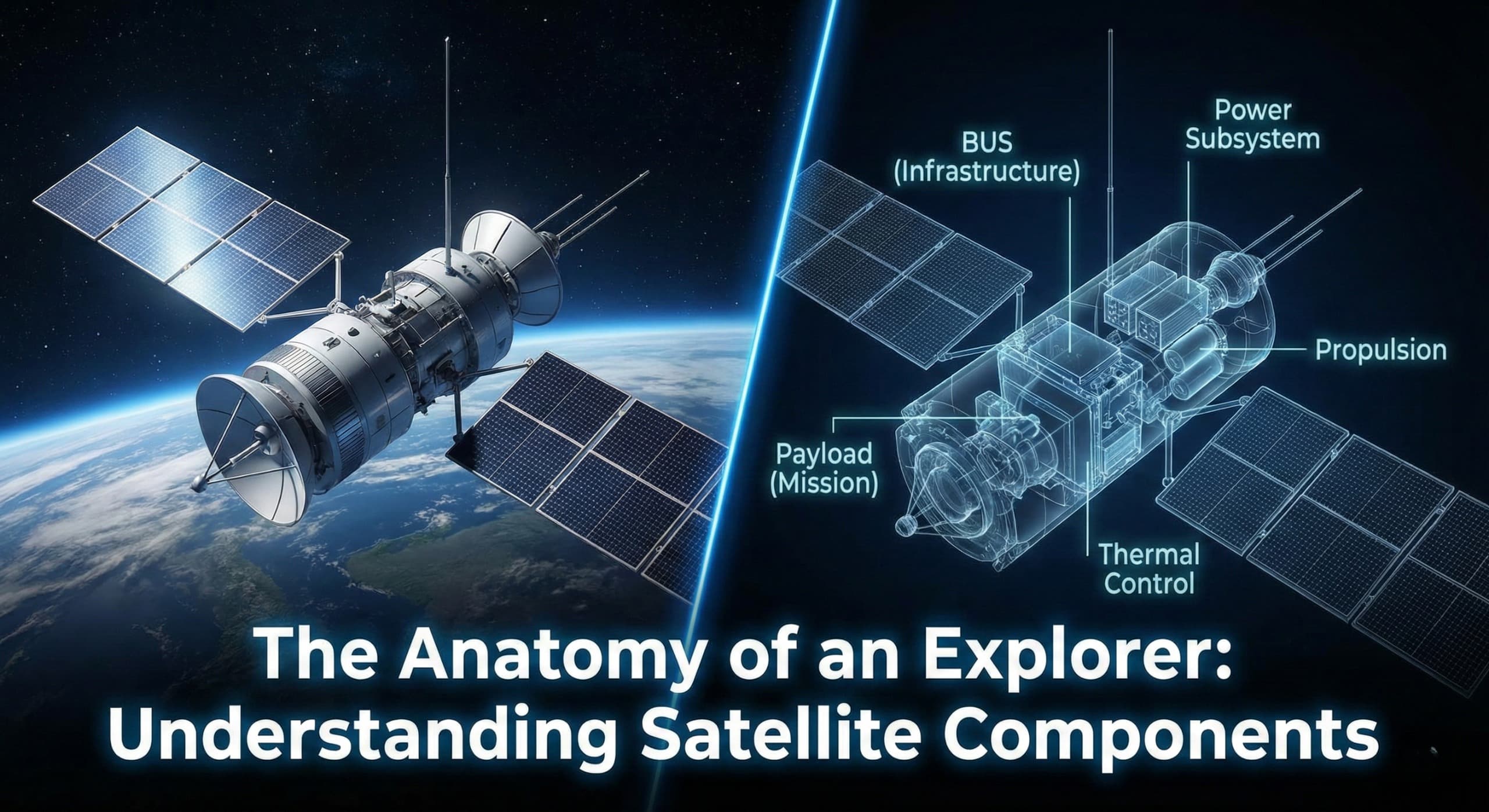
When we look at a satellite, we see a complex machine operating in one of the most hostile environments known to man. To survive extreme temperature fluctuations, radiation, and the vacuum of space, every satellite from a tiny CubeSat to a massive communications bus is built from a set of core subsystems.
In engineering terms, these components are generally divided into two categories: the Bus (the infrastructure) and the Payload (the mission-specific tools).
1.0 The Satellite "Bus" (The Infrastructure)
The "Bus" is the primary body of the satellite. It provides the structure and the "life support" systems required to keep the mission running.
1.1 Structural Subsystem The chassis or frame of the satellite. It must be incredibly strong to survive the massive G-forces of a rocket launch, yet lightweight enough to minimize fuel consumption. Engineers typically use aluminum alloys or carbon fiber composites.
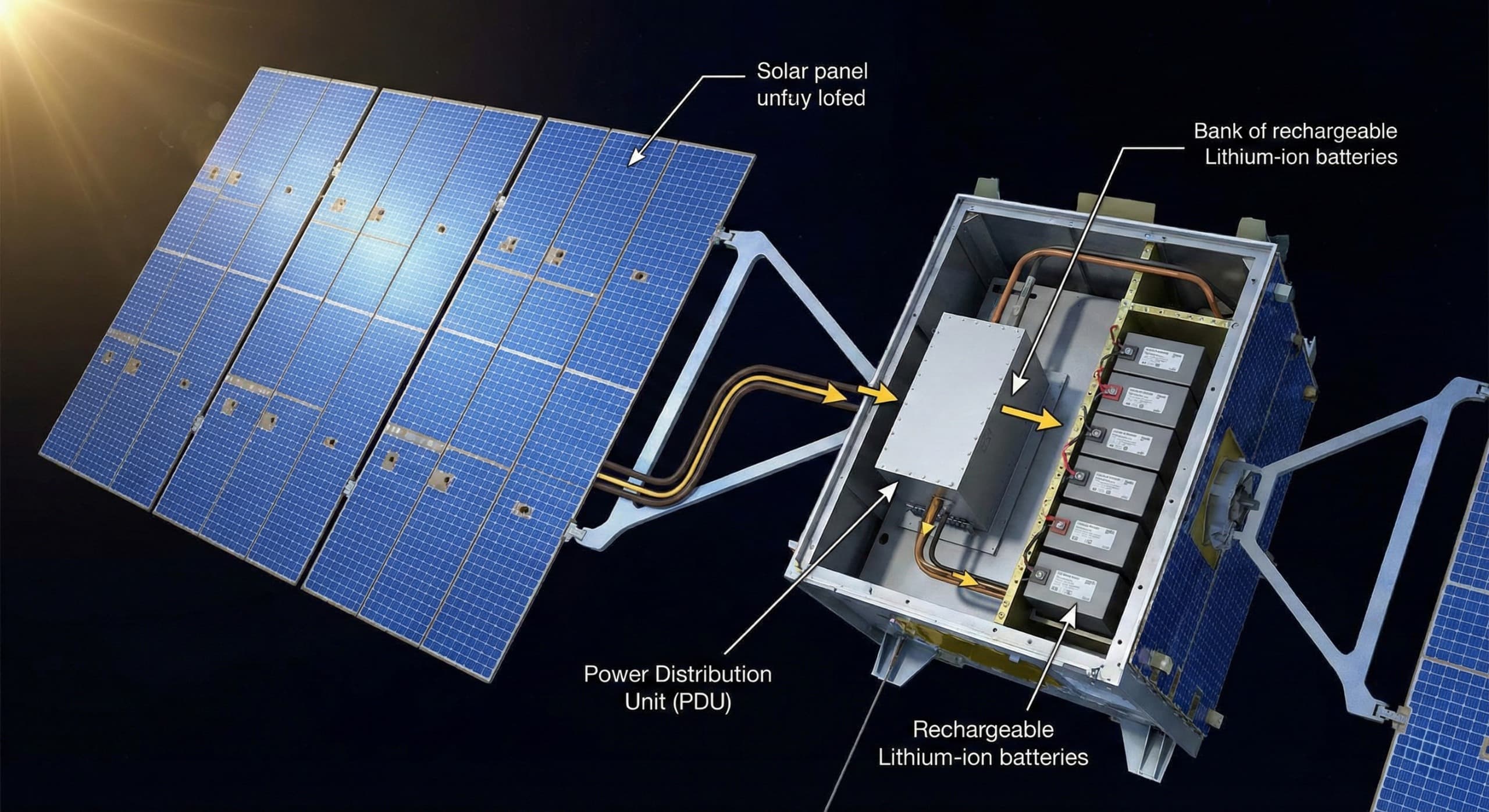
1.2 Power Subsystem (EPS) Most satellites rely on Solar Arrays massive wings covered in photovoltaic cells that convert sunlight into electricity.
Batteries: When the satellite passes into the Earth's shadow (eclipse), it relies on rechargeable batteries (typically Lithium-ion) to maintain power.
Power Distribution Unit (PDU): The "circuit breaker" of the satellite that manages how much voltage goes to each component.
1.3 Thermal Control Subsystem In space, the side facing the sun can reach 120°C, while the shaded side drops to -150°C.
Passive Control: Using multi-layer insulation (MLI)—that gold or silver "foil" you see on satellites to reflect radiation.
Active Control: Using electric heaters or "radiators" to vent excess heat generated by the onboard electronics.
1.4 Attitude Determination and Control System (ADCS) This is the "navigation" system. It ensures the satellite is always pointing its antennas toward Earth and its solar panels toward the Sun.
Star Trackers: Cameras that look at the stars to calculate the satellite's orientation.
Reaction Wheels: Spinning flywheels that use physics to rotate the satellite without using fuel.
1.5 Propulsion Subsystem
Used for "Station Keeping." Even in orbit, gravity and solar winds push satellites out of position. Small thrusters (chemical or ion) are fired to nudge the satellite back into its correct slot.
2.0 The "Payload" (The Mission)
The payload is the reason the satellite was launched. While the bus stays the same for many missions, the payload is unique.
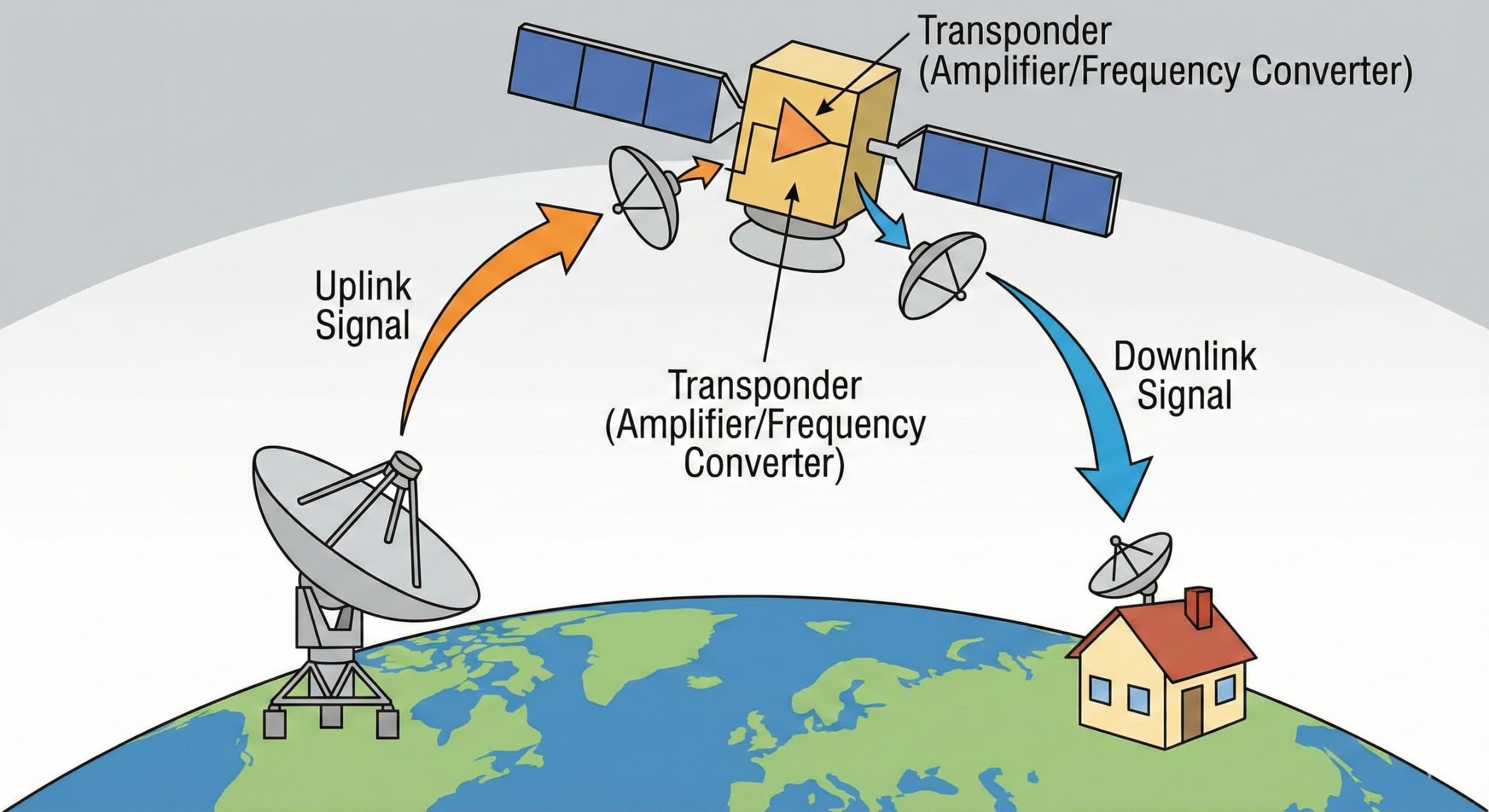
- Communications Satellites: Use Transponders and massive dish antennas to receive, amplify, and re-transmit signals (TV, Internet, Radio).
- Observation Satellites: Use high-resolution Optical Cameras or Radar (SAR) to take photos of the Earth’s surface.
- Navigation Satellites: Use ultra-precise Atomic Clocks to transmit time-stamped signals used by your phone to calculate GPS coordinates.
3.0 Telemetry, Tracking, and Command (TT&C)
This is the "umbilical cord" between the satellite and the engineers on the ground.
- Telemetry: The satellite sends "health data" (battery levels, temperature, position) back to the ground station.
- Command: The ground station sends instructions (e.g., "fire thruster for 2 seconds") to the satellite.
4.0 Conclusion: A Masterpiece of Systems Engineering
Every component of a satellite must work with 100% reliability because, once it is launched, you cannot go up to fix a broken part. For us in the STEM and startup world, the satellite is the ultimate example of Systems Engineering the art of making hundreds of complex parts work together as a single, perfect unit.
5.0 Bibliography
NASA. (2026). What Is a Satellite?. [online] Available at: https://www.nasa.gov/audience/forstudents/5-8/features/nasa-knows/what-is-a-satellite-58.html [Accessed 16 Feb. 2026].
Space.com. (2025). How do satellites stay in orbit?. [online] Available at: https://www.space.com/24839-how-do-satellites-stay-in-orbit.html [Accessed 16 Feb. 2026].
Union of Concerned Scientists. (2025). UCS Satellite Database. [online] Available at: https://www.ucsusa.org/resources/satellite-database [Accessed 16 Feb. 2026].
USGS. (2026). Landsat Missions: Timeline and Overview. [online] Available at: https://www.usgs.gov/landsat-missions [Accessed 16 Feb. 2026].
Test Your Knowledge!
Click the button below to generate an AI-powered quiz based on this article.
Did you enjoy this article?
Show your appreciation by giving it a like!
Conversation (0)
Cite This Article
Generating...