Engineering
The M1 Abrams: The Engineering of Survival
1.0 Introduction: Philosophy of Design
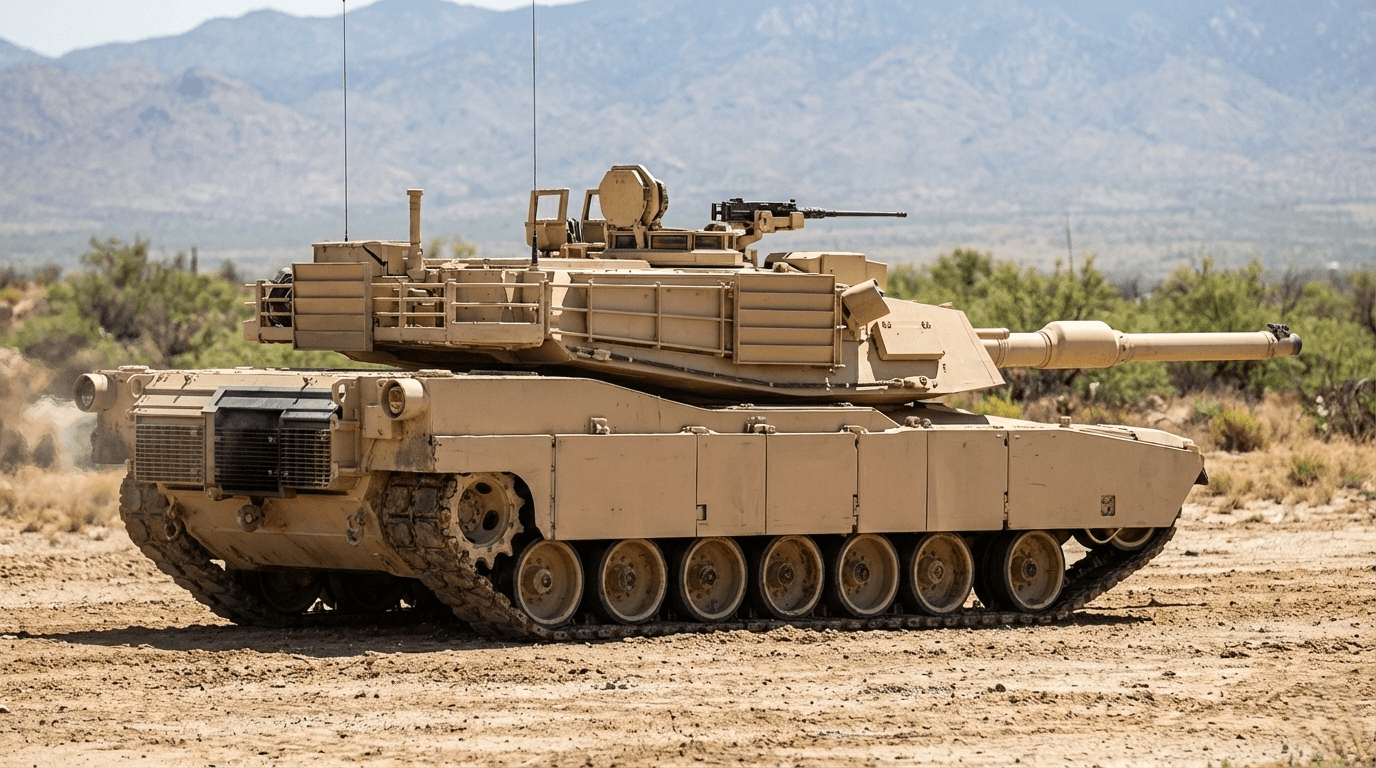
The M1 Abrams is not just a tank; it is a 70-ton survival capsule. When American engineers designed it in the 1970s to replace the M60 Patton, they changed the fundamental philosophy of tank warfare.
The Old Way (Soviet Doctrine): Make tanks small, light, and cheap to produce in mass numbers (e.g., T-72).
The Abrams Way: Make the tank massive, fast, and prioritize Crew Survivability above all else. If the tank is hit, the machine may die, but the crew must live to fight in another tank.
2.0 The Powerplant: Why a Jet Engine?
The most controversial engineering decision in the Abrams was the engine. Unlike almost every other tank in the world (which use V12 Diesel engines), the Abrams uses a Gas Turbine.
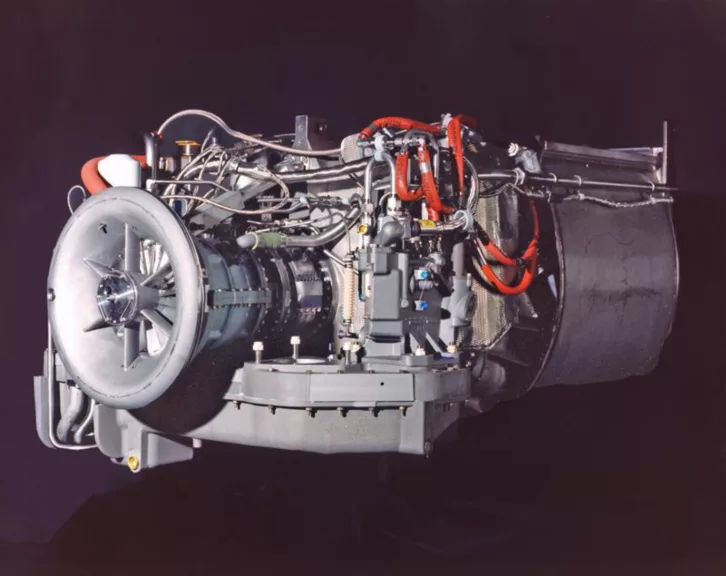
2.1 The Honeywell AGT1500 The heart of the beast is the Honeywell AGT1500. It is essentially a helicopter engine adapted for the ground.
The Science: It sucks in air, compresses it, mixes it with fuel, and ignites it. The expanding hot gas spins a turbine at 30,000 RPM, which is then geared down to 3,000 RPM to turn the tracks.
Multi-Fuel Engineering:
Because it doesn't rely on "compression ignition" like a diesel engine, it doesn't care about the Cetane rating of the fuel. It can run on Diesel, Jet Fuel (JP-8), Kerosene, or even Marine Diesel. In practice, the US Army runs it on Jet Fuel for logistics simplicity.
Pros: "Whispering Death": Turbines don't have the loud "bang-bang" of pistons. The Abrams is surprisingly quiet, allowing it to sneak up on infantry. Cold Start: A diesel engine needs time to warm up in freezing winter. The turbine starts instantly.
Cons: Heat Signature: The exhaust gas is scorching hot (over 500°C), making the tank glow like a Christmas tree on enemy Thermal Cameras.
Thirst: A turbine is inefficient at idle. An Abrams burns fuel just sitting still, which is why modern versions (SEPv3) carry an extra "Under Armor Generator" (APU) just to run the electronics without the main engine.
3.0 Armor Science: Chobham & Depleted Uranium
The Abrams doesn't just rely on thick steel. It uses Composite Armor, a British invention known as "Chobham" (or Burlington).
3.1 The "Sandwich" Composition Imagine a sandwich made of steel, ceramic, and rubber.
The Mechanism: When a HEAT (High Explosive Anti-Tank) round hits, the ceramic layer shatters. The shards of ceramic are harder than the metal jet of the missile, disrupting it and absorbing the energy.
Kinetic Protection: Against solid metal darts (APFSDS), the ceramic layers break the dart, causing it to lose momentum before it penetrates the inner cabin.
3.2 The Heavy Metal: Depleted Uranium (DU) Later versions (M1A1 HA and M1A2) added a mesh of Depleted Uranium into the armor.
Why DU? Uranium is 1.7 times denser than lead. By using a mesh of this ultra-dense metal, the armor becomes incredibly efficient at stopping kinetic penetrators without making the armor significantly thicker.
4.0 The Engineering of Safety: Blow-out Panels
This is the single most important engineering feature for the crew.
The Problem: In Russian tanks (like the T-72 or T-90), the ammo is stored in a carousel under the crew's feet. If the tank is penetrated, the ammo explodes, blowing the turret off and killing everyone instantly (the "Jack-in-the-Box" effect).
The Abrams Solution: The ammo is stored in a separate "bustle" at the back of the turret, separated from the crew by a heavy blast door.
The Physics: The roof of the ammo compartment has weak "Blow-out Panels." If the ammo ignites, the pressure follows the path of least resistance blowing the roof panels UP and venting the fire outside. The blast door keeps the crew safe inside, even while the ammo is burning just inches away.
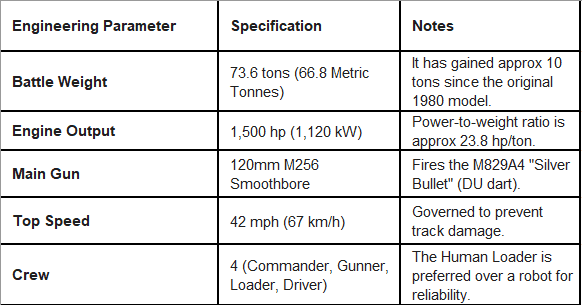
5.0 Technical Specifications (M1A2 SEPv3)
The "System Enhancement Package version 3" is the current cutting-edge standard.
6.0 Bibliography
- Honeywell Aerospace. (2026). 15 Surprising Facts About Honeywell's 1,500 Horsepower Turbine.
- Forecast International. (2009). Honeywell AGT1500 Technical Analysis.
- First Division Museum. (2025). M1 Abrams Tank: Chobham Armor.
- Army Technology. (2024). Abrams M1A2 SEPv3 Main Battle Tank.
- Gaijin Entertainment. (2023). Blow-out panels technical report.
- War Thunder Live. (2023). Analysis of Blowout panels in combat.
- Australian Army. (2024). M1A2 Abrams tank Specifications.
- Wikipedia. (2026). M1 Abrams Variants and Weight History.
Test Your Knowledge!
Click the button below to generate an AI-powered quiz based on this article.
Did you enjoy this article?
Show your appreciation by giving it a like!
Conversation (0)
Cite This Article
Generating...