Science
Theobromine: The Silent Poison for Your Dog That Hiding in Your Kitchen

Most dog owners know chocolate is "bad" for dogs — but very few understand why. The answer lies in a little-known compound that your dog simply cannot handle. Here's the full story.
1.0 What exactly is Theobromine?
Theobromine is a naturally occurring stimulant found in the cacao plant — the same plant that gives us chocolate, cocoa powder, and cocoa butter. Its name actually comes from Theobroma cacao, which translates to "food of the gods." For humans, it's largely harmless. For dogs, it can be fatal.
Theobromine belongs to the same chemical family as caffeine. It works by stimulating the heart and nervous system. The critical difference? Dogs metabolize it roughly 3–4× more slowly than humans, allowing it to accumulate to toxic concentrations in the bloodstream.
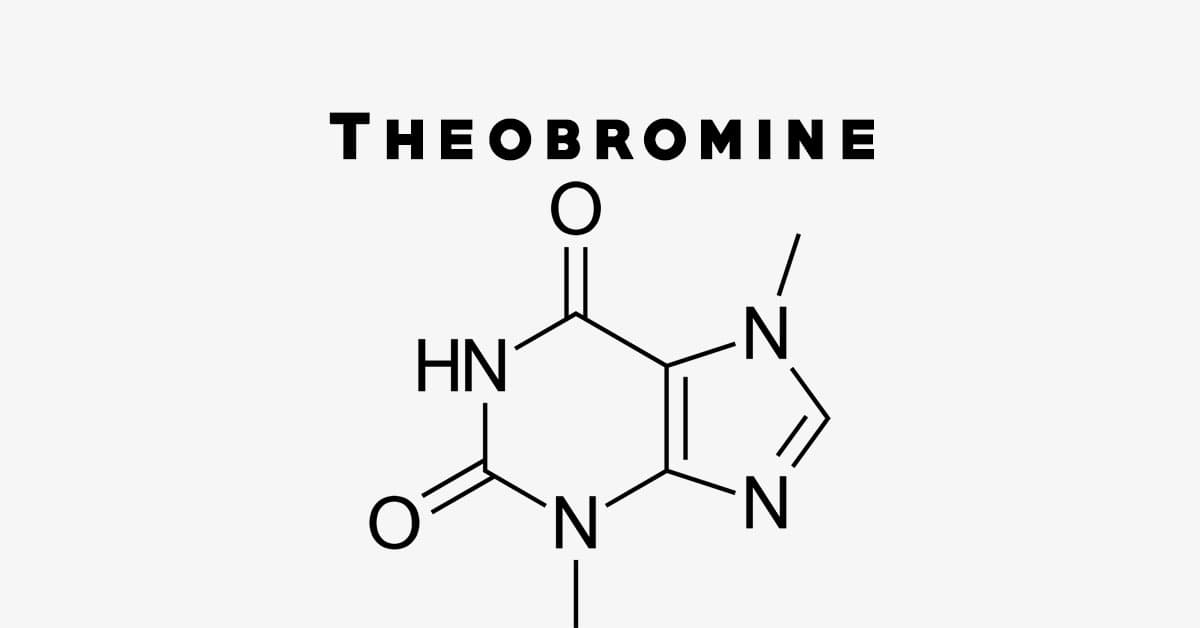
The half-life problem In humans, theobromine has a half-life of about 6–10 hours. In dogs, it's approximately 17.5 hours. This means if a dog eats chocolate in the morning, dangerous levels of theobromine are still circulating in their body the following morning causing continuous harm the whole time.
2.0 Chocolate — How dangerous is each type?
The darker and more concentrated the chocolate, the higher the theobromine content — and the smaller the amount needed to cause serious harm.
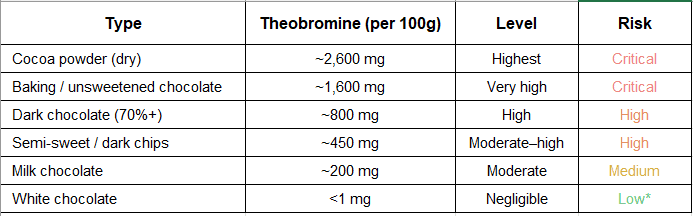
- Size matters — a lot Just 20g of dark chocolate can be enough to cause serious symptoms in a 10kg dog. A single square of baking chocolate could hospitalise a small breed. There is no safe amount — any ingestion should be taken seriously.
3.0 Other foods containing Theobromine
Chocolate is the biggest concern, but it's not the only food that contains theobromine. These items are often found in homes and gardens and many dog owners have no idea they pose a risk.
- Cacao mulch / garden mulch Made from cacao shells. Widely used in gardens. Extremely dangerous — dogs are attracted to the smell and will eat it.
- Hot cocoa & cocoa drinks A mug left on a coffee table is a real hazard. The liquid form is absorbed faster than solid chocolate.
- Chocolate-flavored baked goods Brownies, muffins, cookies, and cakes all contain varying amounts of theobromine depending on the recipe.
- Chocolate-coated candies & nuts Raisins (already toxic to dogs) covered in chocolate, or chocolate-covered almonds, are doubly dangerous.
- Coffee & espresso Contains both caffeine and small amounts of theobromine. Spilled coffee on the floor can be enough to affect a small dog.
- Protein bars & energy snacks Many contain cocoa or dark chocolate coatings. Always check the label before leaving snacks within a dog's reach.
4.0 How poisoning unfolds — A Timeline
Theobromine toxicity doesn't always appear immediately. Knowing when to expect symptoms helps you act before the situation becomes critical.
- 0–2 hrs (Early signs): Vomiting, diarrhea, restlessness, excessive drooling, and unusual thirst or urination. Your dog may seem agitated or uncomfortable.
- 2–6 hrs (Escalation): Rapid breathing, elevated heart rate, muscle stiffness, and tremors. The dog may pace or seem unable to settle.
- 6–12 hrs (Serious stage): Seizures, cardiac arrhythmia, and collapse. At this point hospitalization is almost always required.
- 12–24 hrs (Critical window): Theobromine is still active in the body. Dogs who seemed stable can deteriorate. Continuous veterinary monitoring is essential.
5.0 What to do if your dog eats Chocolate
Act immediately — do not wait for symptoms. Early intervention dramatically improves outcomes.
- Note the type and amount of chocolate eaten, and your dog's weight. This helps your vet calculate the toxicity level fast.
- Call your vet or an animal poison hotline right away — even if your dog seems perfectly fine right now.
- Do not induce vomiting unless specifically instructed by a veterinary professional. Doing it incorrectly can cause additional harm.
- If advised to come in, go immediately. Bring the chocolate wrapper if possible — ingredient labels help the vet assess theobromine content.
- At the clinic, treatment may include activated charcoal, IV fluids, and medication to manage heart rate and seizures.
- Even after returning home, monitor your dog closely for 24–48 hours and follow all follow-up care instructions carefully.
6.0 Safe treat alternatives your dog will love
Treating your dog doesn't have to come with risk. These are naturally safe and genuinely enjoyed by most dogs:
- Carrot sticks
- Apple slices (no seeds or core)
- Blueberries
- Watermelon (no rind or seeds)
- Plain cooked chicken
- Xylitol-free peanut butter
- Cucumber slices
- Plain cooked sweet potato
Always introduce new foods gradually and in small amounts. When in doubt, check with your vet first.
This article is for informational purposes only and does not replace professional veterinary advice. If you believe your dog has ingested chocolate or any toxic substance, contact your vet or an emergency animal poison control service immediately. Do not rely on any online resource — including this one — in place of professional guidance during an emergency.
7.0 Bibliography
- Bates, N., Rawson-Harris, P. and Edwards, N. (2015) 'Common questions in veterinary toxicology', Journal of Small Animal Practice, 56(5), pp. 298–306.
- Dolder, L.K. (2013) 'Methylxanthines: caffeine, theobromine and theophylline', in Peterson, M.E. and Talcott, P.A. (eds.) Small Animal Toxicology. 3rd edn. St Louis: Elsevier.
- Gans, J.H., Korson, R., Cater, M.R. and Ackerly, C.C. (1980) 'Effects of short-term and long-term theobromine administration to male dogs', Toxicology and Applied Pharmacology, 53(3), pp. 481–496. doi: 10.1016/0041-008X(80)90360-9.
- Merck Veterinary Manual (2026) Chocolate Toxicosis in Animals [Online]. Available at: https://www.merckvetmanual.com/toxicology/food-hazards/chocolate-toxicosis-in-animals (Accessed: 8 May 2026).
- Noble, P.J.M., Newman, J., Wyber, C.A., Radford, A.D. and Courcier, E.A. (2017) 'Heightened risk of canine chocolate exposure at Christmas and Easter', Veterinary Record, 181(25). Available at: https://www.ncbi.nlm.nih.gov/pmc/articles/PMC5749306/ (Accessed: 8 May 2026).
- Pet Poison Helpline (2023) Theobromine Toxicity in Dogs [Online]. Available at: https://www.petpoisonhelpline.com/pet-tips/theobromine-toxicity-in-dogs/ (Accessed: 8 May 2026).
- ASPCA Animal Poison Control Center (no date) Animal Poison Control [Online]. Available at: https://www.aspca.org/pet-care/animal-poison-control (Accessed: 8 May 2026).
Test Your Knowledge!
Click the button below to generate an AI-powered quiz based on this article.
Did you enjoy this article?
Show your appreciation by giving it a like!
Conversation (0)
Cite This Article
Generating...