Science
Bringing the Power of the Sun to Earth
1.0 Introduction: The Ultimate Energy Quest
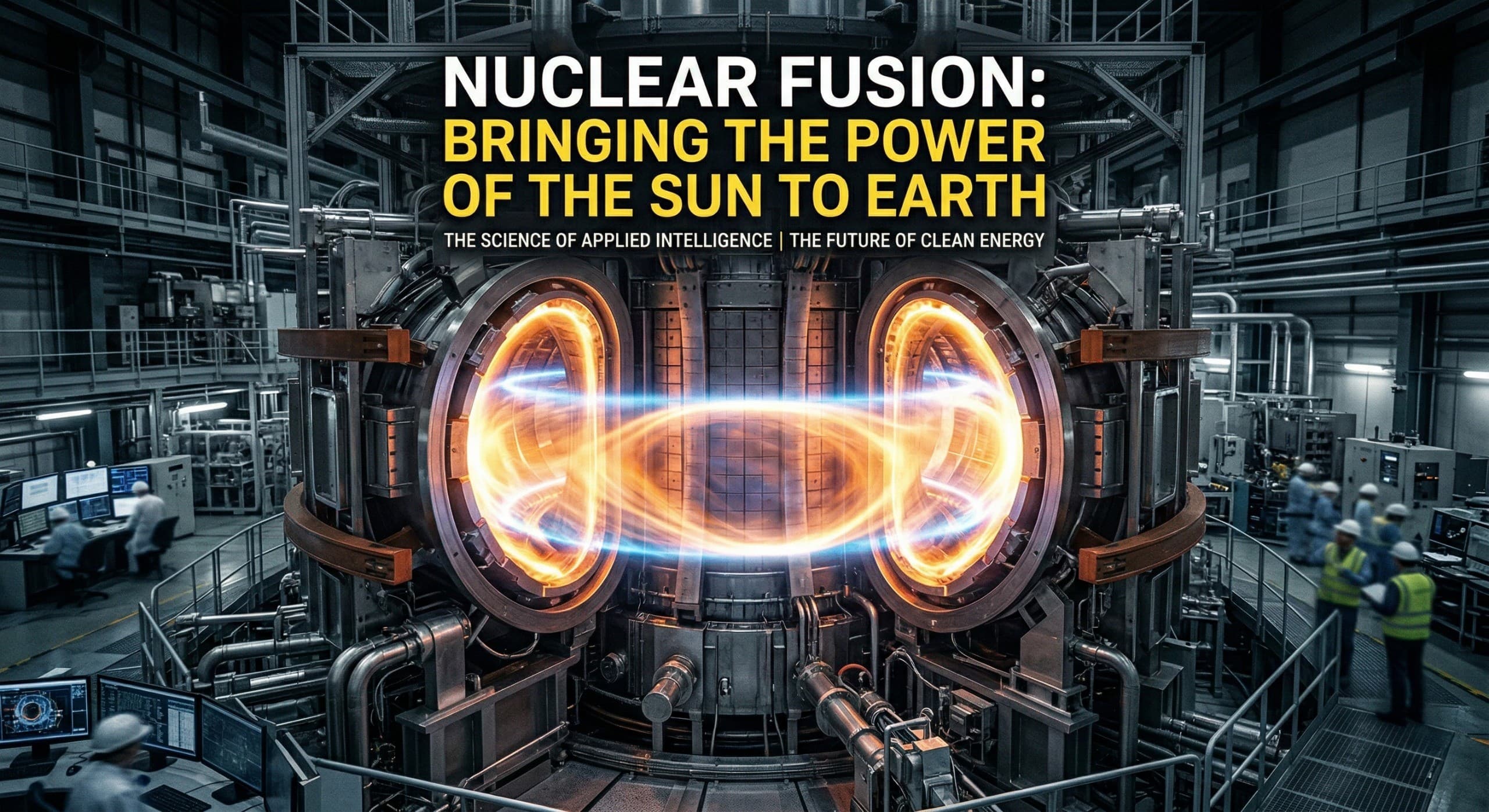
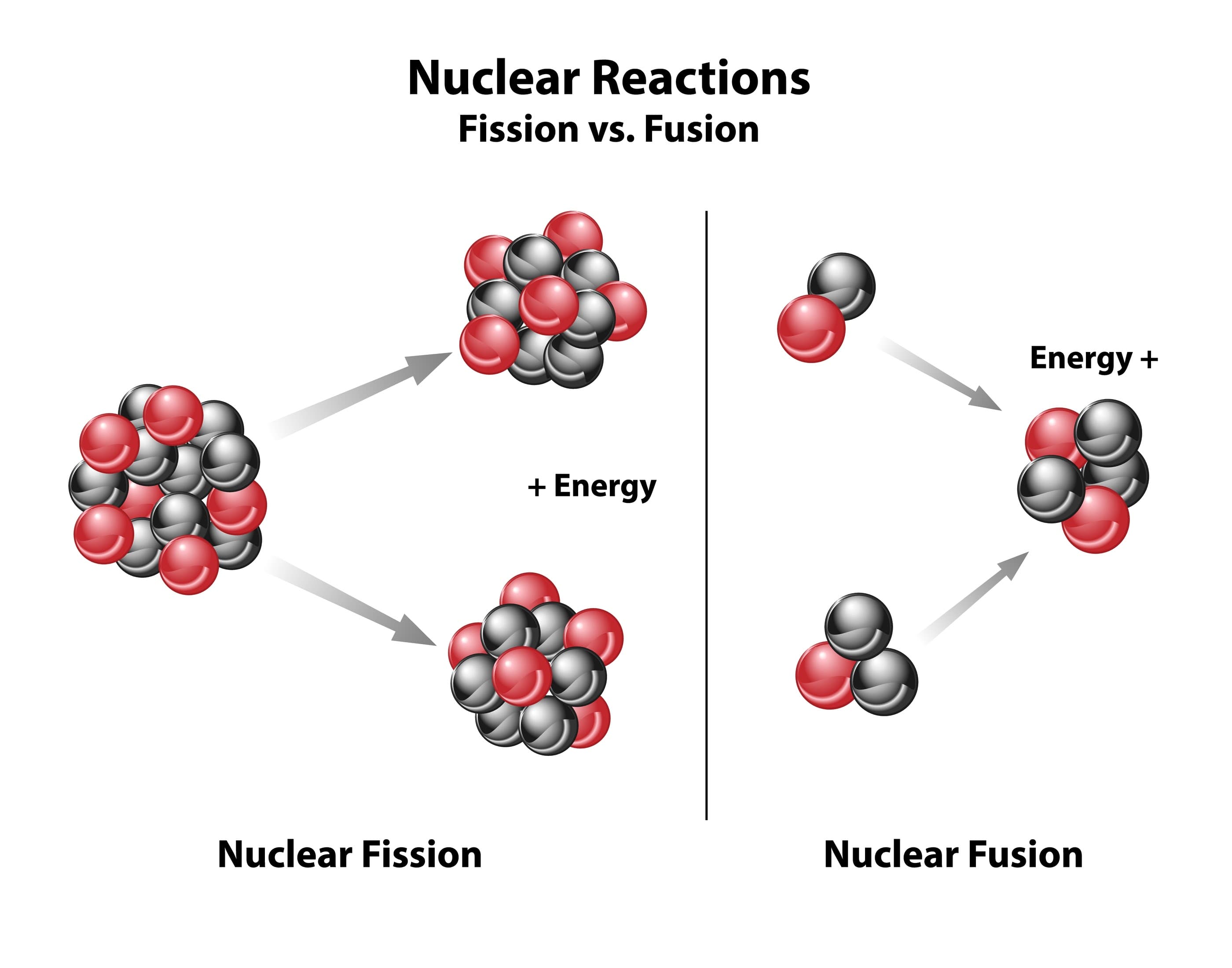
For decades, the promise of nuclear fusion has been the "North Star" of physics. It is the process that powers our sun and every star in the night sky. Unlike our current nuclear power plants, which rely on Fission (splitting heavy atoms like Uranium), Fusion works by forcing light atoms together to form a heavier one.
The result? A massive release of energy with zero carbon emissions, no long-lived radioactive waste, and a fuel source as common as seawater. For the modern engineer and startup leader, understanding the "A to Z" of fusion is understanding the future of the global energy economy.
2.0 The Physics: Fission vs. Fusion
To appreciate the engineering challenge, we must first look at the atomic scale.Nuclear Fission: A heavy nucleus (Uranium-235) is struck by a neutron, causing it to split into smaller fragments and release energy. This is relatively easy to trigger but creates radioactive "spent fuel" that lasts for thousands of years.Nuclear Fusion: Two light nuclei typically isotopes of hydrogen called Deuterium and Tritium are forced together to form Helium. This releases an enormous amount of energy (E=mc2) but requires extreme conditions to overcome the natural electrical repulsion between the atoms.
3.0 The "Star in a Bottle" Challenge
How do you recreate the center of the sun on Earth? In the sun, massive gravity handles the work. On Earth, we have to use two primary methods to reach the necessary 150 million degrees Celsius (ten times hotter than the sun's core).
3.1 Magnetic Confinement (The Tokamak)
- The most advanced method uses a Tokamak a doughnut-shaped vacuum chamber.
- The Plasma: At these temperatures, gas turns into Plasma, a soup of charged particles.
The Magnets: Because plasma is charged, it can be steered by magnetic fields. Superconducting magnets suspend the plasma in mid-air, preventing it from touching the walls of the reactor (which would melt instantly).
3.2 Inertial Confinement (The Laser Path) Used famously by the National Ignition Facility (NIF), this method uses the world’s most powerful lasers to blast a tiny pellet of fuel. The compression is so fast and intense that the atoms fuse before they have a chance to fly apart.
4.0 The "Q" Factor: The Engineering Goal
In the fusion world, the "Q Value" is the most important metric.
- Q < 1.0: The reactor uses more energy to heat the plasma than it produces.
- Q = 1.0: The "Breakeven" point.
- Q > 1.0: Net energy gain.
In late 2022 and throughout 2024, experimental facilities finally achieved Scientific Ignition (Q > 1.0), proving that human-made fusion is no longer just a theory it is a functional reality waiting to be scaled.
5.0 Why Fusion Changes Everything
1. Unlimited Fuel: Deuterium is easily extracted from seawater. The lithium needed to make Tritium is abundant in the Earth's crust. 2. Inherent Safety: Unlike Fission, there is no risk of a "meltdown." If the reactor is damaged, the plasma simply cools down and the reaction stops instantly. 3. High Energy Density: One kilogram of fusion fuel provides the same energy as 10 million kilograms of coal. 4. No Long-Lived Waste: The byproduct is Helium an inert gas. While some reactor components become slightly radioactive, they decay in roughly 50-100 years, not 10,000.
6.0 Conclusion: The Road to 2050
We are currently in the "Space Race" of energy. Massive international projects like ITER (International Thermonuclear Experimental Reactor) and private startups are racing to build the first commercial fusion power plant.
While we are still years away from seeing "Fusion Power" on our local electrical grids, the transition is inevitable. For the STEM community, Fusion represents the ultimate triumph of human engineering over the laws of physics literally bringing the power of the stars down to Earth to sustain our civilization.
7.0 Bibliography (Harvard Style)
- International Atomic Energy Agency (IAEA). (2025). Fusion Energy: The Basics. [online] Available at: https://www.iaea.org/topics/fusion [Accessed 3 Mar. 2026].
- ITER Organization. (2026). What is a Tokamak?. [online] Available at: https://www.iter.org/mach/tokamak [Accessed 3 Mar. 2026].
- National Ignition Facility (NIF). (2024). Achieving Ignition: A New Era for Fusion Research. Livermore: Lawrence Livermore National Laboratory.
- World Nuclear Association. (2025). Nuclear Fusion Power. [online] Available at: https://world-nuclear.org/information-library/current-and-future-generation/nuclear-fusion-power.aspx [Accessed 3 Mar. 2026].
Test Your Knowledge!
Click the button below to generate an AI-powered quiz based on this article.
Did you enjoy this article?
Show your appreciation by giving it a like!
Conversation (0)
Cite This Article
Generating...