Engineering
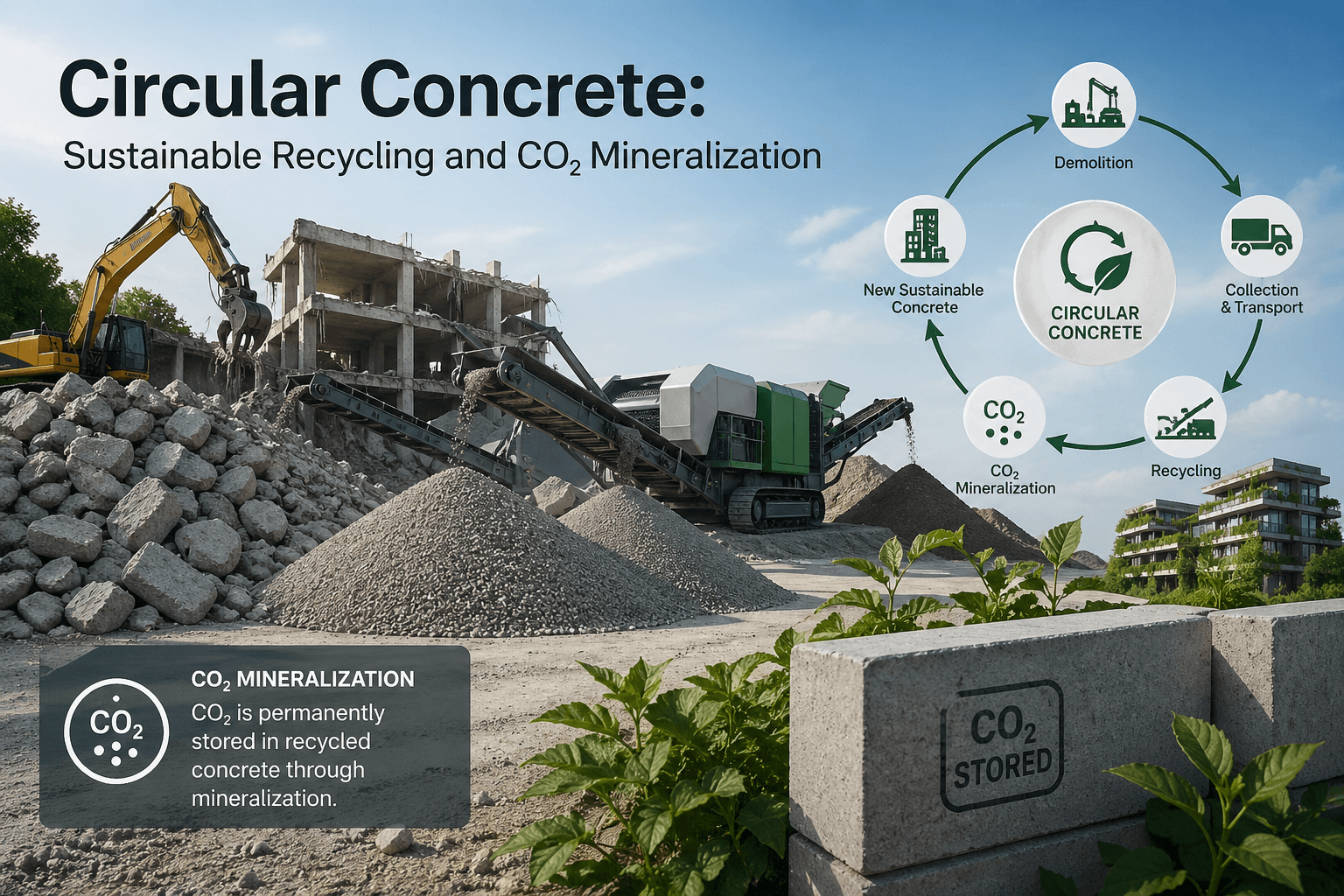
Circular Concrete (The Zero Waste Loop)
1. The Problem with Traditional Concrete
To understand the solution, we first need to understand the scale of the problem. Concrete is the foundation of modern society. It is the most widely used construction material on Earth, with global consumption exceeding that of steel, wood, plastics, and all other man-made materials combined. In the year 2020 alone, humanity produced almost 30 billion tons of concrete.
Because of this massive scale, the concrete industry is a major contributor to global warming. The sector accounts for 7% to 8% of all global anthropogenic (human-made) carbon dioxide (CO2) emissions. The majority of these emissions come from manufacturing cement "clinker," the glue that holds concrete together. Making clinker requires heating limestone in giant kilns, a chemical process that inherently releases trapped CO2 into the atmosphere, making it a famously "hard-to-abate" industry. . Furthermore, the traditional "take-make-dispose" model of construction puts a heavy strain on the Earth's natural resources. As global populations grow and urbanization expands, the demand for cement is projected to rise even further by 2050. When old buildings are torn down, they create mountains of Construction and Demolition Waste (C&DW). Globally, we generate an estimated 2 billion tons of C&DW every single year, and waste concrete makes up roughly 70% of that volume in regions like the European Union.
Unfortunately, traditional recycling doesn't solve the problem. Currently, conventional recycling machines simply smash old concrete into smaller pieces. The resulting material is considered low-quality because it is still covered in old, hydrated cement paste. This old paste acts like a sponge, absorbing water and weakening any new concrete it is added to. As a result, the vast majority of recycled concrete is "downcycled" used merely as a base for building roads (42%) or for backfilling holes (21%), rather than being used to build new structures.
2. Disassembling the Waste (Selective Separation)
To truly recycle concrete from beginning to end, engineers are shifting to a circular economy model ("reduce-reuse-recycle"). The first major technological leap in this process is called Selective Separation.
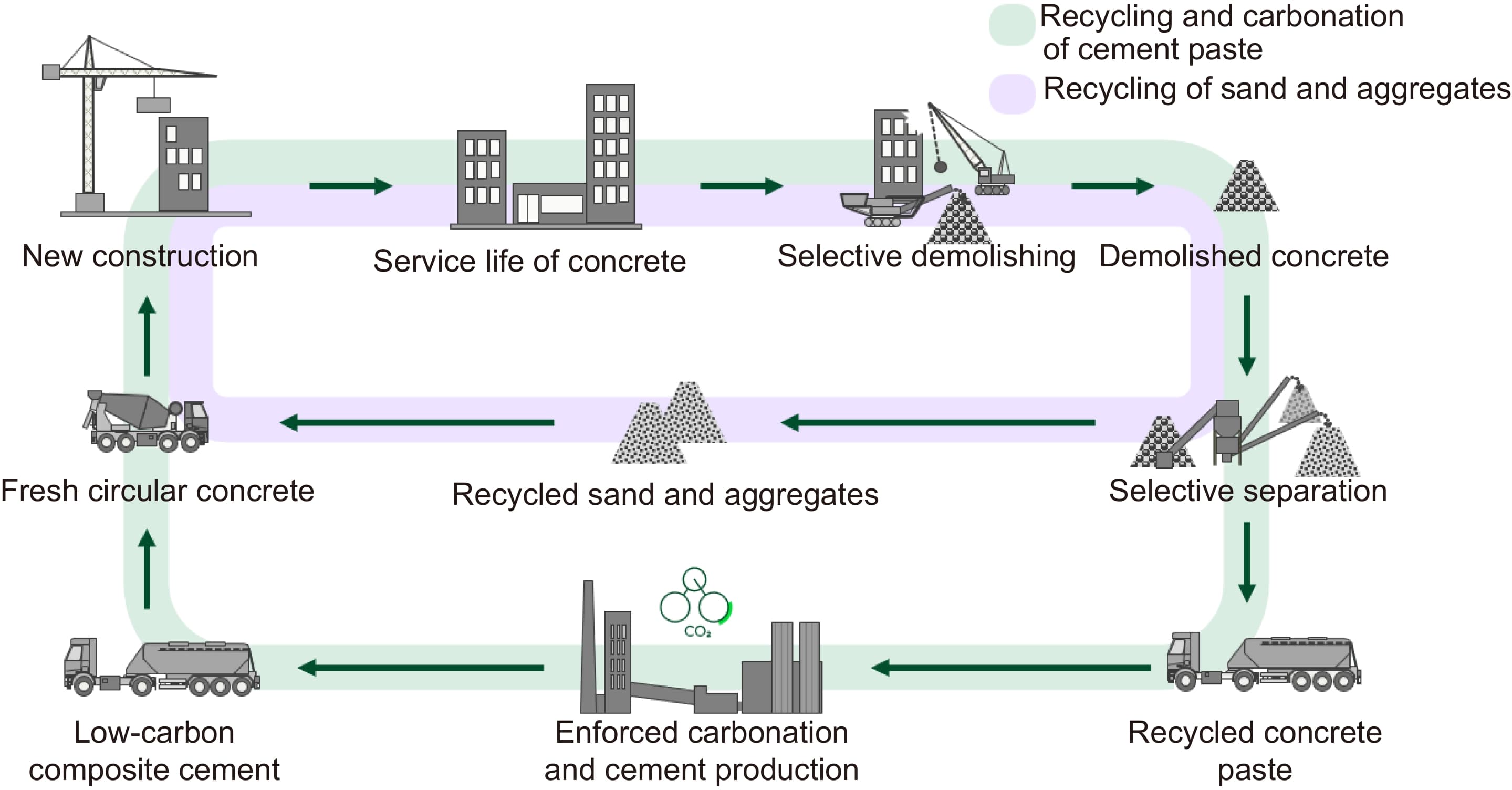
Image source- Sciopen.com
Instead of just mindlessly crushing a demolished building, selective separation aims to carefully disintegrate waste concrete back into its original, pure ingredients: natural aggregates (clean rocks and sand) and hydrated cement paste. Engineers achieve this by taking advantage of the physical differences between natural minerals and cement paste, such as their stiffness, porosity, and how they react to heat. Advanced recycling facilities use several fascinating methods to separate these materials:
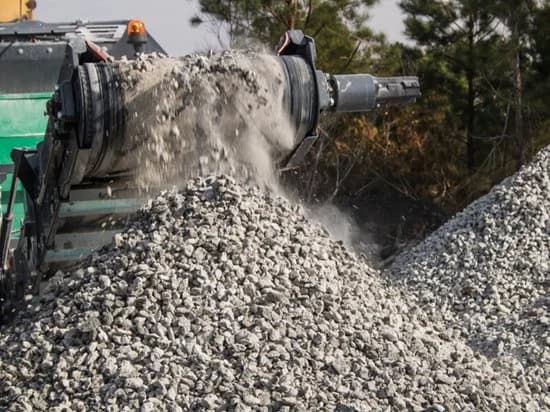
- Mechanical Soft Crushing: Specialized machines, like vertical roller mills and modified jaw crushers, apply a precise combination of compression and shearing forces. This gently rubs and scrubs the brittle old cement paste off the stones without fracturing the natural rocks inside.
- Heating and Rubbing: Waste concrete is heated to about 300 °C. This heat forces the old cement paste to dehydrate, change volume, and weaken. The material is then mechanically rubbed, easily peeling the paste away.
- Microwave Treatment: Exposing waste concrete to microwaves causes the moisture trapped inside the old cement paste to rapidly heat up, expand, and vaporize. This creates micro-cracking that pops the paste right off the aggregates.
The Result: By completely removing the porous old cement, this process recovers incredibly high-quality recycled rocks and sand. When the water absorption of these selectively separated aggregates is kept below 5%, they perform identically to freshly mined natural stones, meaning they are completely safe and reliable for use in brand-new structural concrete.
3. Capturing Carbon (Enforced Carbonation)
Selective separation gives us perfect recycled stones, but it leaves behind a fine, dusty powder known as recycled concrete paste (RCP). In conventional recycling, this dust is a problematic waste product. However, in a circular economy, it becomes the star of the show.
During its normal service life, concrete naturally absorbs CO2 from the atmosphere, permanently trapping it as a mineral. However, this natural carbonation process is incredibly slow and usually only affects the very outer surface of a building. Scientists have developed a way to engineer and supercharge this process, known as Enforced Carbonation (or CO2 mineralization).
Instead of waiting decades for concrete to absorb CO2 from the air, engineers take the fine recycled concrete paste powder and place it in specialized, moist reactors at warm temperatures (between 60 °C and 90 °C). They then pump in highly concentrated CO2 often piping raw, 20% concentrated exhaust gases directly from industrial cement plant smokestacks. Because the paste particles are so tiny and the CO2 is so concentrated, a chemical reaction that would normally take a lifetime reaches completion in just tens of minutes.
The Chemistry: When the concentrated CO2 reacts with the calcium-rich compounds in the old cement paste, it permanently traps the greenhouse gas by forming solid calcium carbonate (limestone). At the exact same time, the reaction produces a microscopic, amorphous substance called alumina-silica gel. This gel is a scientific marvel: it features a highly porous, nano-scale structure with a massive surface area that exceeds 200 square meters per single gram of material.
4. Building the Circular Future
Now that we have successfully broken down a building, recovered perfect recycled stones, and trapped industrial CO2 inside the leftover cement dust, how do we use these materials to build tomorrow's cities? The answer lies in creating next-generation Composite Cements.
Remember that manufacturing traditional cement clinker is responsible for massive global emissions. The ultimate goal of circular concrete is to replace that carbon-heavy clinker with our newly carbonated recycled concrete paste (cRCP). Because the paste has already trapped CO2, using it helps lower the overall carbon footprint of new buildings.
But cRCP doesn't just sit there; it actively makes the new concrete stronger. The high-surface-area alumina-silica gel we created during carbonation acts as an incredibly fast-reacting "pozzolan". When mixed with water and small amounts of traditional cement, this gel rapidly dissolves and reacts to form new binding compounds. It effectively fills and refines the microscopic pores inside the new concrete, boosting its compressive strength much faster than traditional additives like fly ash. In fact, the gel is usually completely consumed and converted into solid strength-giving minerals within just 7 to 28 days.
Taking this a step further, engineers have developed Ternary Cements. These are sophisticated, three-part blends utilizing traditional Portland clinker, our carbonated recycled paste, and calcined clay. Because the carbonated paste and the calcined clay react chemically at different stages during the curing process, they work in perfect harmony. This brilliant synergy allows cement manufacturers to confidently drop the amount of carbon-heavy clinker in their mixtures to well below 50% without sacrificing any structural integrity or durability.
5. Conclusion: A Zero-Waste Eco System
The transition to circular concrete offers a highly effective, scientifically sound solution to one of the world's biggest environmental challenges. By combining the power of selective separation (which conserves our earth's natural landscapes by recovering pristine aggregates) and enforced carbonation (which transforms waste dust into a CO2-trapping binder), the industry is proving that we can build advanced infrastructure while mitigating climate change.
What is perhaps most exciting for students studying this field today is the sheer speed of this transition. The construction industry is heavily regulated and historically slow to adopt new materials. Yet, these advanced recycling and carbonation technologies progressed from laboratory concepts in 2015 to fully functional, industrial-scale applications by 2025.
The linear "take-make-dispose" era of construction is coming to an end. By understanding and advancing these circular, beginning-to-end technologies, the next generation of engineers and scientists holds the key to creating a truly zero-waste, sustainable future.
6. Bibliography
- Global Cement and Concrete Association (GCCA) (2021) Concrete Future: The GCCA 2050 Cement and Concrete Industry Roadmap for Net Zero Concrete. Available at: https://gccassociation.org/concretefuture/wp-content/uploads/2021/10/GCCA-Concrete-Future-Roadmap.pdf
- International Energy Agency (IEA) (2018) Technology Roadmap Low-Carbon Transition in the Cement Industry. Paris: IEA
- Lu, B., Shi, C., Zhang, J., et al. (2018) 'Effects of carbonated hardened cement paste powder on hydration and microstructure of Portland cement', Construction and Building Materials, 186, pp. 699–708
- Shah, I.H., Miller, S.A., Jiang, D., et al. (2022) 'Cement substitution with secondary materials can reduce annual global CO2 emissions by up to 1.3 gigatons', Nature Communications, 13, p. 5758
- Zajac, M., Dienemann, W. and Skocek, J. (2025) 'Circular concrete: Sustainable practices through recycling and CO2 mineralization', Materials Reports: Solidwaste and Ecomaterials, 1, p. 9520016. Available at: https://doi.org/10.26599/MRSE.2025.9520016 .
Test Your Knowledge!
Click the button below to generate an AI-powered quiz based on this article.
Did you enjoy this article?
Show your appreciation by giving it a like!
Conversation (0)
Cite This Article
Generating...