Science
Constructivist Learning Theory: How Learners Build Knowledge Through Experience, Interaction, and Reflection
Introduction
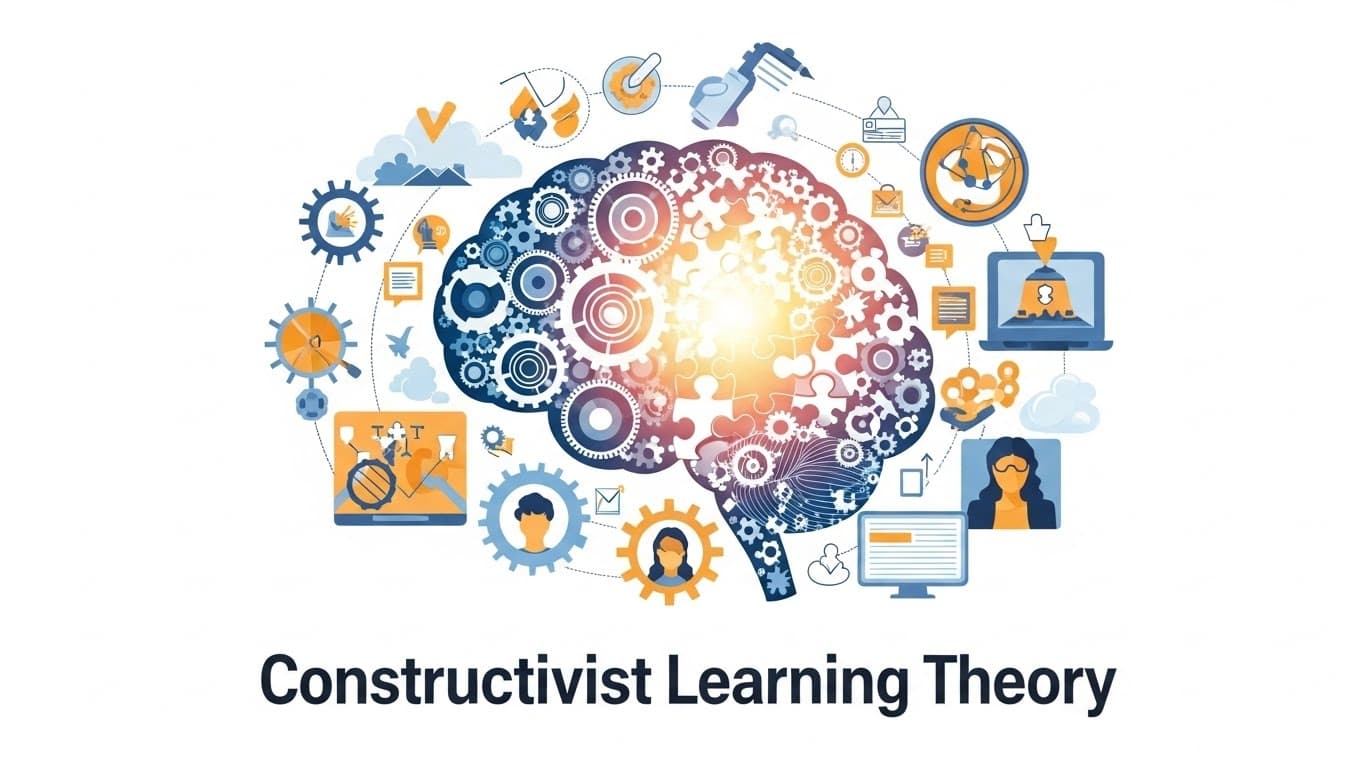
Constructivist learning theory is both a psychological perspective on how learning occurs and a philosophy of education that reshapes the role of the learner, teacher, and learning environment. At its core, constructivism argues that knowledge is not passively received from teachers, textbooks, or digital content. Instead, learners actively construct meaning through experience, reflection, and interaction with others and their environment.
Rather than viewing education as the transmission of fixed truths, constructivism frames learning as an evolving process in which understanding is continuously shaped by prior knowledge, social context, and purposeful engagement. This perspective has had a profound influence on classroom practice, curriculum design, assessment, and workplace training, particularly in environments that value critical thinking, problem-solving, and lifelong learning. To understand how constructivism reshapes learning, it is first necessary to examine its core theoretical assumptions.
What Is Constructivist Learning Theory?
Constructivist learning theory proposes that learners build their own understanding by integrating new information with existing cognitive frameworks. Learning is therefore not about memorising facts, but about interpreting experiences and forming personal meaning.
Two complementary processes explain how learners construct knowledge:
- Assimilation, where new information is integrated into existing mental structures.
- Accommodation, where those mental structures are modified to account for new or conflicting experiences.
These processes operate continuously and often simultaneously, allowing learners to adapt their understanding of the world. Knowledge, from a constructivist perspective, is dynamic rather than static—constantly revised as learners encounter new ideas and situations.
Discovery plays a central role in this process. Learners explore, test ideas, make mistakes, and reflect on outcomes. Through this cycle, understanding deepens and becomes more flexible and transferable.
Core Principles of Constructivism
Although constructivism exists in multiple forms, several foundational principles unite constructivist approaches to learning.
Learners Actively Construct Meaning
Learning is not a passive activity. Students actively build understanding by connecting new ideas to prior knowledge, revising misconceptions, and forming increasingly sophisticated mental models. Opinions and interpretations evolve as learners encounter new perspectives.
Learning Is Social
Interaction with peers, teachers, and the wider environment plays a crucial role in shaping understanding. Dialogue, collaboration, and shared problem-solving expose learners to alternative viewpoints and deepen conceptual insight.
Knowledge Is Situated
Constructivism emphasises learning in meaningful, authentic contexts. Knowledge becomes more powerful when it is connected to real-world applications rather than learned in isolation.
Reflection Is Essential
Reflection allows learners to evaluate their thinking, recognise gaps in understanding, and consolidate learning. Without reflection, experiences may remain superficial rather than transformative.
Mistakes Support Growth
Errors are not failures but opportunities for learning. Through trial, feedback, and revision, learners refine their understanding and develop resilience.
Together, these principles position learning as an active, reflective, and socially mediated process. These shared principles are interpreted differently across constructivist traditions, leading to distinct but related theoretical perspectives.
Types of Constructivism
Constructivism is not a single, unified theory. Instead, it encompasses several related perspectives, each highlighting different aspects of learning.
Cognitive Constructivism
Rooted in the work of Jean Piaget, cognitive constructivism focuses on how individuals construct knowledge through interaction with their environment. Learning is shaped by developmental stages and the learner’s ability to organise experiences cognitively.
Social Constructivism
Associated with Lev Vygotsky, social constructivism emphasises the role of culture, language, and social interaction. Learning occurs first on a social level before becoming internalised by the individual. Concepts such as the Zone of Proximal Development and scaffolding are central to this approach.
Radical Constructivism
Radical constructivism argues that knowledge is entirely subjective and cannot represent an objective reality. Instead, understanding helps individuals function effectively within their environment. Knowledge is invented rather than discovered.
While these perspectives differ in emphasis, they all agree that learners actively construct understanding rather than receive it passively.
Influential Theorists in Constructivism These theoretical perspectives are grounded in the work of several influential educational thinkers.:
-
John Dewey emphasised experiential learning and argued that education should be grounded in real-life problem-solving.
-
Maria Montessori developed child-centred learning environments that promote independence and exploration.
-
Jean Piaget examined how cognitive structures develop and change through interaction with the environment.
-
Lev Vygotsky highlighted the social foundations of learning and the importance of guided participation.
-
Jerome Bruner promoted discovery learning and introduced the spiral curriculum, where concepts are revisited at increasing levels of complexity.
Together, these theorists transformed education from a teacher-dominated enterprise into a learner-centred process.
The Role of the Teacher in a Constructivist Classroom
A common misconception is that constructivism advocates for unguided learning. In reality, constructivist classrooms rely heavily on intentional teacher support.
Rather than acting as a transmitter of knowledge, the teacher functions as a facilitator of learning. This involves:
- Understanding learners’ prior knowledge and misconceptions
- Designing tasks that provoke inquiry and reflection
- Providing scaffolding through feedback, modelling, and questioning
- Gradually reducing support as learners gain competence
Effective scaffolding ensures learners are challenged without being overwhelmed. Teachers continuously adjust their guidance based on learners’ needs, maintaining a balance between structure and autonomy.
Features of a Constructivist Learning Environment
- Constructivist classrooms share several defining characteristics:
- Shared authority between teachers and students
- Emphasis on collaboration and dialogue
- Small, diverse learning groups
- Opportunities to explore concepts from multiple perspectives
- Authentic tasks and assessments
Learning environments are designed to encourage curiosity, exploration, and meaning-making rather than compliance and memorisation.
Teaching Strategies Grounded in Constructivism
Constructivist principles come to life through purposeful instructional strategies.
Inquiry-Based Learning
Open-ended questions encourage learners to analyse, hypothesise, and justify their thinking. These questions promote deeper understanding rather than surface recall.
Role-Play and Simulation
By adopting roles or simulating real-world scenarios, learners explore concepts from multiple viewpoints and develop empathy and critical thinking.
Real-World Problem Solving
Connecting learning to real-life contexts enhances relevance and motivation. Authentic tasks help learners see the value of what they are learning.
Reflection and Metacognition
Journals, discussions, and learning logs encourage learners to examine how their thinking has evolved and identify areas for growth.
Because constructivist instruction emphasises meaning-making and process, assessment practices must align with these same principles.
Assessment in Constructivist Education
Constructivist assessment prioritises understanding over memorisation. Rather than relying solely on traditional tests, teachers use authentic assessments that reveal learners’ thinking processes.
Common methods include:
- Portfolios, showcasing learning over time
- Performance tasks and projects, demonstrating application of knowledge
- Rubrics, focusing on depth of understanding and process
- Peer review and exhibitions, promoting reflection and dialogue
Assessment becomes an ongoing conversation that supports learning rather than a final judgement.
Constructivism in Workplace Learning and Training
Constructivist principles extend beyond formal education into professional training environments. In the workplace, learning is most effective when employees engage with realistic problems, collaborate with colleagues, and reflect on their experiences.
Training programs grounded in constructivism:
- Use case studies and simulations
- Encourage peer discussion and feedback
- Connect new skills to existing knowledge
- Emphasise adaptability and transfer
This approach helps learners develop flexible thinking skills rather than rigid procedures.
Criticisms and Limitations of Constructivism
Despite its pedagogical strengths, constructivism has been criticised for practical and theoretical limitations.
Lack of Structure for Novices
Critics argue that minimal guidance can overwhelm learners who lack foundational knowledge. Research suggests that novices often benefit from structured instruction combined with opportunities for exploration. This limitation is most evident in novice learning contexts, where cognitive load is high and prior knowledge is limited.
Assessment Challenges
Because constructivist learning values personal meaning, assessment can be complex and time-consuming. Ensuring consistency and accountability remains a challenge.
Practical Constraints
Constructivist approaches often require smaller class sizes, more time, and greater resources, which may not be feasible in all educational contexts.
Risk of Unequal Participation
Group-based learning can lead to unequal contributions unless carefully structured and monitored.
These critiques suggest that constructivism is most effective when implemented flexibly rather than dogmatically.
Constructivism Compared to Other Learning Theories
Compared to behaviourism, which focuses on observable behaviour and reinforcement, constructivism emphasises internal meaning-making. Compared to cognitivism, which centres on mental information processing, constructivism places greater emphasis on social interaction and subjective interpretation.
In practice, many educators adopt hybrid approaches, blending constructivist principles with direct instruction and cognitive strategies to meet diverse learner needs.
Conclusion
Constructivist learning theory offers a powerful framework for understanding how learners build knowledge through experience, interaction, and reflection. By recognising learners as active participants in their own learning, constructivism shifts education away from rote transmission toward deeper understanding and transferable skills.
While not without limitations, constructivism remains highly influential in classrooms, training programs, and instructional design. When thoughtfully implemented, it fosters curiosity, critical thinking, and meaningful engagement—skills essential for learning in complex, changing environments.
Ultimately, constructivism reminds educators and designers that learning is not about filling minds with information but about helping learners construct understanding that continues to evolve long after instruction ends.
References
- Bruner, J. S. (1961). The act of discovery. Harvard Educational Review, 31(1), 21–32.
- Bruner, J. S. (1986). Actual minds, possible worlds. Harvard University Press.
- Dewey, J. (1938). Experience and education. Macmillan.
- Hmelo-Silver, C. E., Duncan, R. G., & Chinn, C. A. (2007). Scaffolding and achievement in problem-based and inquiry learning. Educational Psychologist, 42(2), 99–107.
- Kirschner, P. A., Sweller, J., & Clark, R. E. (2006). Why minimal guidance during instruction does not work: An analysis of the failure of constructivist, discovery, problem-based, experiential, and inquiry-based teaching. Educational Psychologist, 41(2), 75–86. https://doi.org/10.1207/s15326985ep4102_1
- Kolb, D. A. (1984). Experiential learning: Experience as the source of learning and development. Prentice Hall.
- Mayer, R. E. (2004). Should there be a three-strikes rule against pure discovery learning? American Psychologist, 59(1), 14–19.
- Montessori, M. (1967). The absorbent mind. Holt, Rinehart & Winston.
- Piaget, J. (1952). The origins of intelligence in children. International Universities Press.
- Piaget, J. (1970). Science of education and the psychology of the child. Orion Press.
- von Glasersfeld, E. (1995). Radical constructivism: A way of knowing and learning. Falmer Press.
- Vygotsky, L. S. (1978). Mind in society: The development of higher psychological processes. Harvard University Press.
- Wertsch, J. V. (1985). Vygotsky and the social formation of mind. Harvard University Press.
Test Your Knowledge!
Click the button below to generate an AI-powered quiz based on this article.
Did you enjoy this article?
Show your appreciation by giving it a like!
Conversation (0)
Cite This Article
Generating...