Engineering
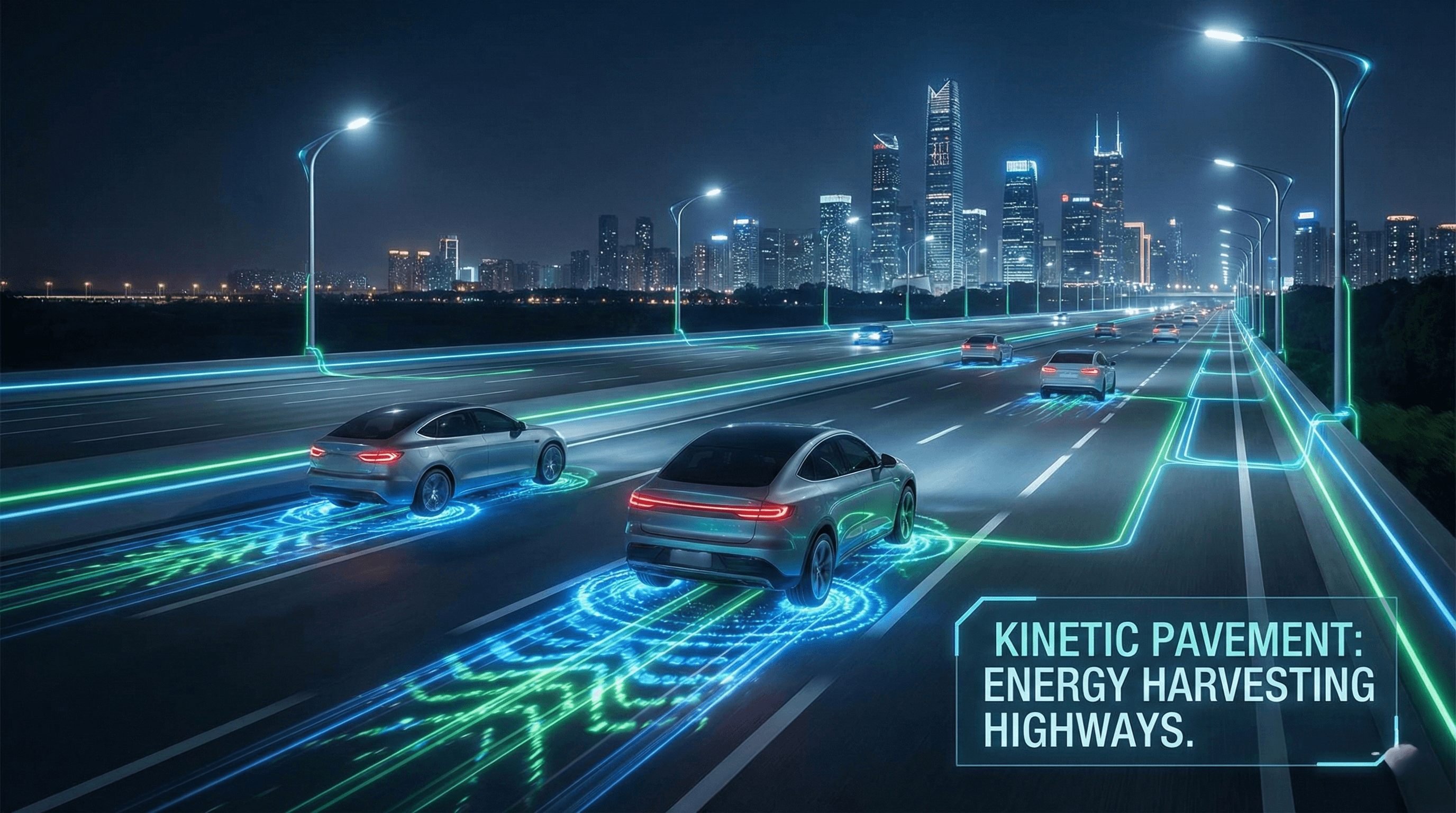
Kinetic Pavements: Harvesting Energy from Our Roads
1. Introduction
Traditionally, the primary function of a road pavement is to provide a smooth, durable surface for vehicles to travel on. It is a "passive" infrastructure. However, with the global push for sustainability and "Smart Cities," engineers are rethinking the purpose of a road.
Every time a vehicle drives over a highway, it exerts force and vibration. In a standard road, this energy is wasted as heat or friction. Kinetic Pavements are designed to capture this wasted mechanical energy and convert it into electrical energy. This technology is known as Roadway Energy Harvesting (REH).
2. The Core Theory: The Piezoelectric Effect
The scientific principle behind kinetic pavements is Piezoelectricity. This is a concept discovered by the Curie brothers in 1880.
Certain materials (like quartz crystals or specialized ceramics) produce an electric charge when they are mechanically stressed or squeezed.
- Input: Mechanical Stress (Pressure from a car tire).
- Output: Electrical Voltage.
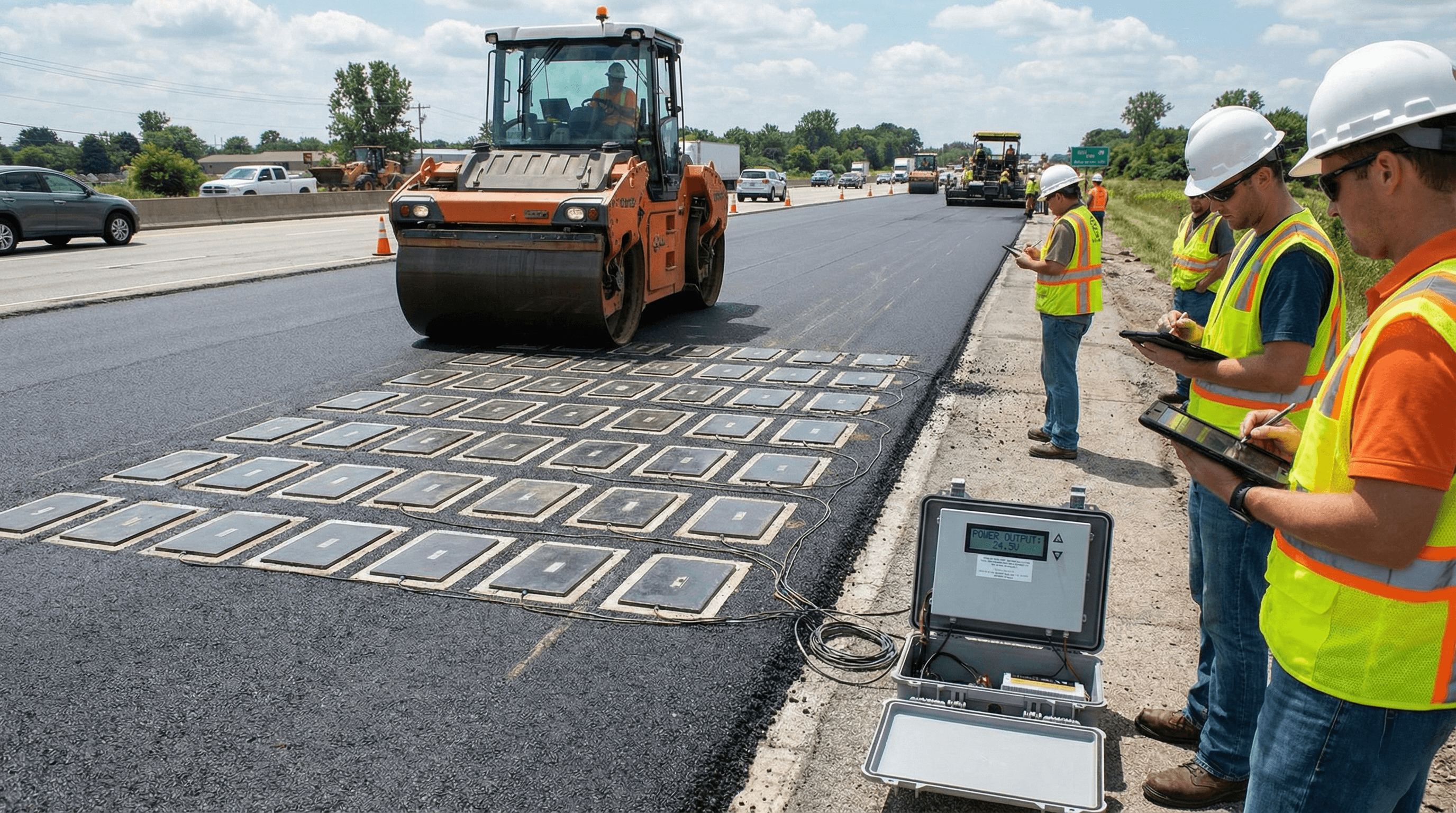
In a kinetic road, thousands of tiny "Piezoelectric Transducers" are embedded beneath the asphalt surface. When a 10-tonne truck drives over them, the crystals deform slightly, generating a pulse of electricity (Wang et al., 2023).
3. Engineering the "Smart Road" Structure
Building a kinetic road is not as simple as mixing sensors into concrete. The pavement structure must be carefully designed to protect the delicate electronics while still transferring the load to them.
1. Surface Layer: A slightly flexible asphalt or composite layer that allows the pressure to transfer downwards.
2. Harvesting Layer: This contains the "energy modules." These modules are often arranged in a grid. They act like shock absorbers.
3. Base and Sub-base: The traditional foundation of the road that supports the overall load.!
4. Power Output and Efficiency
Students often ask: "Can this power a city?" Currently, the answer is no, but it can power the infrastructure around the road.
Output: A typical commercial system (like Pavegen tiles used for footpaths) produces about 2 to 4 Joules per step. For highways, research suggests a 1km stretch of "electric road" with high traffic could generate enough power for 400 streetlights.
Applications: The generated electricity is best used for Local Applications:
- Powering LED street lights.
- Running traffic signals.
- Powering "Structural Health Monitoring" sensors that detect cracks in the road.
5. Structural Durability and Fatigue
For a Civil Engineer, the main concern is Fatigue Life. A highway is designed to last 20 years. Electronics usually last 5 years.
The Problem: Embedding sensors introduces "discontinuities" (weak spots) in the asphalt. This can lead to potholes or cracking around the sensors.
The Solution: Researchers are developing "Piezo-Asphalt" a mixture where the piezoelectric material is ground into a powder and mixed directly with the bitumen, rather than inserting large distinct boxes. This makes the road strong and uniform (Topodar, 2024).
6. Conclusion
Kinetic pavements represent the future of High-Tech Infrastructure. While the technology is still expensive for long-distance highways, it is already viable for toll booths, busy intersections, and pedestrian walkways. As material science improves, we may soon see roads that not only carry us to our destination but also light the way for us.
7. Bibliography
Topodar, P. (2024). Advances in Piezoelectric Energy Harvesting from Pavement. Journal of Civil Engineering Materials, 12(4), pp. 45-58.
Wang, H., Jasim, A. and Chen, X. (2023). Energy Harvesting Technologies in Roadway Transportation Systems. New York: Springer.
Xie, X. and Wang, Z. (2022). Durability of asphalt mixtures containing piezoelectric aggregates. Construction and Building Materials, 301, p. 124567.
Test Your Knowledge!
Click the button below to generate an AI-powered quiz based on this article.
Did you enjoy this article?
Show your appreciation by giving it a like!
Conversation (0)
Cite This Article
Generating...