Engineering
Simulation and Digital Twins in Formula One Car Development
Introduction
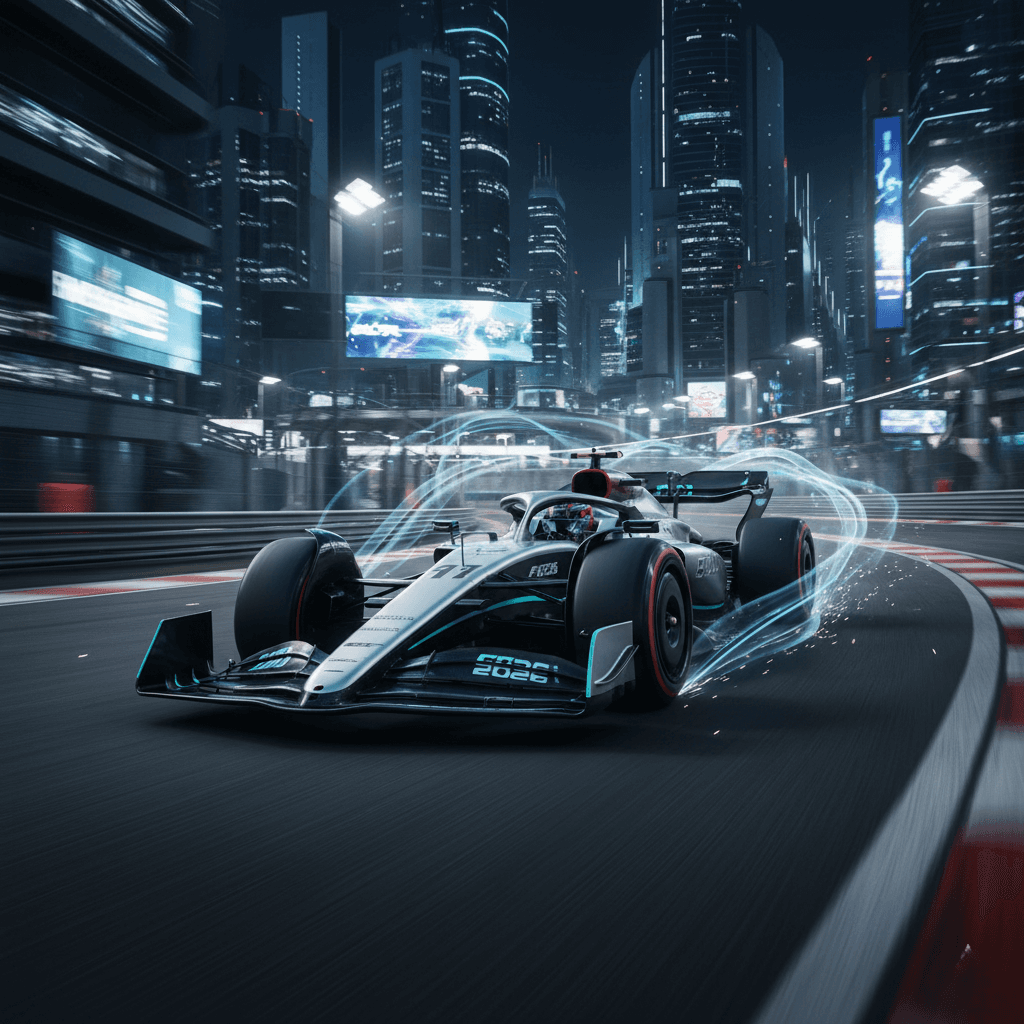
In modern Formula One, success on race day is no longer determined only by the driver’s skill or the engine’s power. It’s also about how accurately a team can predict the car’s behavior before it ever hits the track. That’s where simulation and digital twin technology come in. Over the past decade, F1 teams have built advanced digital ecosystems that model every component of the car from tire wear to airflow and power distribution. Using these tools, engineers can test thousands of “virtual laps” under varying conditions, making faster and smarter design decisions.
What are Digital twins
A digital twin is a virtual replica of a physical system that continuously updates using real-time data. In Formula One, every car has its own digital twin that mirrors its physical state as it races. Sensors on the car collect millions of data points each lap including temperature, vibration, pressure, and aerodynamic forces. These data are transmitted via telemetry to engineers, who feed them into the digital twin model. The model instantly reflects the car’s exact condition, allowing teams to test design tweaks or strategy decisions virtually before applying them in reality. Think of it as a living simulation that evolves lap by lap. The twin helps engineers predict how a setup change like adjusting front wing angles or altering brake balance will impact performance, even before the next pit stop.
The Role of Simulation in Car Design
Before the physical car is even built, simulation tools play a vital role in its development. Each Formula One car consists of over 14,000 individual components. Designing, testing, and optimizing each one physically would take too long and cost too much. Instead, teams use Computational Fluid Dynamics (CFD) and Finite Element Analysis (FEA) to simulate airflow, heat transfer, and material stress. These simulations help engineers test thousands of variations of wings, floors, and sidepods without producing a single prototype. For example, CFD simulations allow engineers to study how air moves around the car at 300 km/h and how small design changes affect downforce and drag. Using high-performance computing clusters (HPC), teams like Mercedes, Mclaren, and Red Bull can process terabytes of simulation data overnight, drastically accelerating the development cycle.
How Digital Twins Improve Race Strategy
Simulation and digital twin technologies don’t stop at design they extend into race operations. During a Grand Prix, engineers run parallel simulations that predict tire degradation, fuel efficiency, and weather impact in real time. These simulations, powered by machine learning, help strategists decide when to pit or which tire compound to use. For instance, if a team’s twin predicts faster tire degradation than expected, they can adapt their strategy mid-race to avoid performance loss. It’s like having a second “virtual race” happening alongside the real one except this one is testing thousands of “what-if” scenarios every second. This digital insight is particularly useful when conditions change suddenly such as a rain shower or safety car. Teams can instantly model the new situation and update their strategies within seconds.
The Human–Machine Collaboration
Although simulation tools are powerful, human expertise remains essential. Engineers and data scientists must interpret results, validate predictions, and understand when a simulation’s assumptions break down. Drivers also contribute by giving feedback during simulator sessions, which are designed to feel nearly identical to real tracks. These driver-in-the-loop simulators combine motion systems, visual projection, and real telemetry to help drivers learn new circuits and engineers fine-tune setups. In many cases, performance improvements first appear in simulation then are tested on track.
Future Outlook
The future of simulation and digital twins in Formula One lies in AI-driven automation. Teams are experimenting with machine learning algorithms that automatically adjust simulations based on past performance, creating self-optimizing digital twins. As computing power continues to grow, future F1 cars might be developed almost entirely in the digital world before any carbon fiber is molded. This approach could shorten development cycles, reduce costs, and make innovation even faster. By 2030, Formula One aims to integrate real-time digital twins directly into car control systems, enabling predictive maintenance, better energy management, and even adaptive aerodynamics.
Conclusion
Simulation and digital twin technology have transformed Formula One from a mechanical competition into a data-driven engineering challenge. These virtual tools allow teams to design smarter, react faster, and predict performance with astonishing accuracy. In essence, every F1 victory today is not only won on the track but also inside a virtual world one filled with algorithms, sensors, and digital replicas that race alongside their physical counterparts.
Test Your Knowledge!
Click the button below to generate an AI-powered quiz based on this article.
Did you enjoy this article?
Show your appreciation by giving it a like!
Conversation (0)
Cite This Article
Generating...