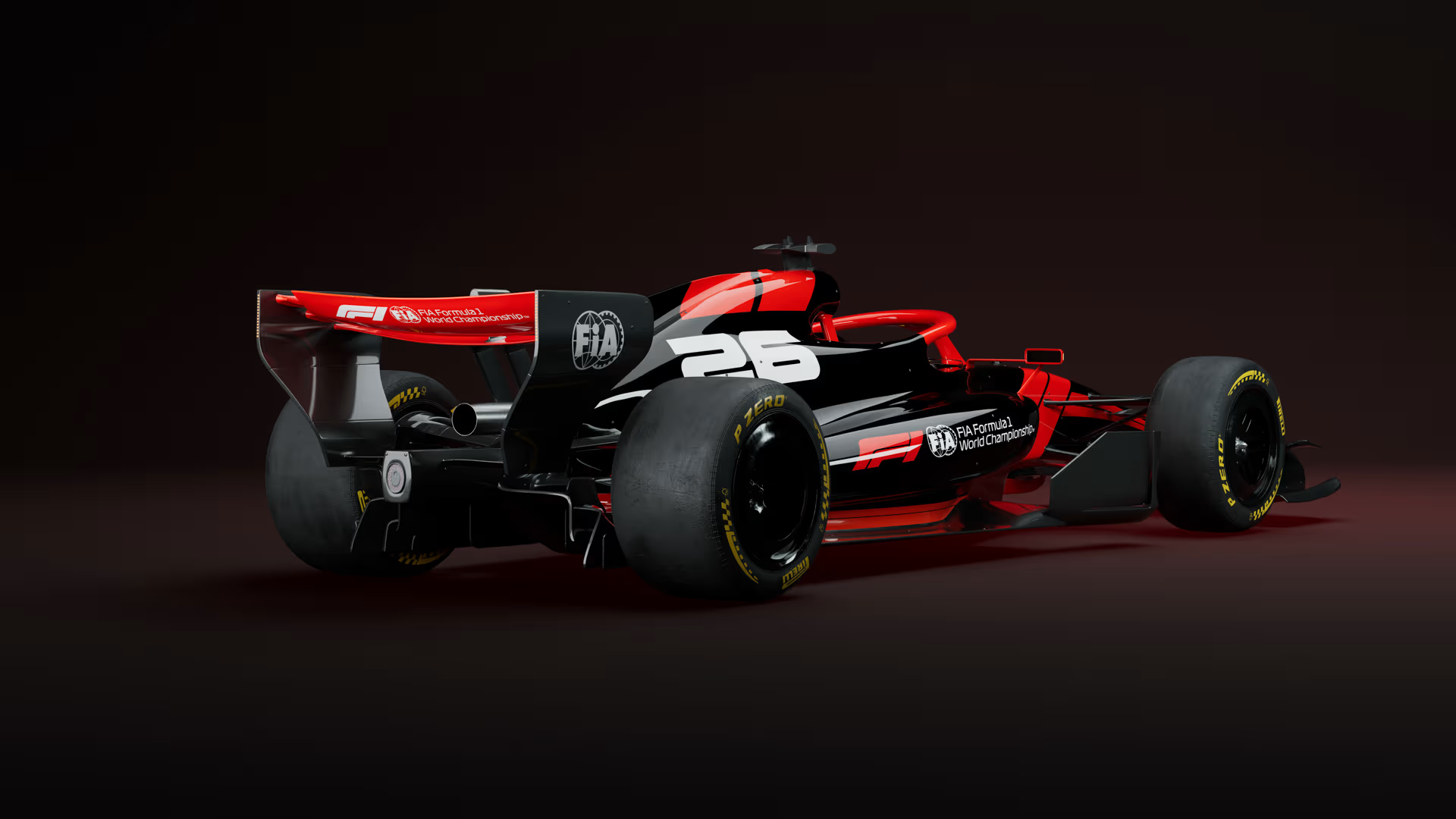
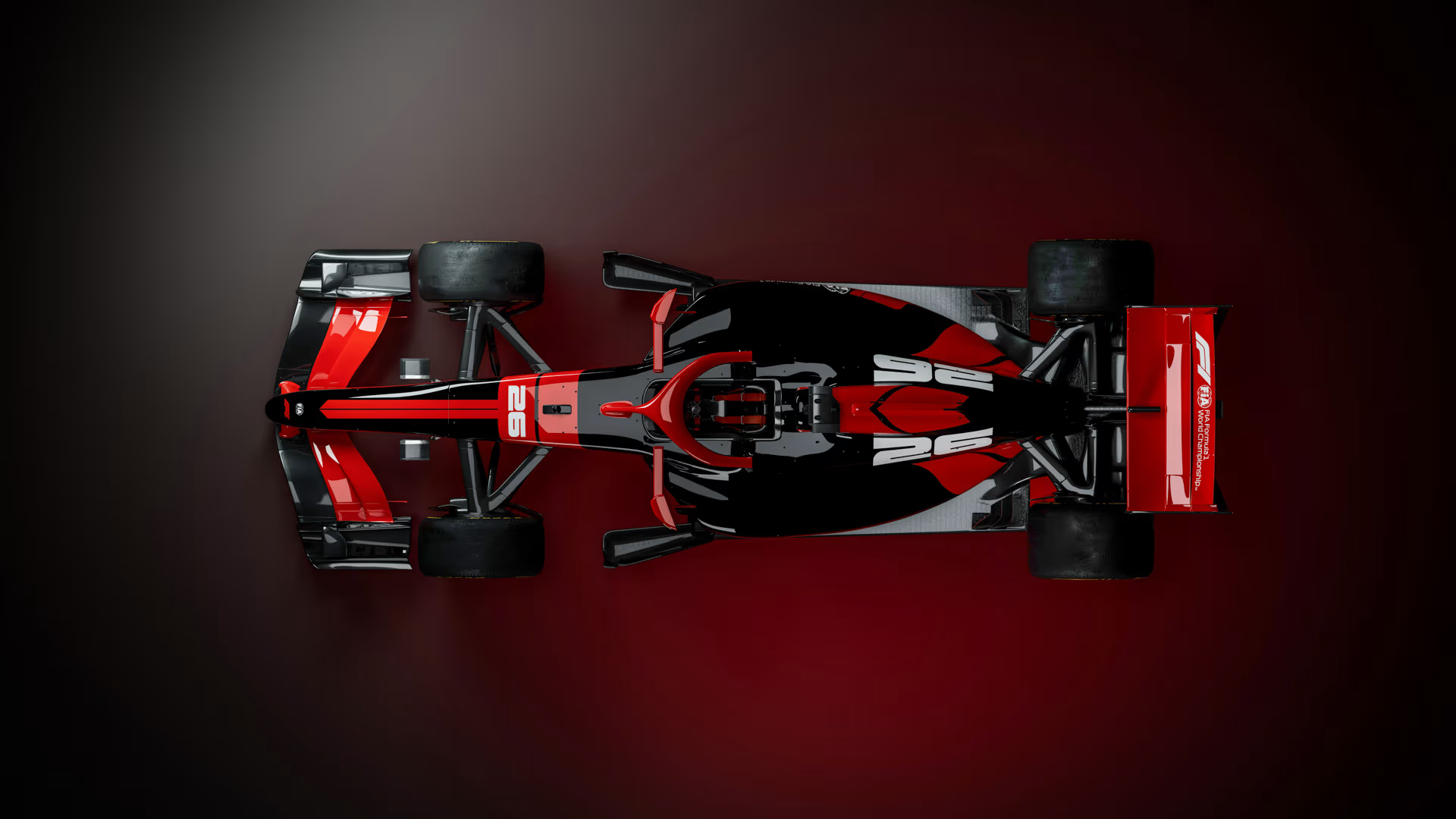
The 2026 Formula 1 Revolution: A Deep Dive into the New Technical Regulation
KRKanchana Rathnayake
8 min read
Posted on January 30, 2026
730 views
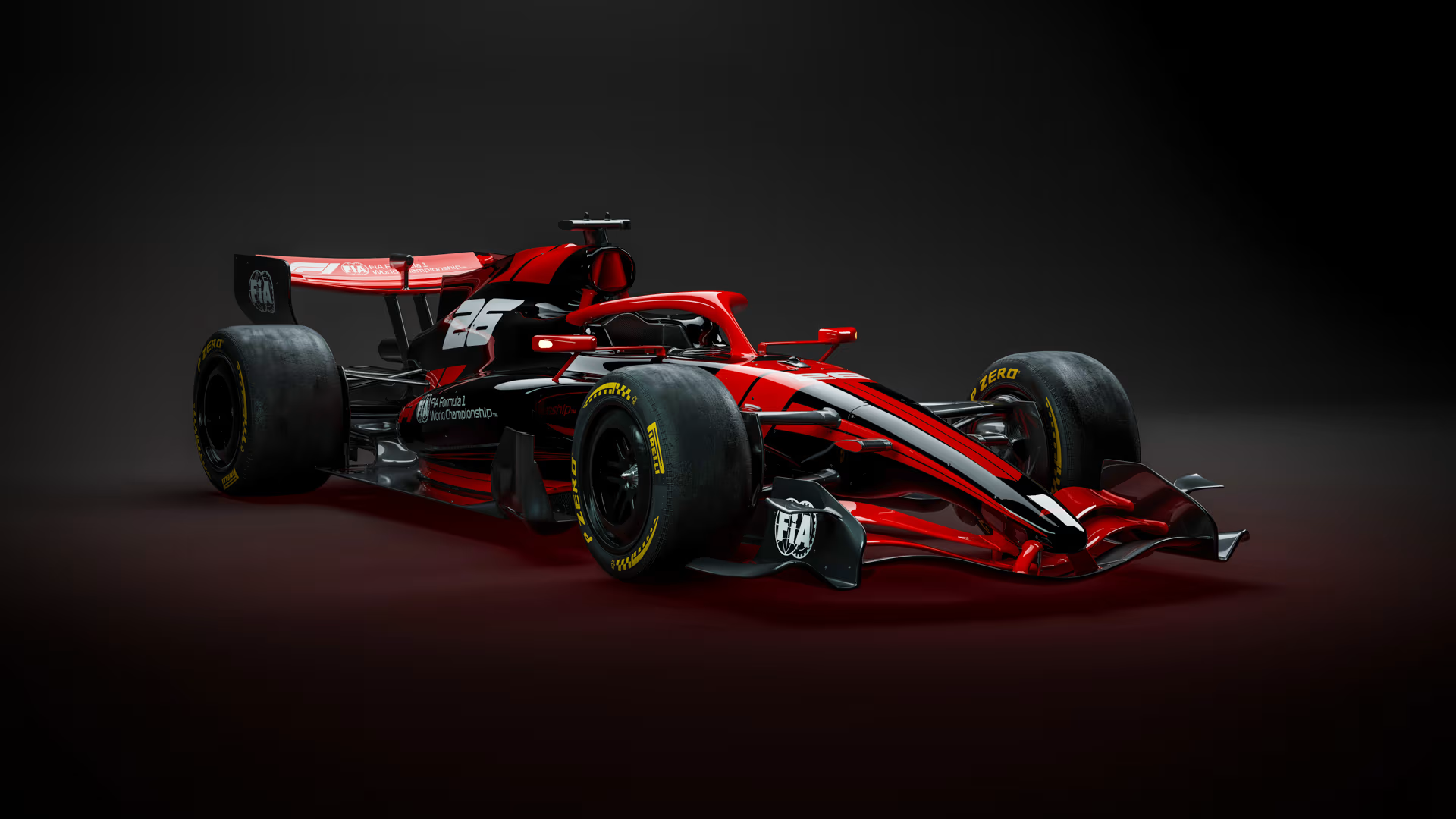
The world of Formula 1 is poised for one of its most significant transformations in history. As we look toward the 2026 season, the FIA has released the definitive technical regulations (Issue 8, June 2024) that will shape the next generation of Grand Prix racing. These rules are not merely a facelift; they represent a fundamental rethinking of the car's philosophy, focusing on a seamless marriage of immense electrical power, active aerodynamics, and enhanced safety, all while striving for a smaller, lighter "nimble" racing car.
For fans and technical enthusiasts alike, understanding these documents is key to understanding the future of the sport. Below, we break down the critical pillars of the 2026 regulations.
1. The Power Unit: An Electric Evolution
The headline change for 2026 is undoubtedly the Power Unit (PU). While the sport retains the 1.6-litre V6 internal combustion engine (ICE) architecture, the way it generates and deploys power has been radically altered to align with sustainability goals and road-relevant technology.
Image source- Formula1.com
The Rise of the MGU-K
The 2026 regulations place a massive emphasis on the hybridization of the powertrain. The complicated MGU-H (Motor Generator Unit-Heat) is gone. In its place, the MGU-K (Motor Generator Unit-Kinetic) has been unleashed. Under the new rules, the MGU-K is permitted to deploy an absolute electrical DC power of 350kW. To put that in perspective, that is approximately 470 horsepower derived purely from the electrical system—a massive leap from the current generation.
This power is carefully managed. The regulations specify that the MGU-K mechanical torque must not exceed 500Nm, referenced to the crankshaft speed. This shift requires the drivers to manage a power unit where the electrical contribution is nearly equal to the internal combustion engine in terms of performance relevance.
Energy Flow and "Override" Mode
With this increase in electrical power comes a sophisticated energy management game. The regulations define a strict "Override" mode effectively the 2026 version of a "push-to-pass" system. The electrical DC power of the ERS-K is mapped against car speed. Above 340kph, the power usually tapers off to zero by 345kph. However, in "override" mode, the driver can access sustained power up to 355kph. This creates a strategic element where drivers must decide when to deploy their battery capacity for attacking or defending.
Image source- Formula1.com
Sustainable Fuel
The internal combustion engine is not just surviving; it is evolving to become cleaner. The regulations mandate that fuel energy flow must not exceed 3000MJ/h. More importantly, the fuel itself must be "Advanced Sustainable" (AS) fuel. This fuel must be certified to be derived from renewable feedstocks of non-biological origin, municipal waste, or non-food biomass. This ensures that F1’s combustion technology remains relevant to a decarbonized future.
2. Aerodynamics: The Era of Active Systems
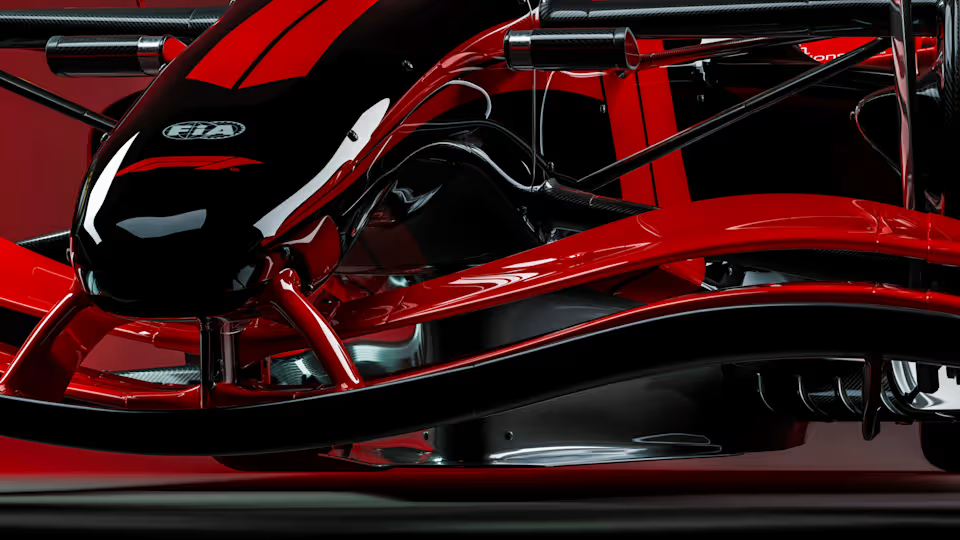
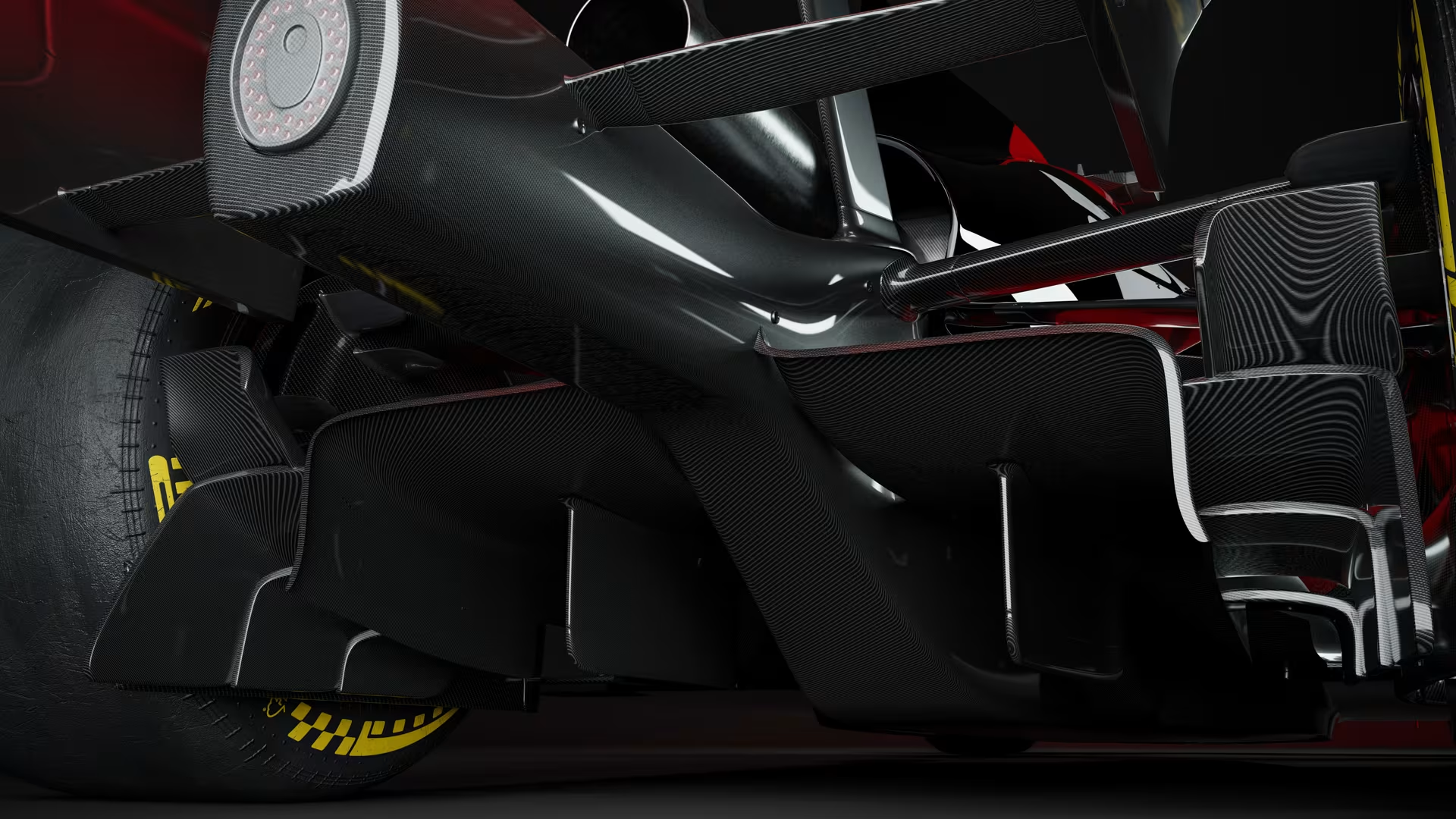
If the 2022 regulations were about bringing back ground effects, 2026 is about "Active Aerodynamics." The goal stated in the regulations is clear: "to promote close racing by minimising the aerodynamic performance loss when one car follows another". To achieve this while reducing drag on straights (to compensate for the new energy profiles), the FIA has introduced movable bodywork on both the front and rear wings.
Image source- Formula1.com
The X-Mode and Z-Mode Concept
While the regulations don't explicitly use the marketing terms "X-Mode" and "Z-Mode" in the technical clauses, they describe the functionality perfectly. The regulations allow for Driver-Adjustable Bodywork on the Front Wing and the Rear Wing.
Front Wing Rotation: Portions of the Front Wing profiles (the flaps) can now rotate about a fixed axis while the car is in motion. This allows the car to shed drag significantly on straights.
Rear Wing Rotation: Similarly, the Rear Wing profiles (specifically the RW Flap) can rotate.
This system replaces the traditional DRS (Drag Reduction System). Instead of just opening a flap to pass, cars will likely switch aerodynamic configurations around the lap to minimize drag on straights and maximize downforce in corners. The regulations specify that this rotation must be commanded by direct driver input, meaning the driver will be constantly managing the car's aerodynamic state alongside its energy deployment.
Narrower and "Nimble"
To combat the trend of F1 cars becoming "boats," the 2026 regulations enforce tighter dimensional limits.
Width: The maximum width of the car is reduced to 1900mm (calculated as 950mm from the centre plane Y=0).
Wheelbase: The distance between the front and rear axles is capped at 3400mm.
These reductions are designed to make the cars more agile and better suited for wheel-to-wheel combat on narrower, historic circuits.
3. Weight Reduction: A Tough Target
Weight has been a major complaint from drivers and fans in recent years. The 2026 regulations set a Minimum Mass of 724kg. Importantly, this figure is defined as the mass of the car including the driver (82kg reference mass) but excluding the fuel.
This target is aggressive. It requires teams to optimize every gram of the survival cell, power unit, and suspension. The rules define the "Nominal Tyre Mass" separately, which is added to the 724kg to get the total scrutineering weight. While 724kg is lighter than the current generation, achieving it with a 350kW hybrid system and robust safety structures will be a massive engineering challenge.
4. Safety: Raising the Bar
As with every new ruleset, safety is paramount. The 2026 car features enhanced protection systems integrated into the chassis design.
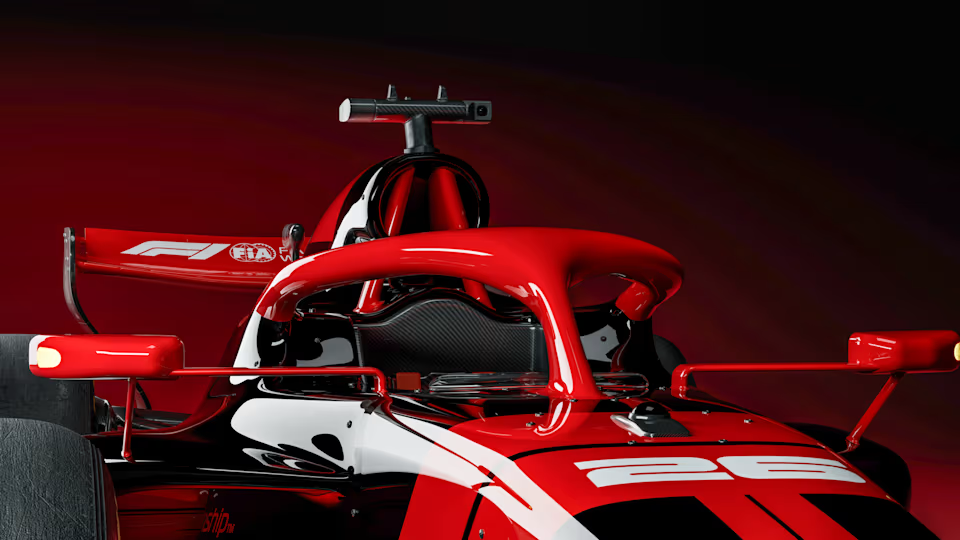
Roll Structure: The principal roll structure (the hoop above the driver's head) faces stricter load tests. It must withstand peak loads of 172kN downwards and varied lateral loads to ensure it doesn't collapse in complex inversion accidents.
Intrusion Protection: The survival cell sides are reinforced. The regulations specify rigorous static load tests, including a "Cockpit Side Test" requiring the chassis to withstand 440kN of intrusion load.
Safety Lights: Beyond the traditional rear light, cars must now be fitted with lateral safety lights on each side of the car. This is likely to help visibility in poor weather conditions or identifying the car's ERS status from different angles.
Secondary Roll Structure (Halo): The Halo remains mandatory, with strict mounting requirements to sustain loads of 140kN.
Image source- Formula1.com
5. Chassis and Suspension: No Active Suspension
Despite rumors of active suspension returning to help with ride height control, the 2026 regulations explicitly forbid it. Article 10.2.4 states that "Any powered device which is capable of altering the configuration or affecting the performance of any part of any suspension system is forbidden".
The suspension must be purely mechanical (sprung). The regulations prohibit systems designed to utilize "heavily asymmetric damping forces" or mass dampers. This puts the onus back on the aerodynamicists to ensure the cars do not suffer from the "porpoising" phenomenon that plagued the 2022 launch, as they cannot rely on active suspension to fix ride height issues.
Image source- Formula1.com
6. The Wheels and Tyres
The 18-inch wheel era continues, but with slight modifications to accommodate the new car dimensions. The wheel rims remain standardized to magnesium alloy (AZ70 or AZ80). The front rim width is set at 315mm and the rear at 401.3mm.
Tyre heating blankets remain permitted for now, but strictly regulated. They must only use resistive heating elements and are limited to three temperature-controllable zones. This suggests the FIA is still balancing the desire to remove blankets with the safety requirements of high-performance tyres.
Image source- Formula1.com
7. Sustainability in Construction
The 2026 regulations go beyond just the fuel in the tank. They dictate the materials used to build the car to ensure environmental responsibility.
Materials: There are strict lists of permitted materials. For example, the use of Beryllium is largely restricted, and strict limits are placed on rare earth materials in alloys.
Recycling: There is a specific mandate that all used engine oils must be collected for recycling, preventing chemical waste at the track.
Fuel System: The fuel bladder must be compatible with the new sustainable fuels, ensuring that the move to green energy doesn't compromise structural integrity.
Image source- Formula1.com
Conclusion: A New Formula
The 2026 Technical Regulations represent a holistic approach to the future of motorsport. By mandating a 350kW electric motor, the FIA has ensured F1 remains at the pinnacle of automotive hybrid technology. By introducing active aerodynamics, they have replaced the artificial "band-aid" of DRS with a system integral to the car's performance profile. And by shrinking the dimensions, they have answered the call for racier, more agile cars.
While the teams now face the daunting task of designing cars to meet these rigorous standards balancing the high weight of the battery against the strict minimum mass limit the result promises to be a faster, cleaner, and more competitive Formula 1. The countdown to 2026 has officially begun.
Bibliography
FIA (2024) 2026 Formula 1 Technical Regulations. Issue 8. Paris: Fédération Internationale de l'Automobile.
Formula 1. (2026). 2026 F1 Regulations. Retrieved from https://www.formula1.com/en/page/2026-f1-regulations
Want to dive deeper?
Continue the conversation about this article with your favorite AI assistant.
Share This Article
Test Your Knowledge!
Click the button below to generate an AI-powered quiz based on this article.