Technology
The Machine Learning Roadmap - A Student's Guide from Math to Real Projects
Machine learning has stopped being a nice to have skill and become a basic expectation in tech, finance, healthcare, and almost every other industry. Job postings that mention AI and machine learning now appear in roughly 89% of technical roles, and professionals with these skills are commonly earning $30,000 to $50,000 more than their non-AI peers (Scale.jobs, 2026). At the same time, the field has gotten noisier. Every week brings a new framework, a new must-learn tool, or a new course promising to turn you into an AI expert in 30 days.
If you're a student trying to figure out where to actually start, this guide is for you. No hype, no shortcuts, just a clear, honest roadmap covering the three things that actually matter: math, code, and projects.
Why 2026 Is a Good (and Slightly Different) Time to Learn ML
A few things have shifted in how people learn and use machine learning recently:
- Generative AI and large language models (LLMs) are now part of the core curriculum, not a side topic. Employers increasingly expect familiarity with concepts like retrieval-augmented generation (RAG), prompt design, and working with pre-trained models, in addition to traditional ML (TripleTen, 2026).
- MLOps and deployment skills matter earlier than they used to. Companies have moved past experimenting with AI and are now running it in production, which means knowing how to monitor, retrain, and maintain a model is no longer an advanced topic you learn after years on the job, it's expected much sooner (Acceler8 Talent, 2026; DOIT Software, 2026).
- The fundamentals haven't changed. Python, statistics, linear algebra, and a solid grasp of how models actually learn are still the foundation everything else is built on (365 Data Science, 2026). The tools on top of that foundation change quickly; the foundation itself doesn't.
That last point is the most important one in this whole article. Tools come and go. Fundamentals compound. Build your roadmap around that idea.
Step 1: Build the Math Foundation (Without Getting Stuck There)
A lot of students stall here because they think they need a math degree before they're allowed to touch a model. You don't. You need a working understanding of four areas:
1. Linear Algebra
Vectors, matrices, dot products, and matrix multiplication. This is the language neural networks are written in. You don't need to prove theorems, you need to understand what's happening when data flows through a model as numbers in a matrix.
2. Calculus (specifically derivatives)
Just enough to understand gradients, the core idea behind how models learn by adjusting themselves to reduce error. Gradient descent is the engine under almost every ML algorithm, so this concept is worth genuinely understanding rather than memorizing.
3. Probability and Statistics
Distributions, mean and variance, conditional probability, and basic statistical testing. This is what lets you understand model uncertainty, evaluate whether your results are meaningful, and reason about data quality.
4. Basic Optimization
Just the concept: models are trying to minimize an error, a loss function by adjusting their internal parameters step by step. You'll see this idea repeated everywhere, so it's worth nailing down early.
Practical advice: Don't try to master all of this before writing a single line of code. Learn math and code in parallel. A two-hour math session paired with an hour of hands-on coding will teach you more than a month of pure theory.
Step 2: Learn to Code Like an ML Practitioner
Python First, Always
Python remains the dominant language in machine learning by a wide margin, showing up in over half of ML job postings, well ahead of SQL and Java (365 Data Science, 2026). Don't get distracted by debates about other languages, learn Python first and learn it well.
Focus on:
- Core Python (loops, functions, classes, error handling)
- NumPy for numerical computing
- Pandas for data manipulation
- Matplotlib/Seaborn for visualization
Then Learn SQL
It's tempting to skip this because it feels less exciting than deep learning. Don't. SQL appears in roughly a quarter of ML job postings because most business data still lives in relational databases, and ML engineers regularly use it to pull, clean, and validate training data (365 Data Science, 2026).
Then Move Into ML Frameworks
Once you're comfortable with the basics, pick up:
- Scikit-learn the best place to learn classic ML algorithms (regression, decision trees, clustering) with clean, readable code.
- PyTorch currently the leading deep learning framework, slightly ahead of TensorFlow in popularity among ML engineers (365 Data Science, 2026).
- Hugging Face Transformers the standard starting point for working with pre-trained language models and modern NLP (DOIT Software, 2026).
Don't Skip the Boring Engineering Skills
Version control (Git), basic command-line usage, and an understanding of cloud platforms like AWS or Azure aren't optional extras anymore, they show up in a large share of ML job listings because companies want people who can actually ship and maintain models, not just train them in a notebook (Acceler8 Talent, 2026; 365 Data Science, 2026).
Step 3: Learn ML Concepts in the Right Order
A sensible learning order, roughly matching how most university courses and respected free courses sequence things:
- Supervised learning, regression and classification (linear regression, logistic regression, decision trees, random forests)
- Model evaluation, accuracy, precision/recall, cross-validation, overfitting vs. underfitting
- Unsupervised learning, clustering, dimensionality reduction
- Feature engineering, turning raw data into useful model inputs
- Neural networks and deep learning- from a single neuron to deep architectures
- Specialized deep learning, convolutional networks (images), recurrent/transformer networks (sequences and language)
- Generative AI fundamentals, how LLMs work, prompt engineering, and retrieval-augmented generation (RAG)
- MLOps basics, deploying a model, monitoring it, and knowing when it needs to be retrained
You don't need to become an expert in every one of these before moving to projects. In fact, you shouldn't.
Step 4: Learn by Building, Not Just by Watching
This is the step most students skip, and it's the one that actually separates people who understand ML from people who've simply watched a lot of videos about it.
Project Ideas by Skill Level
Beginner
- Predict house prices using a public dataset (classic regression)
- Build a spam email classifier
- Analyze and visualize a real-world dataset (sports stats, weather data, anything you're curious about)
Intermediate
- Build an image classifier using a convolutional neural network
- Create a recommendation system (movies, books, products)
- Build a sentiment analysis tool for social media or reviews
Advanced
- Fine-tune a pre-trained language model for a specific task
- Build a small RAG-based chatbot that answers questions using your own documents
- Deploy a model as a working web app so other people can actually use it
The deployment step matters more than students expect. A model sitting in a notebook is a school exercise. A model running behind a simple web interface is a portfolio piece.
Where to Find Datasets and Practice
- Kaggle, datasets, competitions, and free hands-on notebooks
- UCI Machine Learning Repository, classic, well-documented datasets
- Hugging Face Datasets, especially useful for NLP and generative AI projects
Recommended Learning Resources
A few well-regarded, widely recommended starting points:
- Andrew Ng's Machine Learning Specialization - still one of the most respected introductions to ML fundamentals (Scale.jobs, 2026)
- Fast.ai's Practical Deep Learning course - a project-first approach to deep learning, free and well-regarded (Scale.jobs, 2026; TripleTen, 2026)
- Hugging Face's Transformers quickstart - a solid entry point into modern NLP and LLMs (TripleTen, 2026)
- Kaggle Learn - short, hands-on, free notebooks ideal for building applied skills (TripleTen, 2026)
Realistically, expect it to take somewhere around 6 to 9 months of consistent effort to build a genuinely solid grasp of the fundamentals, not because the material is impossibly hard, but because real understanding comes from repetition and applied practice, not from binge-watching tutorials (Scale.jobs, 2026).
A Simple 6-Month Roadmap
Month 1, Foundations: Python fundamentals, NumPy, Pandas, and basic statistics. This is where you build the habits and tools you'll rely on for everything that follows.
Month 2, The Math That Matters: Linear algebra and calculus essentials, paired with your first real models: linear and logistic regression. Learning the math alongside the code makes both stick better.
Month 3, Classic Machine Learning: Work through core algorithms using Scikit-learn, learn how to properly evaluate a model, and complete your first two hands-on projects. This is the month things start to click.
Month 4, Into Neural Networks: Learn the fundamentals of neural networks and get your first hands-on introduction to PyTorch. Expect this to feel harder than the previous months, that's normal.
Month 5, Go Deep: Pick a specialization, computer vision or natural language processing, and go deep on it through deep learning. Build one larger, more ambitious project that you can talk about confidently in an interview.
Month 6, Generative AI and Deployment: Learn the basics of generative AI and retrieval-augmented generation (RAG), then take one project and actually deploy it publicly so others can use it. This is the step that turns a school exercise into a portfolio piece.
Adjust the pace to fit your life - the order matters more than the speed.
Common Mistakes Students Make
- Tutorial hopping without ever building an original project
- Trying to learn every framework at once instead of going deep on one stack first
- Skipping math entirely and then hitting a wall when concepts stop making sense
- Ignoring deployment and engineering skills, then struggling to explain real-world experience in interviews
- Waiting to feel "ready" before starting a project, you learn the most by building something slightly beyond your comfort level
Machine learning in 2026 is bigger, faster-moving, and more embedded in everyday business than ever before. But the path to learning it well hasn't actually gotten more complicated, it's the same path it's always been: solid math fundamentals, real coding ability, a clear understanding of core concepts, and projects that prove you can apply all of it.
Skip the hype, build consistently, and let your projects do the talking.
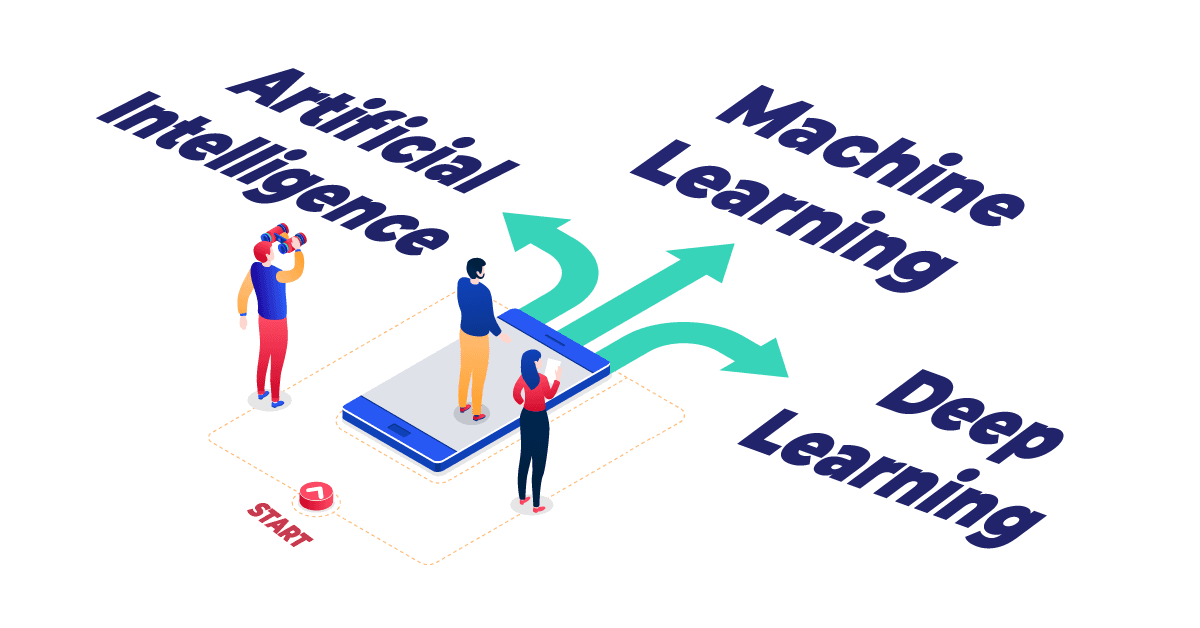
Cover Image by cloudxlab [https://cloudxlab.com]
References
Acceler8 Talent (2026) The most in-demand machine learning roles in 2026: managing the AI talent frontier. Available at: https://www.acceler8talent.com/resources/blog/the-most-in-demand-machine-learning-roles-in-2026--managing-the-ai-talent-frontier/ (Accessed: 23 June 2026).
365 Data Science (2026) What are the in-demand machine learning engineer skills in 2026? Available at: https://365datascience.com/career-advice/career-guides/machine-learning-engineer-skills/ (Accessed: 23 June 2026).
DOIT Software (2026) Top 15 machine learning engineer skills for 2026 [checklist]. Available at: https://doit.software/blog/machine-learning-engineer-skills (Accessed: 23 June 2026).
Scale.jobs (2026) Top in-demand skills of 2026 (tech + soft skills). Available at: https://scale.jobs/blog/in-demand-skills-2026-tech-and-soft-skills (Accessed: 23 June 2026).
TripleTen (2026) AI skills 2026: the employer's wishlist. Available at: https://tripleten.com/blog/posts/ai-skills (Accessed: 23 June 2026).
Test Your Knowledge!
Click the button below to generate an AI-powered quiz based on this article.
Did you enjoy this article?
Show your appreciation by giving it a like!
Conversation (0)
Cite This Article
Generating...