Technology
Tiny Models, Big Impact - Why Small, Local AI Is Beating Giant Models in Everyday Use
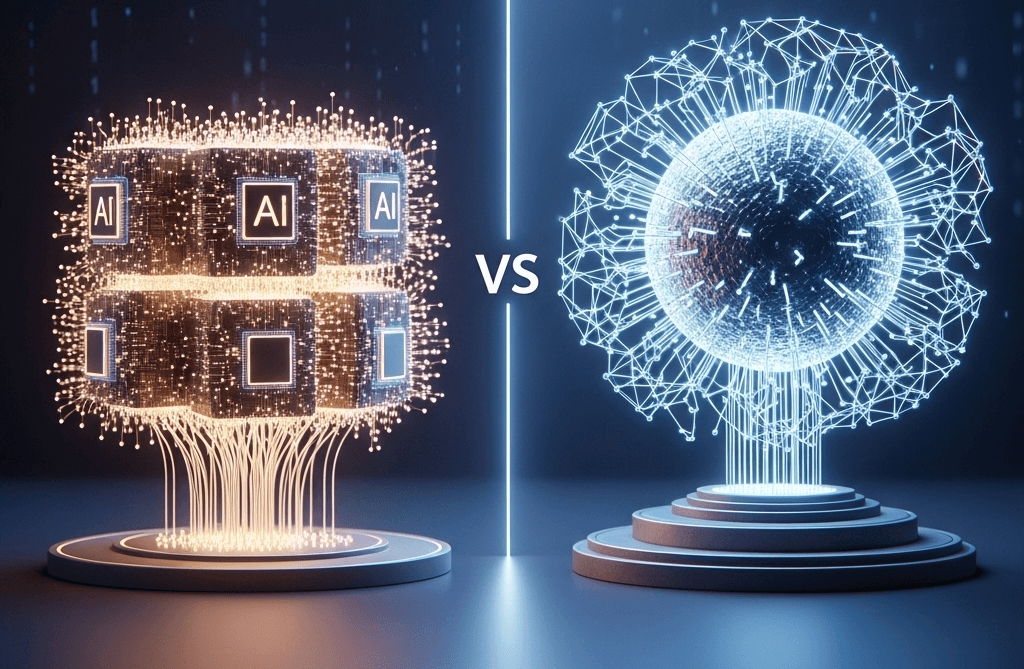
For the past few years, the story of AI has been one of relentless growth. Bigger models. More data. More computing power. More billions of dollars. The race was always toward the next giant system, trained on supercomputers, living in the cloud, and accessible only through an internet connection. Bigger, it was assumed, was always better. That assumption is now being seriously challenged and the challenger is something much, much smaller.
Across the technology industry, a quiet but significant shift is underway. Engineers, researchers, and product teams are discovering that small AI models running directly on your phone, laptop, or local device can outperform their cloud-based giants on the tasks most people actually care about, every day. And they do it faster, more privately, more reliably, and more cheaply.
This article explains what small, local AI actually is, why it's winning where it counts, and what it means for the way you use technology today and in the years ahead.
1. The Era of the Giant Model
To understand the shift, you need to understand what came before. The AI breakthroughs of the last decade large language models like GPT-4, Gemini Ultra, and Claude are extraordinarily powerful systems. They were trained on vast amounts of text and data, using thousands of specialised computer chips running for months, at a cost of hundreds of millions of dollars. These models contain billions sometimes hundreds of billions of numerical parameters, the internal settings that allow them to understand and generate language.
Because of their size and the infrastructure required to run them, these models live in data centres enormous, warehouse-scale facilities filled with servers and you access them through the internet. When you type a question into ChatGPT, your words travel over the internet to a data centre, get processed by the model, and the answer travels back to you. The model itself never runs on your device.
This architecture made sense when AI models were too large and computationally demanding to run anywhere else. But it comes with a set of costs that are easy to overlook until you start to feel them.
The hidden costs of cloud AI:
Privacy: Every question you ask a cloud AI is transmitted to a third party's server. Your conversations, your documents, your queries all leave your device.
Latency: There is always a delay sometimes tiny, sometimes frustrating as your request travels to a data centre and back. In real-time applications, this matters enormously.
Connectivity dependence: No internet? No AI. Cloud models are completely unavailable offline.
Cost at scale: Processing millions of queries through cloud infrastructure is expensive and those costs are passed on, directly or indirectly, to users and businesses.
Environmental footprint: Running enormous data centres consumes vast amounts of electricity, much of it still generated from fossil fuels.
2. What Is a Small, Local AI Model?
A small language model (SLM) also called an on-device model, edge model, or local model is an AI system designed to run entirely on the hardware of a single device, your smartphone, your laptop, a smart speaker, a car's onboard computer, or a piece of industrial machinery. It requires no internet connection to operate. No data leaves your device. No cloud is involved.
These models are significantly smaller than their cloud-based counterparts typically ranging from 1 billion to 13 billion parameters, compared to the hundreds of billions found in frontier cloud models. They're designed with efficiency as a primary constraint: to do useful work within the memory, processing power, and battery life available on consumer hardware.
Bigger was never the point. Better for the task at hand was always the point. It just took a few years to figure that out.
The key insight driving this shift is one that seems obvious in hindsight: most of what people actually ask AI to do does not require a model trained on the entire internet. Summarising a document, translating a menu, drafting a quick reply, answering a question about a file on your computer, transcribing a voice note these are focused, bounded tasks. A well-designed small model, tuned for these specific purposes, can handle them as well as or better than a giant cloud model and do it instantly, privately, and without needing Wi-Fi.
3. How Small Is "Small"?
To give you a sense of scale:
- 1 to 7 billion parameters the range of leading small models available today
- Under 1 second response latency for on-device AI, with no round-trip to a server
- 0% of data transmitted to external servers when running locally
- 4 to 16 gigabytes of memory required fits comfortably on modern phones and laptops
For context, a modern flagship smartphone has more than enough processing power and memory to run a capable small language model. Apple's Neural Engine, Qualcomm's AI processing chips, and Google's Tensor chips are all purpose-built for exactly this kind of workload. The hardware has been ready for a while. The software is now catching up.
4. The Four Advantages That Actually Matter
Privacy Your Data Stays Yours
This is the most significant advantage for most people. When an AI model runs entirely on your device, nothing you type, say, or share with it ever leaves your hardware. Your medical questions, your financial documents, your private messages, your legal queries all processed locally. A cloud AI, by contrast, transmits all of this to a remote server. For individuals who care about privacy, and for businesses operating under data protection regulations, this distinction is enormous.
Speed No Waiting for the Round Trip
When a cloud AI responds to you, your request must travel from your device to a data centre sometimes on the other side of the world be processed, and the answer must travel back. Even on a fast connection, this introduces latency. A local model processes your request in the same chip that's running the rest of your applications. The response is essentially instantaneous. In real-time applications live transcription, instant translation, voice assistants this speed difference is not a minor convenience. It's the difference between a tool that feels magical and one that feels sluggish.
Reliability Works Offline, Everywhere
Cloud AI requires an internet connection. That sounds obvious, but its implications are significant. On a plane. In a rural area. In a country with restricted internet access. In a hospital with strict network policies. In an underground facility. In any situation where connectivity is unreliable, slow, or blocked local AI keeps working. Cloud AI goes dark. For applications in healthcare, field research, logistics, manufacturing, and defence, offline reliability is not a nice-to-have. It is a requirement.
Cost The Inference Bill Disappears
Running queries through a cloud AI costs money paid by the API call, the token processed, the compute consumed. For individuals, these costs are often absorbed into subscription fees. For businesses running millions of AI interactions per day, the bills are very large indeed. A local model, once deployed on-device, runs at essentially zero marginal cost per query. The compute is already there, in the device the user already owns. This economic reality is driving rapid adoption in enterprise and consumer applications alike.
5. What Small AI Actually Looks Like in Practice
These are not hypothetical use cases. Here is where small, local AI is already working in the real world right now.
Offline Translation Google Translate's offline mode, Apple's on-device translation, and dedicated apps use small local models to translate between languages with no internet required. Travel to a country with no data roaming translation still works, instantly, and your conversation isn't logged on any server.
Local Voice Transcription Apple's on-device speech recognition, Whisper models running locally, and apps like MacWhisper transcribe speech to text entirely on your device. Medical professionals can dictate patient notes without those notes ever leaving the device. Journalists can transcribe interviews with complete confidentiality.
Private Document Summarisation Tools like Apple Intelligence and local LLM apps Ollama, LM Studio let you feed a document such as a contract, a report, or a research paper to a local model and get a summary without that document ever touching the cloud. Lawyers, accountants, and executives handling sensitive materials use this routinely.
On-Device Code Completion GitHub Copilot now offers a local mode. Tools like Continue and Cursor can be configured to run entirely on local models. Developers at companies with strict code confidentiality requirements banks, defence contractors, pharmaceutical companies can use AI coding assistance without sending their proprietary code to any external server.
Clinical Decision Support Hospitals are piloting on-device AI that assists with patient triage, drug interaction checks, and clinical documentation all processing data locally to comply with patient data privacy regulations. No patient information leaves the hospital's own hardware.
Edge Defect Detection in Manufacturing Factories deploy small vision AI models on cameras directly on the production line. Defects are detected in real time in milliseconds without any image data leaving the factory floor. Faster, more private, and independent of internet connectivity.
6. Who Is Building Small AI and What They've Made
The race to build capable small models has attracted investment from across the industry. Here is the current landscape:
Microsoft Phi-3 / Phi-4 Designed for on-device and consumer hardware. Achieves exceptional reasoning per parameter tiny size, surprisingly capable. Built using exceptionally high-quality curated training data rather than raw scale.
Google DeepMind Gemma 2 / Gemma 3 Designed for phones and edge devices. Runs on Android with tight integration into Google's on-device AI stack. Ships inside Pixel phones as Gemini Nano.
Meta AI Llama 3 (small variants) Open source and highly customisable, with a massive developer ecosystem. Widely used for developer and enterprise local deployment.
Mistral AI Mistral 7B / Mixtral Strong general-purpose performance with open weights. Popular in Europe particularly for data sovereignty reasons. Runs well on laptops and local servers.
Apple Apple Intelligence Models Deep hardware-software integration, running entirely on-device for core features across iPhone, iPad, and Mac. Tightly integrated with the Neural Engine in Apple Silicon.
Alibaba Qwen 2.5 (small variants) Strong multilingual performance, particularly in Chinese and related languages. Optimised for mobile and Asian language use cases.
The most striking development in this space is not any single model it is the trajectory. Models that required a high-end workstation to run in 2023 fit comfortably on a mid-range smartphone in 2026. And the performance gap between small and large models, for the tasks most people actually use AI for, is closing rapidly.
7. Cloud vs Local A Side-by-Side Comparison
Cloud / Giant Model
- Data leaves your device on every query
- Requires a reliable internet connection
- Response delayed by network round-trip
- Cost scales with usage expensive at volume
- Handles very complex, open-ended tasks better
- Has knowledge of recent events and can be updated
- Can search the web and use external tools
- Unavailable offline or in restricted environments
Local / Small Model
- All data stays on your device complete privacy
- Works fully offline, anywhere in the world
- Near-instant responses no network latency
- Zero marginal cost per query after deployment
- Less capable on very broad, complex tasks
- Knowledge frozen at training cutoff date
- Cannot browse the internet independently
- Works in hospitals, planes, and secure facilities
The honest answer is that neither approach wins across the board. The right model is the one that fits the task, the context, and the constraints. Increasingly, the most sophisticated products use both a small model handles the quick, routine, private work locally, and escalates to a cloud model only when the task genuinely demands it. This hybrid approach is becoming the standard architecture for serious AI-powered products in 2026.
8. Common Misconceptions About Small AI
Myth: "Small models are just cut-down, inferior versions of big models."
Not exactly. The best small models are not simply shrunken giants they are architectures designed from the ground up for efficiency, often trained on carefully curated, high-quality data rather than raw scale. Microsoft's Phi series achieves remarkable performance specifically because of the quality of its training data, not despite its small size.
Reality: For the vast majority of everyday tasks, small models are genuinely good enough and often better.
Summarising a document, translating a sentence, drafting an email, answering a question about a file you have open a well-tuned 7B model handles all of this confidently. You do not need GPT-4 to summarise your meeting notes.
Myth: "Running AI on my device will kill my battery and slow everything down."
On modern hardware with dedicated AI processing chips Neural Engines, NPUs running a small model is highly efficient. Apple, Google, and Qualcomm have invested billions in on-device AI acceleration specifically because they knew this use case was coming. Battery impact for typical local AI tasks is modest.
Reality: On-device AI is already in your pocket.
If you use an iPhone with iOS 18 or later, a Pixel 9, or a Samsung Galaxy S25, you already have on-device AI models running on your device for features like transcription, text summarisation, smart reply, and photo organisation. This is not future technology. It is already the present.
Myth: "Local AI is only for tech experts who can set up servers and run command-line tools."
That was true in 2023. It is increasingly not true in 2026. Apple Intelligence, Google's on-device Gemini Nano, and consumer apps like Ollama and Jan have made local AI accessible to anyone willing to download an app. The technical barrier is falling fast.
9. Where Small AI Is Going Over the Next Five Years
Every Device Becomes AI-Native By 2028 to 2030, it is reasonable to expect that virtually every consumer device phones, laptops, tablets, smart TVs, cars, wearables will ship with on-device AI capabilities as a standard feature, not a premium add-on. The hardware manufacturers are all moving in this direction simultaneously.
The Hybrid Model Becomes Standard The future is not local AI replacing cloud AI it is the two working together seamlessly. Your device handles the fast, private, routine work locally. When you need something genuinely complex a long research task, a nuanced creative project, a query requiring real-time web search it escalates to a cloud model, with your explicit awareness. The best AI products of 2026 already do this. It will become ubiquitous.
Regulation Will Accelerate Adoption Data protection regulations GDPR in Europe, state-level privacy laws in the US, and emerging frameworks across Asia are making cloud AI increasingly complicated for sensitive use cases. Healthcare, finance, legal, and government sectors face strict rules about where data can travel. Local AI sidesteps most of these complications entirely, making it the path of least resistance for regulated industries.
Global Access Without Global Infrastructure One of the most profound implications of local AI is for the billions of people in parts of the world where internet connectivity is unreliable, expensive, or censored. On-device AI does not require cloud infrastructure. A student in a rural area with a modest smartphone can access capable AI assistance for education, translation, and information without a data connection. This democratising potential is significant and underappreciated.
A Smaller Environmental Footprint The energy consumption of large-scale AI data centres is a growing environmental concern. On-device models shift the computational burden to consumer hardware, which is far more energy-efficient per query than data centre infrastructure. As the mix of AI computation shifts toward the edge, the overall energy footprint of AI could improve meaningfully.
10. What You Can Do Right Now
Check what your phone already does locally. If you have a recent iPhone, Android Pixel, or Samsung Galaxy, explore the AI features in your settings. Much of what Apple Intelligence and Gemini Nano do runs on-device by default. You are probably already using local AI without knowing it.
Try Ollama or Jan for desktop local AI. Both are free, user-friendly applications that let you run capable small language models entirely on your Mac or Windows laptop. You can chat, summarise documents, and get AI assistance completely offline, completely privately. Models like Llama 3, Phi-3, and Mistral 7B are available in one click.
Use offline translation apps. Download language packs to Google Translate or a dedicated offline translation app before your next trip. Experience for yourself what local AI feels like instant, private, no data connection required.
Think about which tasks genuinely need the cloud. For many everyday uses summarising a document, drafting a message, answering a question a local model is entirely sufficient. Use cloud AI for genuinely complex tasks where its broader capabilities matter. Defaulting to the cloud for everything is a habit, not a necessity.
If you handle sensitive data professionally, investigate local AI seriously. Lawyers, doctors, accountants, journalists, and researchers working with confidential information should be evaluating on-device AI tools as a privacy-preserving alternative to cloud-based assistants. The tooling has matured considerably and the compliance benefits are real.
The Verdict - The Biggest AI Idea of 2026 Might Be Going Small
The AI conversation has been dominated for years by a single metric: scale. Bigger models, more parameters, more compute, more data. This was the playbook that produced genuinely remarkable results and it will continue to drive progress at the frontier of what AI can do.
But the frontier is not where most people live. Most people live in the everyday summarising emails, translating menus, transcribing meetings, drafting documents, asking questions about the file open on their screen. For these tasks, a small, well-designed model running locally is not a compromise. It is often the better choice.
It is faster. It is private. It works offline. It costs nothing per query. And it is already in your pocket.
The insight the industry is slowly arriving at is one that applies beyond AI: the right tool for a job is rarely the most powerful tool available. It is the most appropriate one. Small AI, it turns out, is appropriate for an enormous amount of what we actually need AI to do.
The giants are not going anywhere. But their smaller, quieter, more privacy-respecting cousins are already doing more of the real work than most people realise. And that balance will only shift further in the years ahead.
Cover image by https://ai.plainenglish.io/the-rise-of-small-ai-models-why-bigger-isnt-always-better-2b40d8037f68
References
Abadía-Heredia, R., López-Martín, M., Carro, B., Sánchez-Esguevillas, A. and Monge, M.A. (2022) 'A predictive maintenance model by using recurrent neural networks on edge devices', Expert Systems with Applications, 188, article 116011. doi:10.1016/j.eswa.2021.116011.
Abdin, M., Jacobs, S.A., Awan, A.A., Aneja, J., Awadallah, A., Awasthi, A., Bach, N., Bahree, A., Bakhtiari, A., Bao, J., Behl, H., Bhatt, H., Bhatia, P., Brockett, C., Chen, X., Chen, Y., Chaudhary, V., Chopra, P., Das, A., Dixon, M., El-Kishky, A., Fasoli, F., Fung, J., Garg, D., Goel, M., Grover, A., Guhur, G., Gupta, S., Han, J., Harrison, G., He, J., Heidari, H., Hoque, R., Hu, A., Iriondo, J., Javaheripi, M., Jin, X., Karuturi, P., Khademi, A., Kim, H.J., Kim, Y.J., Liden, L., Lin, C., Lin, X., Liu, Z., Ma, S., Madan, A., Malaviya, C., McAuley, J., Mitra, R., Modi, H., Nouri, R., Nourbakhsh, B., Pendyala, S., Qin, H., Radmilovic, O., Rosset, C., Roy, S., Ruwase, O., Saarikivi, O., Sabooniha, R., Saller, S., Salvi, A., Schmidt, E.B., Seetharaman, S., Shahid, S., Shang, J., Shi, S., Sivakumar, K., Sood, S., Srinivasan, R., Stefanik, A., Subramanian, A., Sun, C., Tupakula, P., Vaddamanu, K., Wang, F., Wang, L., Wang, S., Wang, W.S., Wang, Y., Xie, Y., Xu, F., Yang, F., Ye, J. and Zhang, D. (2024) Phi-3 technical report: a highly capable language model locally on your phone. arXiv preprint arXiv:2404.14219. Available at: https://arxiv.org/abs/2404.14219 (Accessed: 12 March 2026).
Apple Inc. (2024) Introducing Apple Intelligence. Cupertino, CA: Apple Inc. Available at: https://www.apple.com/apple-intelligence/ (Accessed: 15 March 2026).
Bender, E.M., Gebru, T., McMillan-Major, A. and Shmitchell, S. (2021) 'On the dangers of stochastic parrots: can language models be too big?', in Proceedings of the 2021 ACM Conference on Fairness, Accountability, and Transparency (FAccT '21), New York: ACM, pp. 610–623. doi:10.1145/3442188.3445922.
Brown, T., Mann, B., Ryder, N., Subbiah, M., Kaplan, J.D., Dhariwal, P., Neelakantan, A., Shyam, P., Sastry, G., Askell, A., Agarwal, S., Herbert-Voss, A., Krueger, G., Henighan, T., Child, R., Ramesh, A., Ziegler, D., Wu, J., Winter, C., Hesse, C., Chen, M., Sigler, E., Litwin, M., Gray, S., Chess, B., Clark, J., Berner, C., McCandlish, S., Radford, A., Sutskever, I. and Amodei, D. (2020) 'Language models are few-shot learners', Advances in Neural Information Processing Systems, 33, pp. 1877–1901. Available at: https://arxiv.org/abs/2005.14165 (Accessed: 10 March 2026).
Dhar, P. (2020) 'The carbon impact of artificial intelligence', Nature Machine Intelligence, 2(8), pp. 423–425. doi:10.1038/s42256-020-0219-9.
European Parliament and Council of the European Union (2016) Regulation (EU) 2016/679 of the European Parliament and of the Council of 27 April 2016 on the protection of natural persons with regard to the processing of personal data and on the free movement of such data (General Data Protection Regulation). Official Journal of the European Union, L 119, pp. 1–88. Available at: https://eur-lex.europa.eu/legal-content/EN/TXT/?uri=CELEX%3A32016R0679 (Accessed: 14 March 2026).
Gao, J., Lanchantin, J., Baraniuk, R.G. and Qi, Y. (2024) 'Training language models to self-correct via reinforcement learning', arXiv preprint arXiv:2409.12917. Available at: https://arxiv.org/abs/2409.12917 (Accessed: 11 March 2026). Google DeepMind (2024) Gemma: open models based on Gemini research and technology. Mountain View, CA: Google DeepMind. Available at: https://deepmind.google/technologies/gemma/ (Accessed: 15 March 2026). Hoffmann, J., Borgeaud, S., Mensch, A., Buchatskaya, E., Cai, T., Rutherford, E., Casas, D. de L., Hendricks, L.A., Welbl, J., Clark, A., Hennigan, T., Noland, E., Millican, K., van den Driessche, G., Damoc, B., Guy, A., Osindero, S., Simonyan, K., Elsen, E., Rae, J.W., Vinyals, O. and Sifre, L. (2022) 'Training compute-optimal large language models', arXiv preprint arXiv:2203.15556. Available at: https://arxiv.org/abs/2203.15556 (Accessed: 10 March 2026).
Howard, A., Sandler, M., Chu, G., Chen, L.C., Chen, B., Tan, M., Wang, W., Zhu, Y., Pang, R., Vasudevan, V., Le, Q.V. and Adam, H. (2019) 'Searching for MobileNetV3', in Proceedings of the IEEE/CVF International Conference on Computer Vision (ICCV), pp. 1314–1324. doi:10.1109/ICCV.2019.00140.
Jiang, A.Q., Sablayrolles, A., Mensch, A., Bamford, C., Chaplot, D.S., Casas, D. de L., Bressand, F., Lengyel, G., Lample, G., Saulnier, L., Lavaud, L.R., Lachaux, M.A., Stock, P., Scao, T.L., Lavril, T., Wang, T., Lacroix, T. and Sayed, W.E. (2023) 'Mistral 7B', arXiv preprint arXiv:2310.06825. Available at: https://arxiv.org/abs/2310.06825 (Accessed: 12 March 2026).
Lin, J., Tang, J., Tang, H., Yang, S., Chen, W.M., Wang, W.C., Xiao, G., Dang, X., Gan, C. and Han, S. (2024) 'AWQ: activation-aware weight quantization for on-device LLM compression and acceleration', in Proceedings of Machine Learning and Systems (MLSys) 2024. Available at: https://arxiv.org/abs/2306.00978 (Accessed: 13 March 2026). Meta AI (2024) Introducing Meta Llama 3: the most capable openly available LLM to date. Menlo Park, CA: Meta Platforms Inc. Available at: https://ai.meta.com/blog/meta-llama-3/ (Accessed: 15 March 2026). Mistral AI (2024) Mistral AI models overview. Paris: Mistral AI. Available at: https://mistral.ai/technology/ (Accessed: 14 March 2026). OpenAI (2023) GPT-4 technical report. arXiv preprint arXiv:2303.08774. Available at: https://arxiv.org/abs/2303.08774 (Accessed: 10 March 2026).
Patterson, D., Gonzalez, J., Le, Q., Liang, C., Munguia, L.M., Rothchild, D., So, D., Texier, M. and Dean, J. (2021) 'Carbon and the machine learning cloud', Communications of the ACM, 65(6), pp. 52–58. doi:10.1145/3434204.
Qualcomm Technologies Inc. (2024) AI at the edge: Snapdragon platforms for on-device AI. San Diego, CA: Qualcomm Technologies Inc. Available at: https://www.qualcomm.com/research/artificial-intelligence (Accessed: 15 March 2026).
Radford, A., Kim, J.W., Xu, T., Brockman, G., McLeavey, C. and Sutskever, I. (2022) Robust speech recognition via large-scale weak supervision. arXiv preprint arXiv:2212.04356. Available at: https://arxiv.org/abs/2212.04356 (Accessed: 11 March 2026).
Rajpurkar, P., Irvin, J., Ball, R.L., Zhu, K., Yang, B., Mehta, H., Duan, T., Ding, D., Bagul, A., Langlotz, C.P., Patel, B.N., Yeom, K.W., Shpanskaya, K., Blankenberg, F.G., Seekins, J., Amrhein, T.J., Mong, D.A., Halabi, S.S., Zucker, E.J., Ng, A.Y. and Lungren, M.P. (2018) 'Deep learning for chest radiograph diagnosis: a retrospective comparison of the CheXNeXt algorithm to practicing radiologists', PLOS Medicine, 15(11), e1002686. doi:10.1371/journal.pmed.1002686.
Strubell, E., Ganesh, A. and McCallum, A. (2019) 'Energy and policy considerations for deep learning in NLP', in Proceedings of the 57th Annual Meeting of the Association for Computational Linguistics (ACL), pp. 3645–3650. doi:10.18653/v1/P19-1355.
Weng, Q. (2024) 'Small language models are the future of AI at the edge', IEEE Spectrum, 61(3), pp. 28–33. doi:10.1109/MSPEC.2024.10462509.
Wu, C., Wu, F., Qi, T., Huang, Y. and Xie, X. (2023) 'Tiny-newsrec: efficient and effective PLM-based news recommendation', in Proceedings of the 2023 Conference on Empirical Methods in Natural Language Processing, pp. 9614–9626. doi:10.18653/v1/2023.emnlp-main.595.
Xu, R., Lim, B., Yao, X. and Ng, S.K. (2024) 'Privacy-preserving federated learning for healthcare applications: a systematic review', npj Digital Medicine, 7(1), article 38. doi:10.1038/s41746-024-01031-0.
Test Your Knowledge!
Click the button below to generate an AI-powered quiz based on this article.
Did you enjoy this article?
Show your appreciation by giving it a like!
Conversation (0)
Cite This Article
Generating...