Science
Word Processor for Life - How Prime Editing Is Rewriting Genetic Diseases
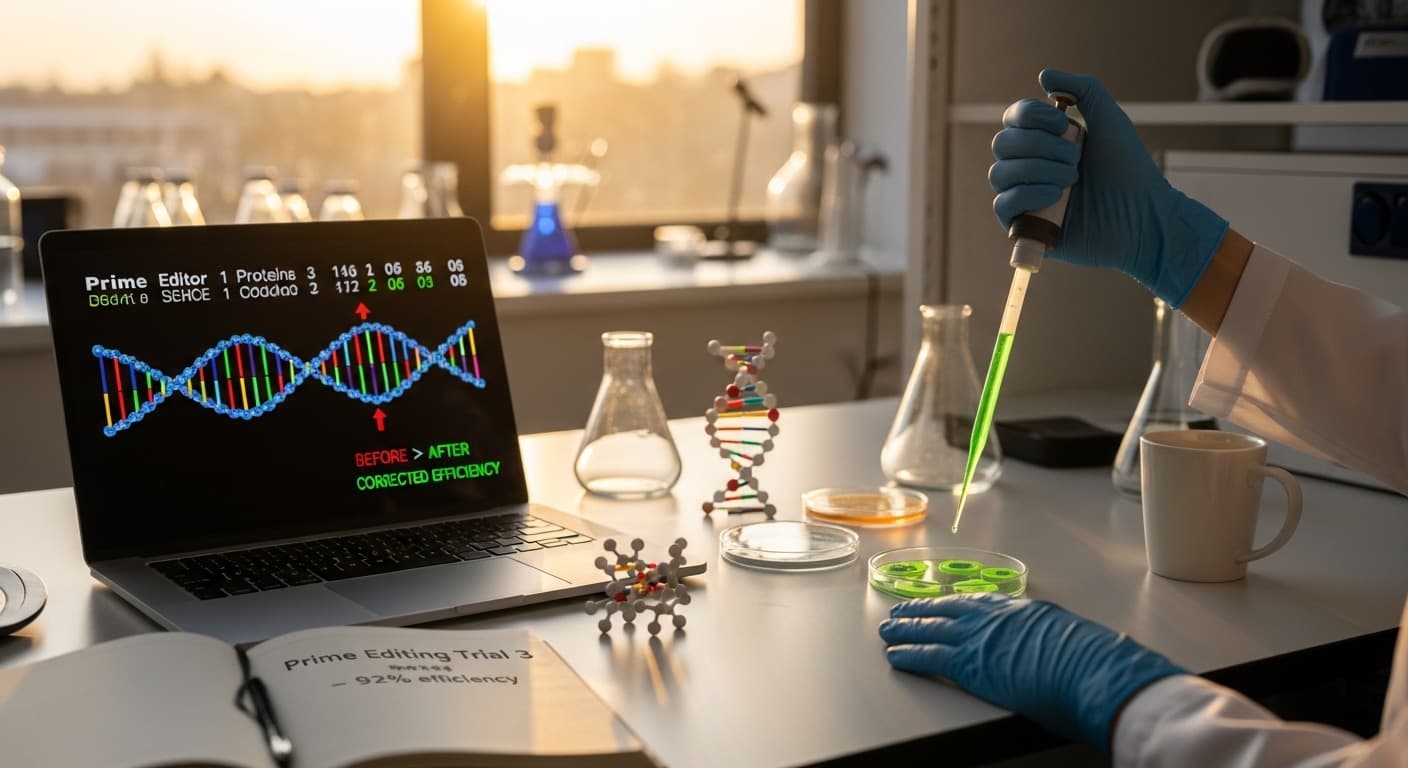
Imagine your DNA as a massive book containing the complete instructions for building and running your body. Sometimes, there are typos single letter changes that cause serious diseases like sickle cell anemia or cystic fibrosis. Traditional gene editing tools like CRISPR are like scissors: powerful, but they can accidentally cut the wrong places, causing errors. Prime Editing is different. It's more like a word processor that finds the exact typo and types the correct letter no cutting required. This breakthrough is already in human trials, and it could change medicine forever.
The Problem - DNA Typos That Cause Disease
Your genome has about 3 billion DNA letters (A, T, C, G). Most are perfect, but a single wrong letter can disrupt a critical protein. For example:
- Sickle cell disease: One letter change makes red blood cells sickle-shaped, blocking blood flow and causing pain crises.
- Cystic fibrosis: A deletion of just three letters clogs the lungs with thick mucus.
- Tay-Sachs disease: A single letter swap destroys nerve cells in babies.
These aren't rare. Millions worldwide live with single-letter genetic diseases. Current treatments manage symptoms but don't fix the root cause. Prime Editing aims to do exactly that rewrite the typo directly in a patient's cells.
How Prime Editing Works
Traditional CRISPR uses a protein called Cas9 that acts like molecular scissors. It finds a DNA target using a guide RNA, cuts both strands, and hopes the cell repairs itself correctly. But cells aren't perfect editors repairs often introduce new errors or don't work at all.
Prime Editing is smarter. Here's the simple version:
- Search: A guide RNA finds the exact DNA location with the typo. Unzip: Instead of cutting, it gently pries open a small section of the DNA double helix.
- Rewrite: A special enzyme reads a custom template attached to the guide and writes the correct DNA letters directly into the genome.
- Zip up: The cell seals the strand naturally, with the typo fixed.
No double-strand breaks. No random repairs. Just precise rewriting. Think of it as Find & Replace in Microsoft Word, but for your DNA. Researchers at the Broad Institute invented this in 2019, and by 2026, it's showing 90%+ accuracy in lab and early human tests.
Real Results - From Lab to Human Patients
Prime Editing isn't just theory. Here's what's happening now:
Lab success: In cell studies, Prime Editing fixes disease mutations with up to 95% accuracy far better than CRISPR's 20-50% for precise changes. It works on many mutation types as insertions, deletions, and substitutions.
Animal trials: Mice with sickle cell mutations had their blood cells corrected. Fixed cells produced healthy hemoglobin and lasted longer in circulation.
Human trials (2026): Early-phase trials are treating sickle cell and beta-thalassemia. Patients receive edited stem cells that produce normal blood cells. First results show patients transfusion-free months after treatment something traditional care rarely achieves.
Why Prime Editing Beats Older Tools
What makes Prime Editing stand out from traditional CRISPR? First, while CRISPR relies on cutting both strands of DNA which can lead to unpredictable repairs and higher error rates Prime Editing rewrites the DNA directly without any cuts, achieving 80-95% accuracy compared to CRISPR's typical 20-50% for precise changes. This also means much lower risk of off-target edits, where the tool accidentally alters the wrong part of the genome.
Prime Editing's versatility is another big advantage. CRISPR works best for simple deletions or insertions, but Prime Editing handles all mutation types insertions, deletions, and precise letter replacements in a single system. Delivery methods are similar, but the end result is safer and more reliable, especially for in vivo editing directly inside the body where mistakes are harder to fix.
The Big Applications - Beyond Rare Diseases
Prime Editing could transform medicine in several ways:
1. Rare genetic diseases Over 7,000 known genetic disorders affect 300+ million people. Many are single-letter fixes Prime Editing can target.
2. Common diseases with genetic roots Heart disease, diabetes, Alzheimer's while not single-gene, key mutations contribute. Editing these could lower risk or slow progression.
3. Cancer Some cancers have driver mutations. Editing them out of tumor cells or making immune cells better at targeting cancer is being explored.
4. Infectious diseases Editing human cells to resist HIV by blocking its entry receptor or making mosquitoes immune to malaria.
5. Agriculture Editing crops for drought tolerance, higher nutrition, or pest resistance faster and more precisely than older methods.
The Ethical Puzzle - Power Comes with Questions
Prime Editing is so precise that it raises new debates:
Embryo editing: Fixing mutations before birth sounds miraculous, but should we? Who decides what perfect DNA is?
Access: Treatments cost millions initially. How do we make this available globally, especially in places like Sri Lanka?
Unintended effects: Even 90% accuracy leaves 10% risk. Long-term studies are needed.
Designer babies: Technically possible, but most scientists and ethicists oppose non-medical edits. Regulations are tightening worldwide.
The good news? Groups like the WHO and national bioethics boards are developing guidelines. The focus remains therapeutic healing, not enhancing.
What's Next - The 2026-2030 Roadmap
Prime Editing is moving fast:
- 2026: More Phase I/II trials for blood disorders.
- 2028: Liver, eye, and muscle disease trials.
- 2030+: In vivo delivery improvements.
Companies like Prime Medicine and Beam Therapeutics are raising billions. Academic labs worldwide are adapting the tech for local diseases.
From Science Fiction to Your Future
Prime Editing isn't just another lab tool it's potentially the most precise way humans have ever edited life itself. Where CRISPR was revolutionary, Prime Editing is evolutionary, safer, more versatile, more reliable.
For patients with genetic diseases, it offers hope where there was mostly despair. For the rest of us, it raises profound questions about health, identity, and what it means to fix nature.
Your DNA isn't destiny anymore. With a digital word processor for biology, we might finally start writing healthier stories one letter at a time.
Test Your Knowledge!
Click the button below to generate an AI-powered quiz based on this article.
Did you enjoy this article?
Show your appreciation by giving it a like!
Conversation (0)
Cite This Article
Generating...