Science
Are the Bacteria in Your Gut Helping You Age?
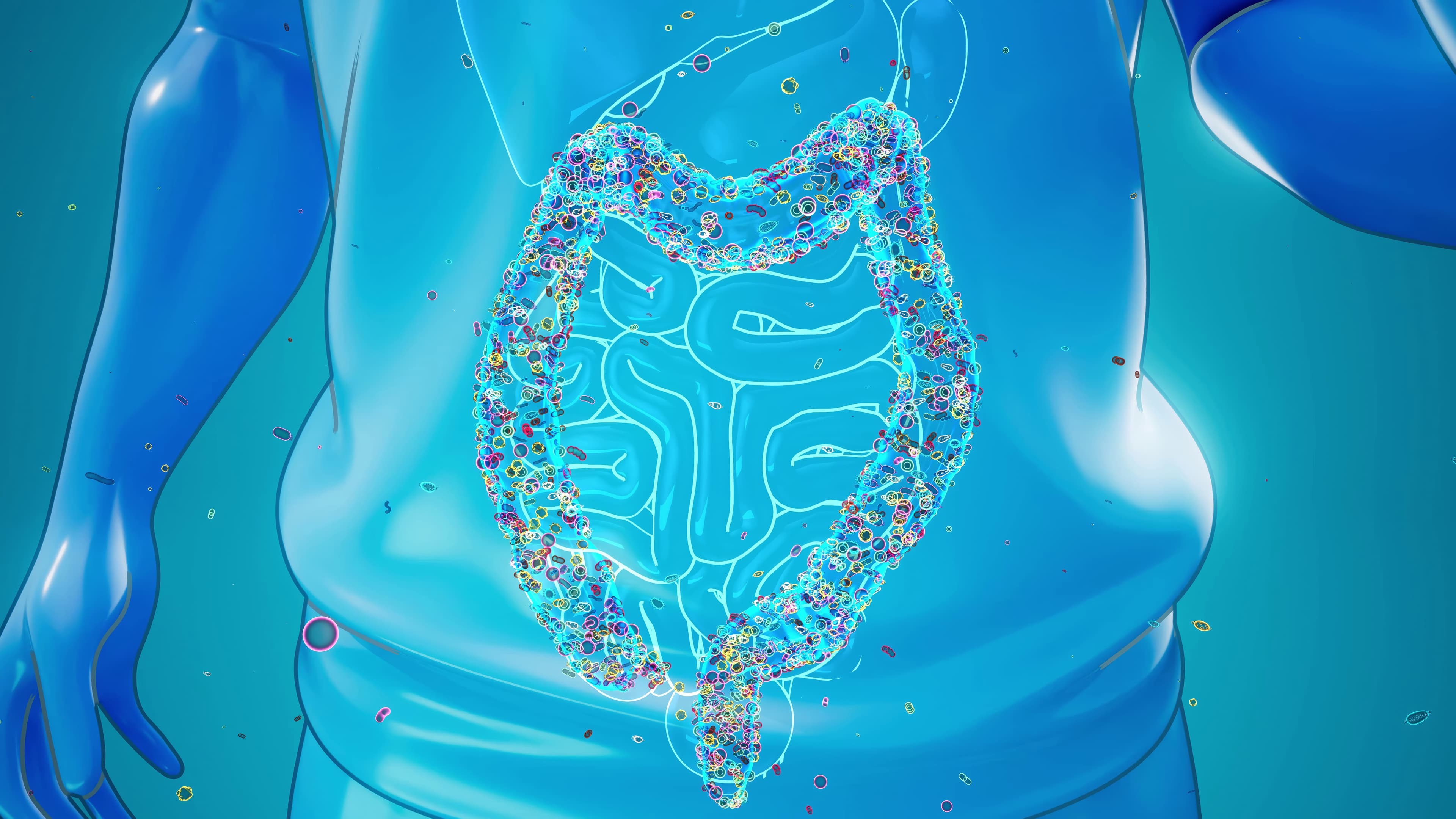
You have heard the advice a thousand times. Eat well. Exercise. Sleep. Manage stress. These are the pillars of healthy ageing, the habits that science consistently backs, the ones your doctor gently nudges toward at every checkup.
But there is a pillar that most people have never heard of, one that researchers are increasingly convinced belongs alongside the rest. It lives inside you. It weighs about as much as a bag of sugar. It contains more genetic information than your entire human genome. And it may be one of the most significant determinants of how well, and how long, you live.
Your gut bacteria.
The Gut Changes as You Age, and Not Always for the Better
A healthy gut microbiome in a young adult is diverse. It contains hundreds of different bacterial species, each playing different roles, digesting fibre, producing vitamins, training the immune system, protecting the gut lining, and communicating with the brain. This diversity is a marker of health.
As we age, that diversity tends to decline. Studies tracking gut microbiome composition across the human lifespan have found that the microbial communities of older adults are typically less varied, less stable, and less dominated by the beneficial bacteria that characterize the microbiomes of younger, healthier individuals (Claesson et al., 2012).
In particular, two changes appear consistently in aged microbiomes, a reduction in the abundance of bacteria that produce butyrate, a short, chain fatty acid with powerful anti, inflammatory and gut, protective effects, and an increase in pro, inflammatory bacterial species. This shift in microbial community composition is associated with the chronic, low, grade inflammation that characterizes biological ageing, a state researchers call inflammaging, and that contributes to virtually every major age, related disease, from cardiovascular disease to type 2 diabetes to neurodegeneration (Franceschi et al., 2018).
The question that has moved to the center of longevity research is, is this microbiome shift a consequence of ageing, or is it a cause?
What Evidence from Centenarians Tells Us
Some of the most compelling evidence that the microbiome is actively involved in healthy ageing, not just passively changed by it, comes from studying people who have aged exceptionally well.
Centenarians, people who live to 100 and beyond in reasonably good health, consistently show microbiome profiles that look younger than their chronological age. Studies of centenarian gut microbiomes in Italy, China, and Japan have found higher microbial diversity, higher abundance of butyrate, producing bacteria, and lower abundance of pro, inflammatory species compared to average older adults in the same populations (Biagi et al., 2016).
These are people who have lived through a century of dietary change, illness, stress, and environmental variation, and whose gut microbial communities still retain the diversity and beneficial composition associated with health. Whether this is a driver of their longevity or a consequence of the same lifestyle factors that allowed them to reach 100 is a question the cross, sectional data cannot definitively answer.
But animal studies have pushed the causal argument forward in a striking way. Research in which gut microbiota from young animals was transferred to older animals, and vice versa, found that old animals receiving young microbiota showed improvements in cognitive function, immune activity, and markers of inflammation, while young animals receiving old microbiota showed accelerated signs of ageing (Parker et al., 2022). The transfer of microbial communities appeared to transfer aspects of the biological age of the donor, suggesting that the microbiome is not just a passenger in the ageing process but an active participant.
The Inflammation Connection
The mechanism most clearly linking gut bacteria to the pace of ageing is inflammation, specifically, the chronic, low, grade inflammation that increases as we age and that appears to accelerate most age, related disease processes.
Healthy gut bacteria do two things that keep inflammation in check. They maintain the integrity of the gut lining, the single, cell, thick barrier that separates the gut contents from the bloodstream, preventing bacterial products from leaking into circulation and triggering immune responses. And they actively produce anti, inflammatory compounds, including butyrate, that signal the immune system to stand down.
When the microbiome shifts toward less diversity and more pro, inflammatory species, both protective functions weaken. The gut lining becomes more permeable. Bacterial products leak into the bloodstream. The immune system is chronically activated at a low level. And that chronic activation, maintained over years and decades, drives the tissue damage, organ dysfunction, and disease accumulation that characterize biological ageing (Cani et al., 2022).
The practical implication is that interventions that support gut microbiome health, maintaining diversity, supporting butyrate, producing bacteria, reducing inflammatory species, may slow this inflammation, driven ageing process. This is no longer purely theoretical. Clinical trials are beginning to test it directly.
What You Can Do Right Now
The good news is that the interventions with the strongest evidence for supporting a healthy, diverse, age, protective gut microbiome are not experimental. They are accessible, affordable, and backed by decades of research.
Eat more plants, and more variety of plants. Dietary fiber is the primary fuel for beneficial gut bacteria. The greater the variety of plant foods you eat, different vegetables, fruits, legumes, whole grains, nuts, and seeds, the more diverse and robust your microbial community. Research from the American Gut Project found that people who ate 30 or more different plant foods per week had significantly more diverse microbiomes than those eating fewer than 10 (McDonald et al., 2018). That diversity appears to be genuinely protective.
Add fermented foods. A randomized controlled trial from Stanford University found that a high, fermented, food diet, including yoghurt with live cultures, kefir, kimchi, and sauerkraut, increased microbiome diversity and reduced inflammatory markers significantly more than a high, fiber diet alone (Wastyk et al., 2021). Fermented foods introduce live beneficial bacteria and create the conditions in which existing beneficial bacteria thrive.
Move regularly. Exercise is independently associated with higher gut microbial diversity and greater abundance of butyrate, producing bacteria, an effect that appears to be partly mediated through the gut itself, not just through general health improvements (Mailing et al., 2019). A 30, minute walk most days is not just cardiovascular medicine. It may be microbiome medicine too.
Protect your sleep. Sleep deprivation disrupts gut microbiome composition in measurable ways, reducing beneficial species, increasing inflammatory ones, and the relationship is bidirectional. A healthier microbiome appears to support better sleep quality. Protecting sleep is protecting the gut.
Use antibiotics carefully. Antibiotics are genuinely life, saving and should absolutely be taken when needed. But they cause significant disruption to the gut microbiome, reducing diversity and allowing less beneficial species to proliferate. Where antibiotics are prescribed, supporting microbiome recovery through dietary means afterward is advisable.
The Honest Caveat
The science is genuinely exciting. But it would be dishonest not to note where the evidence is still developing.
Most studies linking specific microbiome profiles to longevity are observational, they show associations, not proven causation. The specific bacterial species that are most protective, the mechanisms by which they extend healthy lifespan, and the extent to which microbiome interventions in older adults can genuinely slow ageing at a biological level are questions that are still being actively investigated.
The supplement industry has raced ahead of the evidence, as it always does. Probiotic products marketed specifically as longevity interventions are, in most cases, not supported by the clinical trial evidence that would justify that claim. The interventions with the best evidence remain dietary and lifestyle ones, unglamorous, not profitable to sell, and genuinely effective.
The Bottom Line
Your gut bacteria are not merely passengers in your body. They are active participants in the biological processes that determine how you age, influencing inflammation, immune function, brain health, and metabolic stability in ways that compound over a lifetime.
The emerging picture from longevity research is that a diverse, butyrate, rich, low, inflammation microbiome is not just a marker of good health. It may be one of the mechanisms through which some people age better than others, and one of the levers through which we can influence that process.
The prescription is not a supplement. It is a plate full of different plants, a serving of fermented food, a walk in the evening, and a decent night's sleep. The bacteria do the rest.
Written for a global, general audience · July 2026 Topics, gut microbiome, ageing, longevity, inflammaging, gut bacteria, healthy ageing, microbiome and health This article is for informational purposes only and does not constitute medical advice. Always consult a qualified healthcare professional regarding health decisions.
References
Biagi, E., Franceschi, C., Rampelli, S., Severgnini, M., Ostan, R., Turroni, S., Consolandi, C., Quercia, S., Scurti, M., Monti, D., Capri, M., Brigidi, P. and Candela, M. (2016) 'Gut microbiota and extreme longevity', Current Biology, 26(11), pp. 1480–1485. doi,10.1016/j.cub.2016.04.016.
Cani, P.D., Depommier, C., Plovier, H., Van Hul, M. and Geurts, L. (2022) 'Akkermansia muciniphila, paradigm for next, generation beneficial microorganisms', Nature Reviews Gastroenterology and Hepatology, 19(10), pp. 625–637. doi,10.1038/s41575, 022, 00631, 9.
Claesson, M.J., Jeffery, I.B., Conde, S., Power, S.E., O'Connor, E.M., Cusack, S., Harris, H.M., Coakley, M., Lakshminarayanan, B., O'Sullivan, O., Fitzgerald, G.F., Deane, J., O'Connor, M., Harnedy, N., O'Connor, K., O'Mahony, D., van Sinderen, D., Wallace, M., Brennan, L., Stanton, C., Marchesi, J.R., Fitzgerald, A.P., Shanahan, F., Hill, C., Ross, R.P. and O'Toole, P.W. (2012) 'Gut microbiota composition correlates with diet and health in the elderly', Nature, 488(7410), pp. 178–184. doi,10.1038/nature11319.
Franceschi, C., Garagnani, P., Parini, P., Giuliani, C. and Santoro, A. (2018) 'Inflammaging, a new immune, metabolic viewpoint for age, related diseases', Nature Reviews Endocrinology, 14(10), pp. 576–590. doi,10.1038/s41574, 018, 0059, 4.
Mailing, L.J., Allen, J.M., Buford, T.W., Fields, C.J. and Woods, J.A. (2019) 'Exercise and the gut microbiome, a review of the evidence, potential mechanisms and implications for human health', Exercise and Sport Sciences Reviews, 47(2), pp. 75–85. doi,10.1249/JES.0000000000000183.
McDonald, D., Hyde, E., Debelius, J.W., Morton, J.T., Gonzalez, A., Ackermann, G., Aksenov, A.A., Behsaz, B., Brennan, C., Chen, Y., DeRight Goldasich, L., Dorrestein, P.C., Dunn, R.R., Fahimipour, A.K., Gaffney, J., Gilbert, J.A., Gogul, G., Green, J.L., Hugenholtz, P., Humphrey, G., Huttenhower, C., Jackson, M.A., Janssen, S., Jeste, D.V., Jiang, L., Kelley, S.T. and Knight, R. (2018) 'American gut, an open platform for citizen science microbiome research', Cell Host and Microbe, 23(3), pp. 433–445. doi,10.1016/j.chom.2018.02.011.
Parker, A., Romano, S., Ansorge, R., Aboelnour, A., Le Gall, G., Savva, G.M., Pontifex, M.G., Telatin, A., Baker, D., Jones, E., Vauzour, D., Rudder, S., Blackshaw, L.A., Jeffery, G. and Carding, S.R. (2022) 'Fecal microbiota transfer between young and aged mice reverses hallmarks of the aging gut, eye, and brain', Microbiome, 10(1), article 68. doi,10.1186/s40168, 022, 01243, w.
Wastyk, H.C., Fragiadakis, G.K., Perelman, D., Dahl, W.J., Zhu, Z., Sonnenburg, J.L. and Gardner, C.D. (2021) 'Gut, microbiota, targeted diets modulate human immune status', Cell, 184(16), pp. 4137–4153. doi,10.1016/j.cell.2021.06.019.
Test Your Knowledge!
Click the button below to generate an AI-powered quiz based on this article.
Did you enjoy this article?
Show your appreciation by giving it a like!
Conversation (0)
Cite This Article
Generating...