Engineering
The story of the Silver Arrows in Formula 1
The story of the Silver Arrows in Formula 1 is not one of continuous presence, but of calculated, devastating strikes. When Mercedes-Benz enters the sport, they do not just compete; they redefine the engineering standard.
Here is the complete history of how the German marque conquered Formula 1.
1.0 The Original Silver Arrows (1954–1955)
Mercedes-Benz did not join Formula 1 in its inaugural 1950 season. They waited until 1954, arriving with a technological marvel that immediately rendered the rest of the grid obsolete: the W196.
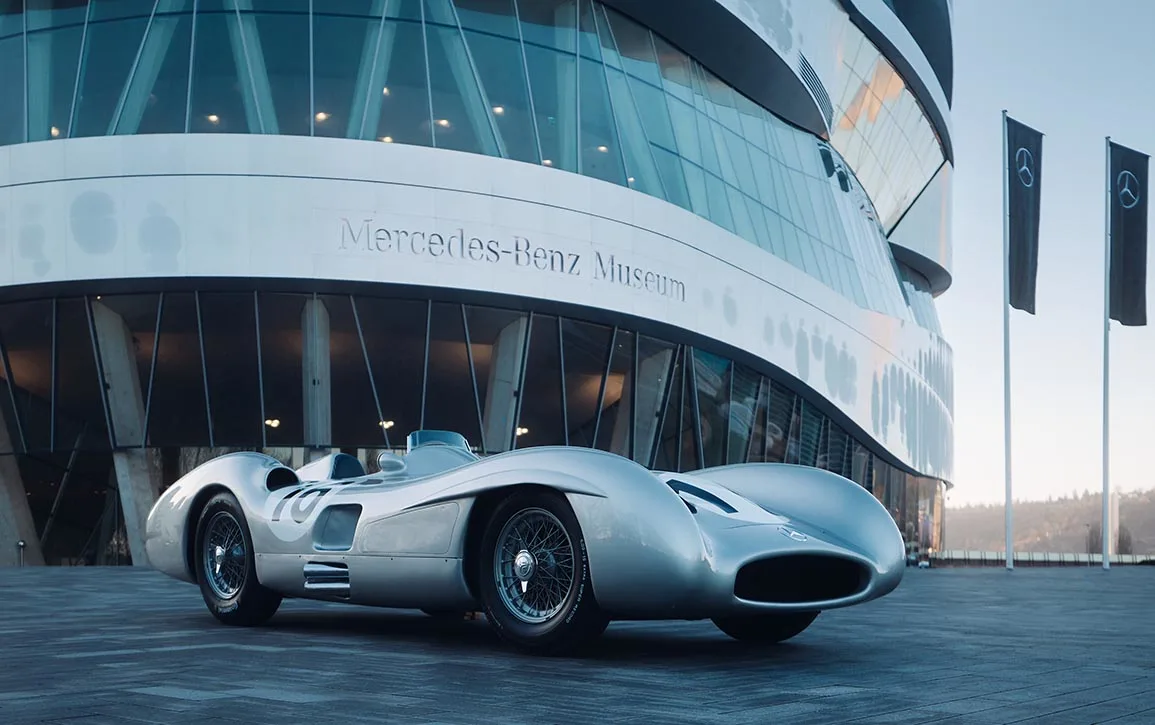
The W196 featured desmodromic valves and the first use of Bosch direct fuel injection in F1 technology adapted from the Messerschmitt Bf 109 fighter plane.
To pilot this machine, Mercedes poached the 1951 World Champion, Juan Manuel Fangio, mid-season from Maserati. The impact was instant. Fangio won on the car's debut at the 1954 French Grand Prix and went on to secure the Drivers' Championship in both 1954 and 1955, aided by a young Stirling Moss.
The Sudden Exit: Despite winning 9 of the 12 races they entered, Mercedes abruptly withdrew from all factory motorsport at the end of 1955 following the horrific Le Mans disaster. They would not return as a constructor for 55 years.
2.0 The Engine Supplier Era (1994–2009)
In the 1990s, Mercedes quietly re-entered the sport, initially backing the engine builder Ilmor to supply the Sauber team. By 1995, they forged a partnership that would define a generation of F1: McLaren-Mercedes.
- 1997 Australian GP First win for the McLaren-Mercedes partnership (David Coulthard).
- 1998 & 1999 Mika Häkkinen wins back-to-back Drivers' Championships.
- 2008 Lewis Hamilton wins his first Drivers' Championship in a McLaren-Mercedes.
- 2009 Mercedes supplies engines to the newly formed Brawn GP, resulting in a fairytale Championship for Jenson Button.
The 2009 season with Brawn GP a team born from the ashes of Honda's F1 exit, run by Ross Brawn—proved to be the catalyst for the next great era. Mercedes executives realized that building engines for others was highly profitable, but owning the team outright offered infinitely more brand value.
3.0 The Works Team Returns (2010–2013)
In November 2009, Mercedes-Benz (via parent company Daimler) purchased a 75.1% stake in Brawn GP, rebranding it as Mercedes Grand Prix for the 2010 season.
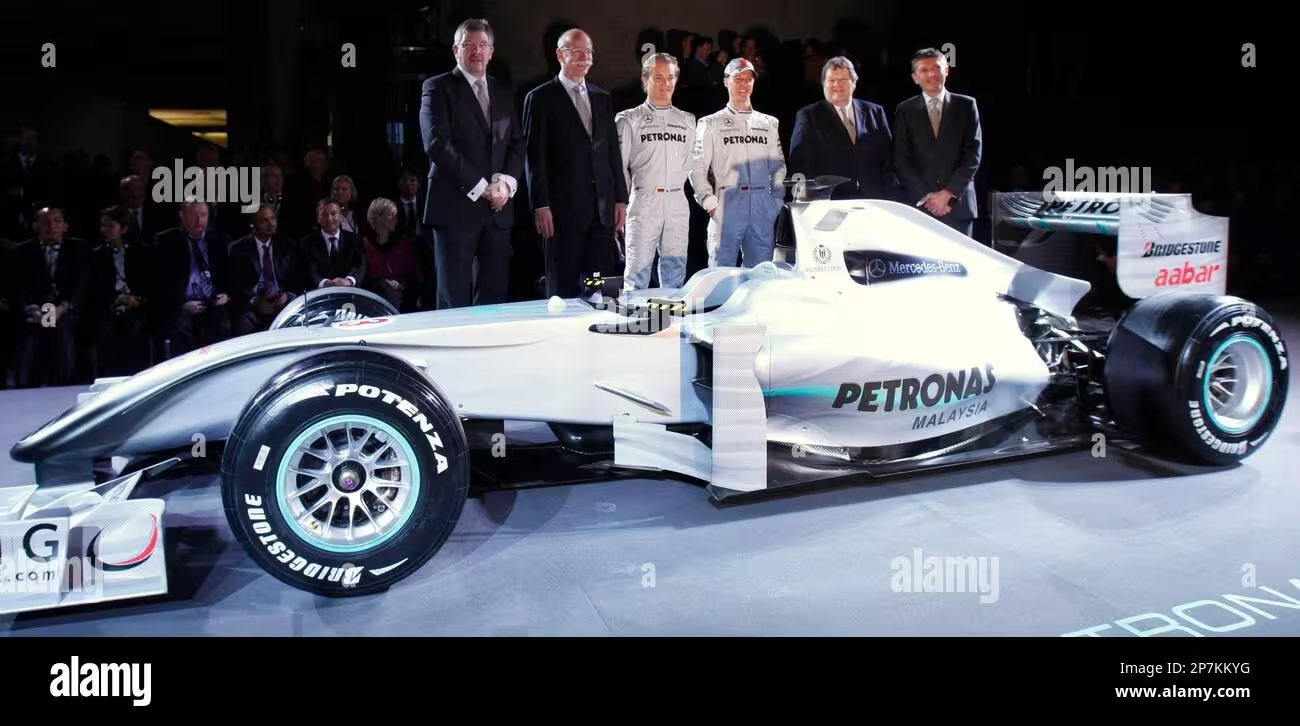
To signal their ambition, they coaxed seven-time World Champion Michael Schumacher out of retirement to partner with Nico Rosberg. While this era did not yield immediate championships, Schumacher's exacting feedback and Ross Brawn's structural overhaul laid the critical foundation for what was to come.
In 2013, Lewis Hamilton made the highly scrutinized decision to leave McLaren and replace the retiring Schumacher at Mercedes. At the time, it was called a massive gamble. It became the greatest career move in F1 history.
4.0 The Turbo-Hybrid Dynasty (2014–2021)
In 2014, Formula 1 introduced complex 1.6-liter V6 turbo-hybrid regulations. Mercedes AMG High Performance Powertrains had been developing their engine for years, finding a brilliant packaging solution (splitting the turbocharger across the engine block) that left Ferrari and Renault completely outclassed.
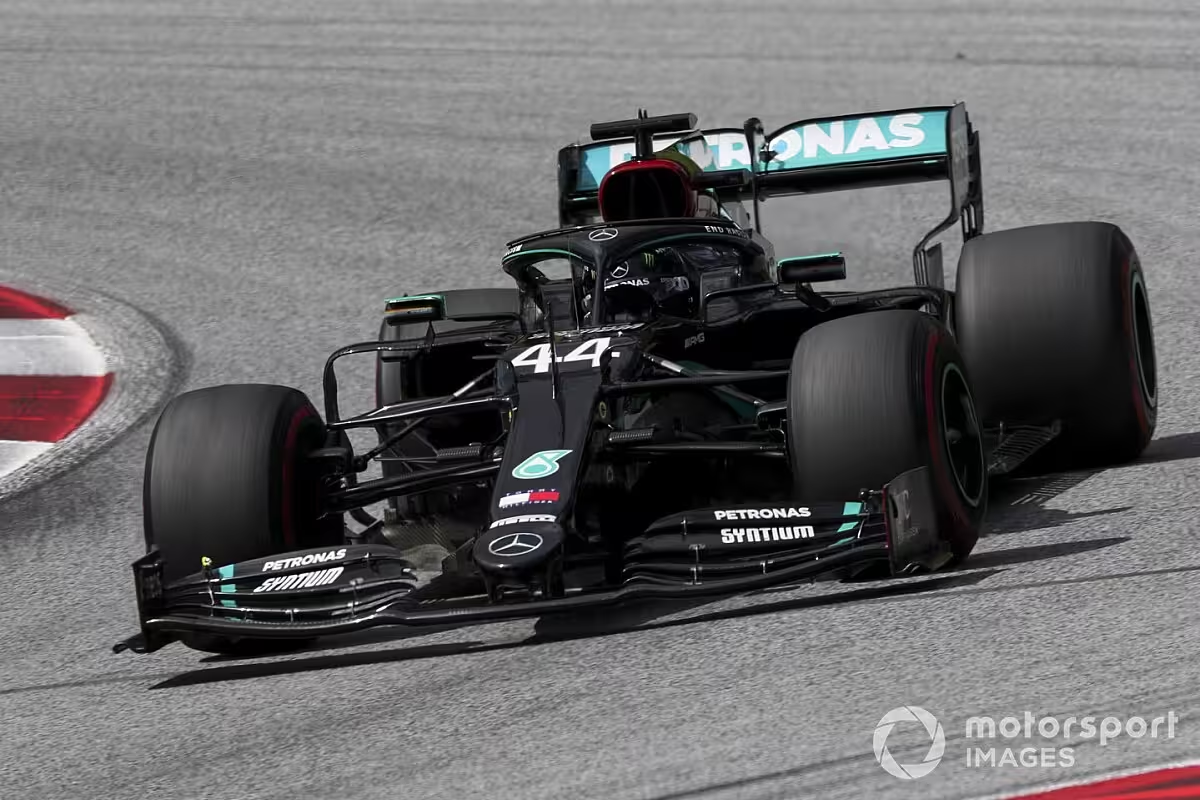
Under the leadership of Team Principal Toto Wolff, Mercedes achieved a level of dominance never before seen in the sport.
- The Stats: Between 2014 and 2021, Mercedes won a record-breaking 8 consecutive Constructors' Championships.
- The Drivers: Lewis Hamilton won six of his seven world titles in this era, while Nico Rosberg claimed the 2016 crown after a grueling intra-team rivalry.
- The Peak: The 2020 W11 is widely considered the fastest Formula 1 car ever built, shattering track records globally to ground-effect aerodynamics finally dethroned Mercedes. The team spent two painful seasons wrestling with a flawed car concept, watching Red Bull assume control of the grid.
The turbulence culminated in a shock announcement before the 2024 season: Lewis Hamilton, the face of the franchise, activated a release clause to join Ferrari for 2025.
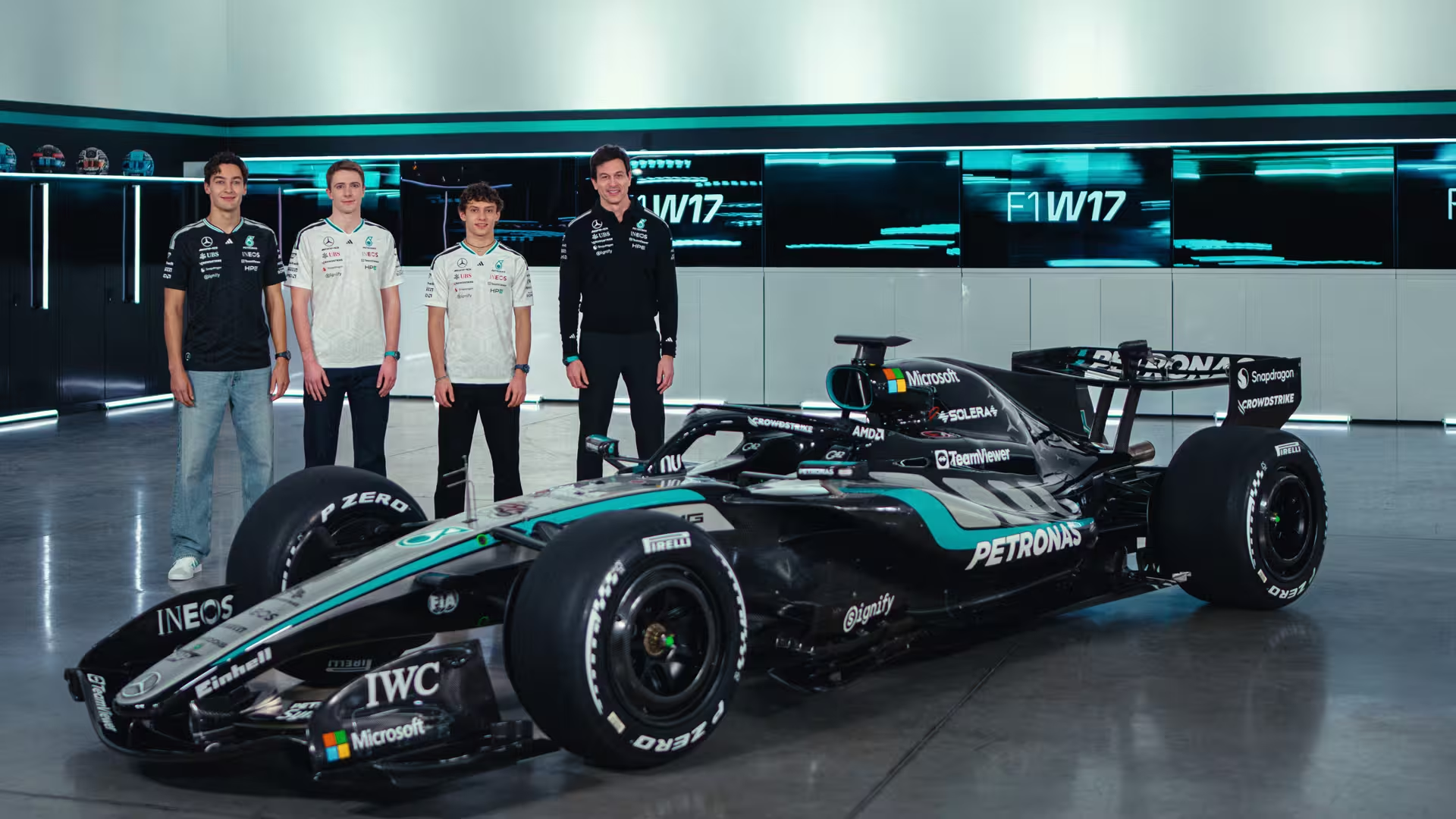
However, Mercedes used this seismic shift to successfully rebuild. With Hamilton gone, George Russell assumed team leadership alongside teenage prodigy Kimi Antonelli. Entering the 2026 season, Mercedes has mastered the latest aerodynamic development cycle. With Antonelli and Russell consistently.
Test Your Knowledge!
Click the button below to generate an AI-powered quiz based on this article.
Did you enjoy this article?
Show your appreciation by giving it a like!
Conversation (0)
Cite This Article
Generating...