Science
How Your DNA Is Quietly Shaping Your Health in 2026
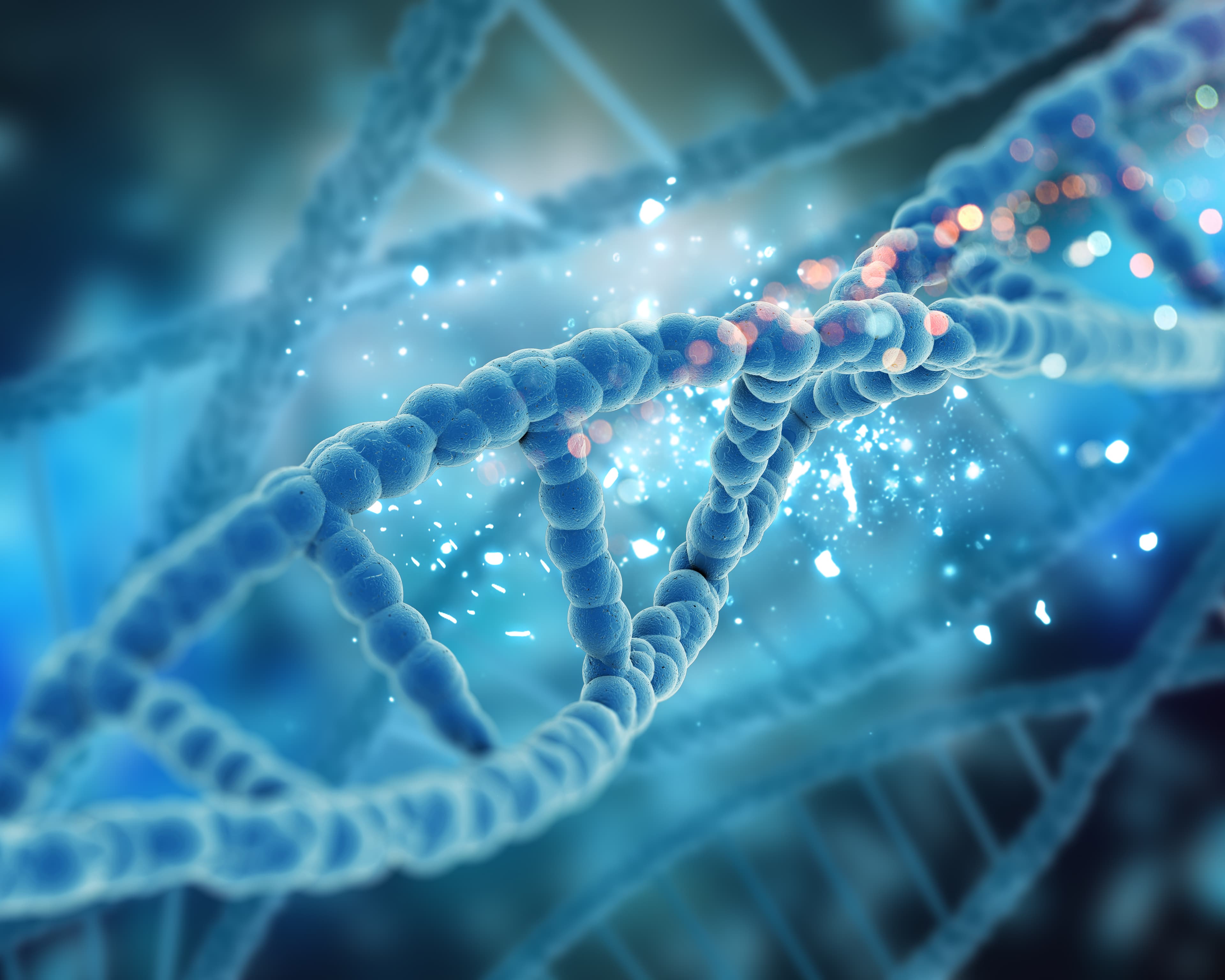
Inside every cell in your body, a 3-billion-letter instruction manual is already making decisions about your life. Here's what it's saying and what you can do about it.
You didn't choose your DNA. But in 2026, for the first time in human history, you can read it, understand significant portions of it, and use that knowledge to make smarter decisions about your health often before any symptoms appear.
This isn't the plot of a sci-fi film. Genetic medicine has quietly moved out of specialist clinics and into everyday life. Millions of people around the world now carry insights about their own biology that their grandparents could never have imagined. And the gap between what science knows and what most people understand is growing wider by the month.
This article closes that gap. No jargon. No assumptions. Just the things worth knowing explained clearly, for anyone.
Let's Start From Scratch - What Actually Is DNA?
Inside almost every cell in your body sits a nucleus a tiny control room. Inside that control room is your DNA, coiled up tightly like an enormous ball of string. If you unravelled all the DNA from a single one of your cells and stretched it out, it would measure roughly two metres long. You have approximately 37 trillion cells. The maths is staggering.
DNA is made of four chemical letters, A, T, C, and G. These letters are arranged in pairs along a twisted ladder the famous double helix and they spell out instructions for building and running a human body. Your entire genome contains about 3 billion of these letter pairs.
A USEFUL ANALOGY
Think of your genome as a recipe book with 23 chapters (chromosomes), containing around 20,000 individual recipes (genes). Each recipe tells your cells how to make a specific protein and proteins do essentially everything: they build structures, carry signals, fight infection, regulate mood, digest food, and repair damage.
The difference between your recipe book and your neighbour's is surprisingly small humans share about 99.9% of their DNA. But that 0.1% variation across billions of letters accounts for an enormous range of differences in appearance, personality, and health risk.
The Numbers Tell a Striking Story
- 3 billion letter pairs in a single human genome
- ~20,000 protein-coding genes in the human body
- 99.9% DNA shared between any two humans on Earth
- Under $200 the cost of a full genome sequence in 2026, down from $100 million in 2001
From the Lab to Your Living Room - What's Changed
For most of human history, genetics was purely theoretical. Scientists knew heredity existed that traits passed from parents to children but had no idea how. The discovery of DNA's structure in 1953 changed everything. The sequencing of the first complete human genome, completed in 2003 after 13 years and $2.7 billion, was a landmark moment.
What followed was one of the fastest technological cost reductions in history. By 2026, sequencing a human genome costs less than a dental check-up in many countries. The tools are faster, more accurate, and increasingly accessible to ordinary people not just researchers in elite institutions.
Three developments in particular have brought genetics into everyday life:
1. Consumer DNA Testing Services like 23andMe, AncestryDNA, and newer clinical-grade platforms let you send a saliva sample and receive insights about ancestry, inherited traits, and health risk factors from your own home. Tens of millions of people have now done this.
2. Clinical Genetic Testing Doctors now routinely order genetic tests to guide treatment particularly in oncology (cancer care), cardiology, and pharmacogenomics (which drugs will work best for you, based on your genes).
3. Newborn & Prenatal Screening Many countries now screen newborns for dozens of genetic conditions at birth. Prenatal genetic testing can identify chromosomal differences and hereditary conditions early in pregnancy, giving families time to prepare and access support.
What Your Genes Are and Aren't Telling You
This is the most misunderstood part of genetics, and it matters enormously. A genetic risk factor is not the same as a diagnosis. Your DNA does not write your future in permanent ink. Understanding this distinction is the foundation of everything.
Genes load the gun. Environment pulls the trigger or doesn't. Your choices, your environment, and sheer chance all play an enormous role.
Consider heart disease. Certain genetic variants increase your likelihood of developing it but whether you actually do depends heavily on diet, exercise, stress levels, smoking, sleep, and a host of other factors. Someone with a high genetic risk who lives well may outlive someone with low genetic risk who doesn't.
The scientific term for this is gene-environment interaction. Most common diseases heart disease, type 2 diabetes, many cancers, depression are polygenic (influenced by hundreds or thousands of small genetic variants) and multifactorial (shaped by both genes and environment). Very few health conditions are purely genetic and completely unavoidable.
Conditions Where Genetics Plays a Significant Role
That said, there are areas where your genetic blueprint is a powerful health signal:
- Cardiovascular Disease Variants in genes like APOE, LDLR, and PCSK9 affect cholesterol metabolism and heart attack risk sometimes dramatically.
- Hereditary Cancers BRCA1 and BRCA2 gene mutations significantly elevate breast and ovarian cancer risk. Lynch syndrome raises colorectal cancer risk. Knowing early allows for proactive screening.
- Type 2 Diabetes Dozens of gene variants contribute to insulin resistance and glucose regulation. Genetic risk scores are increasingly used to identify high-risk individuals before symptoms appear.
- Mental Health Genes explain a substantial portion of risk for conditions like depression, schizophrenia, and bipolar disorder though environment and life experiences remain equally powerful.
- Drug Response (Pharmacogenomics) Your genes reveal how your liver metabolises medications. Some people are "fast metabolisers" who need higher doses; others process drugs slowly and risk serious side effects at standard doses.
- Bone & Joint Health Genetic variants influence bone density and risk of conditions like osteoporosis. Knowing your risk early can prompt diet, exercise, and monitoring habits that prevent fractures decades later.
The Exciting Frontier - Polygenic Risk Scores
One of the most significant advances of the past five years is the polygenic risk score (PRS). Rather than looking at one or two genes, a PRS analyses thousands of genetic variants simultaneously and calculates a combined risk score much like a credit score, but for your health.
For conditions like coronary artery disease, type 2 diabetes, and certain cancers, polygenic risk scores have become powerful enough to rival and sometimes surpass traditional risk factors like blood pressure readings or cholesterol levels. In 2026, clinical guidelines in several countries now recommend incorporating PRS into routine cardiovascular risk assessments.
REAL WORLD IMPACT
A 35-year-old with normal cholesterol but a high polygenic risk score for heart disease can now be identified as a high-priority candidate for early lifestyle intervention and monitoring before any clinical warning signs appear. This is the promise of predictive, preventive medicine.
Separating Myth from Reality
Public understanding of genetics is still filled with misconceptions. Here are the most common:
Myth: "If my parent had it, I'll definitely get it." Fact: Most conditions are influenced by many genes and your environment. Inheritance increases risk it rarely makes outcomes certain.
Myth: "My DNA is fixed there's nothing I can do." Fact: Your DNA sequence is fixed, but how your genes are expressed changes constantly. Lifestyle powerfully shapes gene activity through a field called epigenetics.
Myth: "Consumer DNA tests give you medical diagnoses." Fact: Consumer tests offer probabilistic insights and ancestry data. Clinical diagnoses require validated medical tests interpreted by qualified healthcare professionals.
Myth: "Genetic testing is only for sick people." Fact: Preventive genetic insight is most valuable before disease appears. Knowing your risks early gives you the maximum window to act.
The Ethical Landscape - Privacy, Equity, and Consent
The democratisation of genetics raises real ethical questions that deserve honest discussion.
- Who owns your genetic data? When you send a saliva sample to a consumer testing company, your data may be stored, shared with researchers, or in some cases accessed by insurers or employers, depending on your country's laws. Read the terms carefully and understand what you're consenting to.
- Genetic discrimination In some countries, laws exist to prevent insurance companies from using genetic data against you. In others, no such protections exist. This is an active and important policy debate happening right now around the world.
- The equity gap Most large genomic studies have historically been conducted on populations of European ancestry. This means genetic risk tools are less accurate and sometimes misleading for people from other backgrounds. Closing this gap is one of the most urgent priorities in modern genetics research.
- The psychological weight of knowing Learning you carry a genetic variant linked to a serious illness is not a neutral experience. Genetic counsellors exist specifically to help people navigate this and consulting one before and after testing is strongly recommended.
What Should You Actually Do With This?
Knowing that genetics matters is one thing. Knowing how to engage with it wisely is another. Here is a grounded, practical framework:
1. Know your family history. It remains the most underused and most accessible genetic tool available. Speak to relatives. Document patterns of illness across generations. Share this with your doctor it's more useful than most people realise.
2. Consider genetic counselling before testing. If you're thinking about clinical genetic testing particularly for cancer risk or inherited conditions speak to a genetic counsellor first. They help you understand which tests are appropriate and how to interpret results.
3. Approach consumer tests with calibrated expectations. They're fascinating and can surface useful signals. But they are not medical diagnoses. A positive result warrants a conversation with a doctor. A negative result is not a guarantee of good health.
4. Focus on what you can change. Regardless of your genetic profile, the fundamentals of good health remain the fundamentals. Sleep, movement, nutrition, not smoking, managing stress these interventions are powerful, and they work even if you carry elevated genetic risk.
5. Stay curious, not anxious. Genetics is giving us a remarkable new window into our own biology. Treat it as information not as destiny.
Your DNA has always been shaping your health. What's new in 2026 is that we can read it, understand it, and increasingly act on it in ways that improve outcomes for real people.
This is genuinely one of the most significant scientific shifts in living memory. Diseases that once arrived without warning can now be anticipated. Treatments that once required years of trial-and-error can now be matched to your biology from the start. Lives are already being saved.
But genetics is not a crystal ball. It is a conversation between your biology and your life. The double helix inside your cells is not a sentence it is an opening paragraph. The rest of the story is still being written by the choices you make, the environment you live in, and the care you give yourself and those around you.
Understanding your DNA doesn't diminish the mystery of being human. If anything, it deepens it revealing just how extraordinary and intricate the biological machinery behind every heartbeat truly is.
Cover image by Freepik (www.freepik.com)
Test Your Knowledge!
Click the button below to generate an AI-powered quiz based on this article.
Did you enjoy this article?
Show your appreciation by giving it a like!
Conversation (0)
Cite This Article
Generating...