Engineering
The Incredible Story of How a Torpedo Sinks a Giant Ship
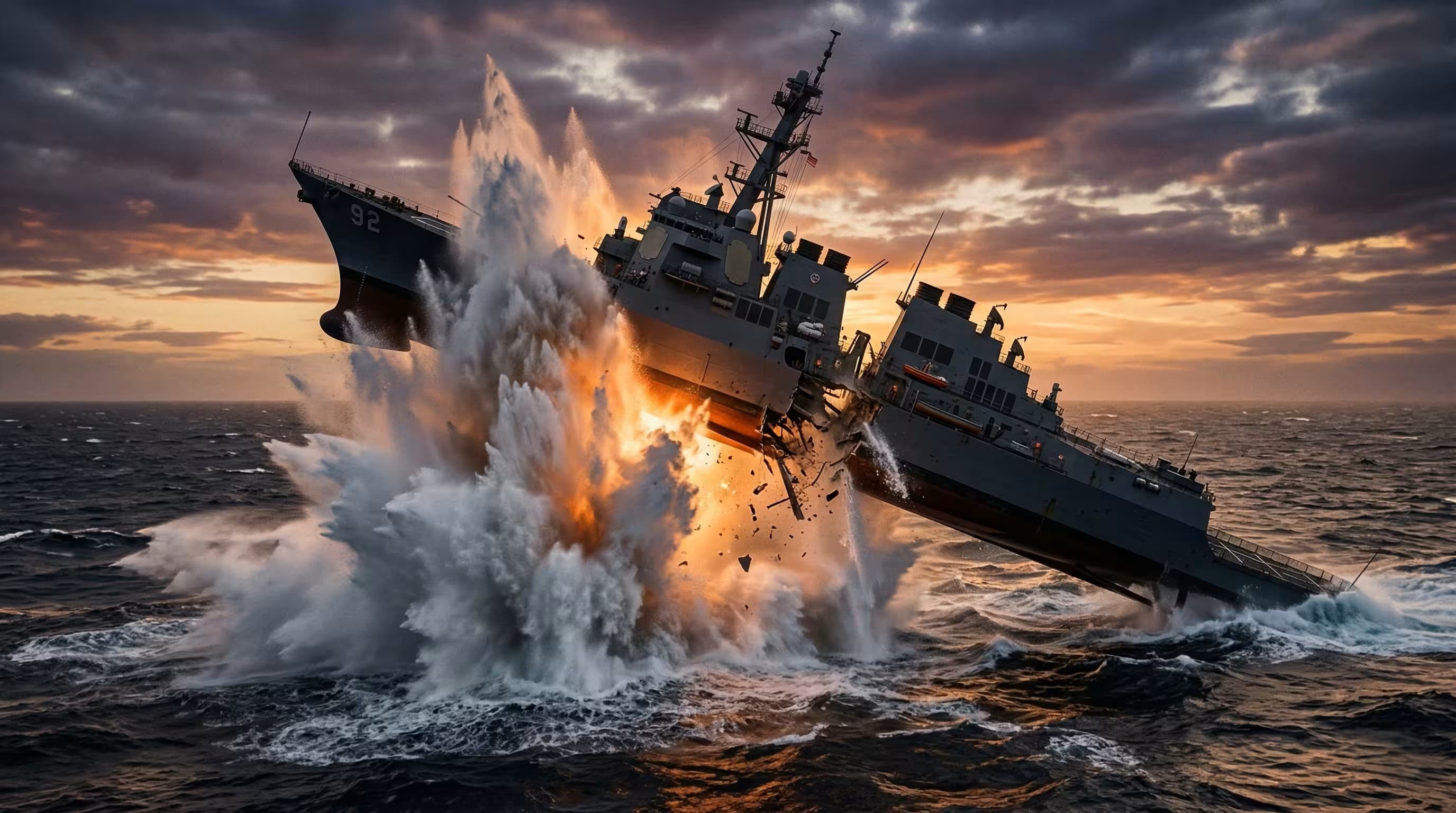
If you imagine a torpedo hitting a ship, you probably think of a massive metal "spear" crashing into the side of the hull, blowing a hole in the steel, and letting water rush in.
While that can happen, it isn't actually how modern torpedoes work. In fact, if a torpedo actually touches the ship, the engineers consider it a bit of a "miss." To truly destroy a massive vessel, you don't hit the side you break its back.
Here is the step-by-step story of the brutal physics behind the "Keel Break."
1.0 The Backbone of the Ship (The Keel)
Before we look at the explosion, we have to understand the ship. Every large ship is built around a Keel. Think of the keel as the ship’s spine. It is a massive, incredibly strong beam of steel that runs from the front (bow) to the back (stern).
As long as the spine is intact, the ship is a floating fortress. But just like a human, if you snap the spine, the body cannot function.
2.0 The Approach: The Silent Slide
Unlike the old days of World War II movies, modern torpedoes are "smart." As the torpedo approaches its target, it uses magnetic sensors to detect the massive amount of steel in the ship’s hull.
Instead of aiming for the side, the torpedo's "brain" tells it to dive. It slides silently through the water, passing directly underneath the center of the ship.
3.0 The Explosion: Creating the "Gas Bubble"
When the torpedo is exactly under the center of the ship, it detonates. This is where the physics gets fascinating.
Because the explosion happens underwater, it creates a massive, high-pressure Gas Bubble. This isn't just a small pop; it is a giant sphere of super-heated gas expanding at incredible speeds.
Because water is heavy and hard to move, that gas bubble has nowhere to go but UP.
4.0 The Lift: Defying Gravity
As the bubble expands, it pushes thousands of tons of water upward against the bottom of the ship. The center of the ship is suddenly lifted high out of the water.
Imagine two people holding a long wooden plank at either end. If a third person suddenly runs into the middle and lifts it up with a powerful shove, the plank bows upward. For a ship, this puts massive stress on the steel "spine" (the keel).
5.0 The Void: The "Hole" in the Ocean
Here is the part that does the real damage. After the bubble reaches its maximum size, it suddenly collapses.
Nature hates a vacuum. The heavy ocean water rushes back in to fill the space where the bubble was. This creates a massive "void" or a hole in the water directly under the ship.
For a few terrifying seconds, the middle of the ship is hanging in mid-air with zero support from the water.
6.0 The Snap: Gravity Wins
Now, the physics of gravity takes over.
- The front of the ship is supported by water.
- The back of the ship is supported by water.
- The middle is hanging over a hole.
The weight of the engines, the deck, and the steel becomes too much. Under its own weight, the ship’s keel snaps. The "spine" is broken.
The ship doesn't just "leak" it literally breaks in half. Within minutes, the two halves tilt and sink into the abyss.
7.0 Summary: Why Engineers Love the "Keel Break"
Engineers use this method because it is efficient.
- To sink a ship by hitting the side, you might need 3 or 4 torpedoes to let in enough water.
- To sink a ship by breaking the keel, you only need one.
By using the power of the ocean itself the weight of the water and the force of gravity a relatively small torpedo can destroy a ship a hundred times its size. It is the ultimate example of "working smarter, not harder" in the world of physics.
Test Your Knowledge!
Click the button below to generate an AI-powered quiz based on this article.
Did you enjoy this article?
Show your appreciation by giving it a like!
Conversation (0)
Cite This Article
Generating...