Engineering
The 2026 Gulf War Drone Race
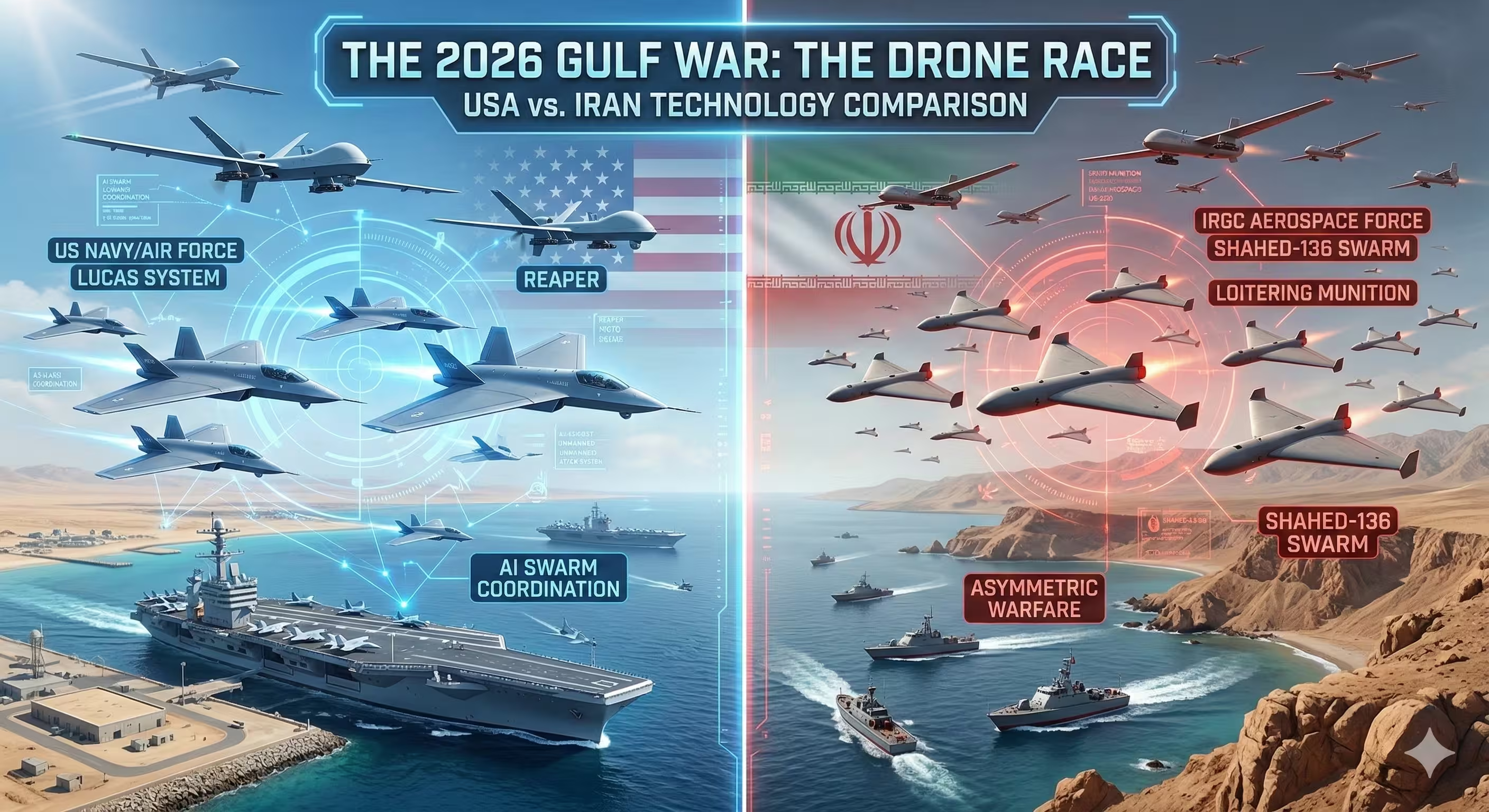
The outbreak of the 2026 Gulf War initiated by the US and Israeli campaign dubbed "Operation Epic Fury" has fundamentally shifted the paradigm of modern aerial combat. Unlike previous conflicts in the region, which were dominated by multi-million-dollar stealth jets and cruise missiles, the 2026 conflict is defined by the rapid deployment of Unmanned Aerial Vehicles (UAVs).
For military analysts and tech enthusiasts alike, the skies over the Persian Gulf have become a live testing ground for the future of automated warfare. This guide breaks down the specific drone technologies deployed by both Iranian and US forces, highlighting how low-cost, AI-integrated systems are superseding traditional airpower.
1.0 Iranian Drone Technology: The Economics of Asymmetric Warfare
Iran entered the 2026 conflict with one of the most extensive and combat-tested drone arsenals in the world. Rather than competing with the United States in traditional air superiority, Tehran's strategy revolves around "cost-imposing" swarm tactics designed to overwhelm advanced air defense networks.
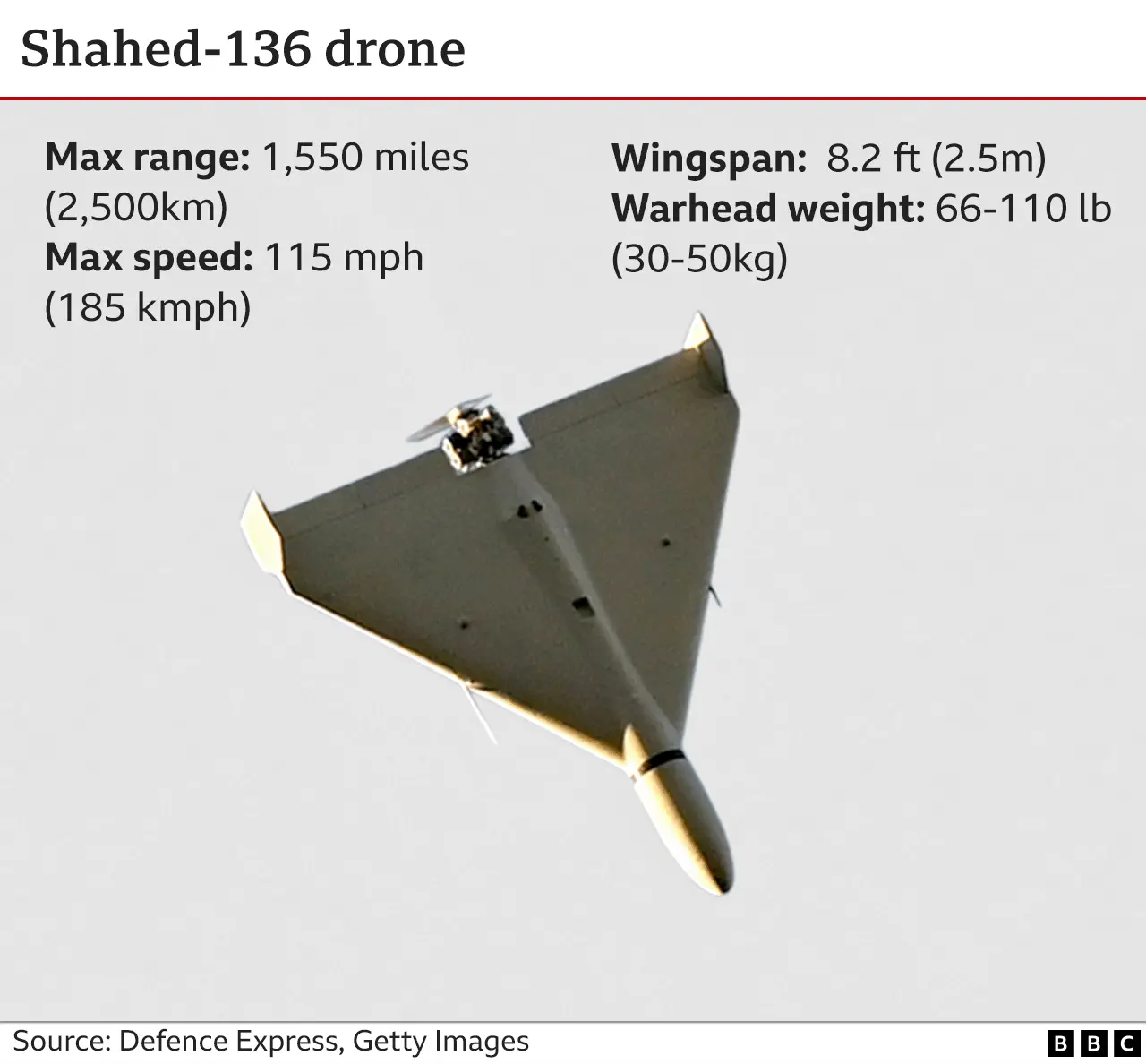
1.1 The Shahed-136 (Kamikaze Drone) The backbone of Iran's drone offensive across the Gulf Cooperation Council (GCC) territories is the Shahed-136, a one-way attack drone (or loitering munition).
- Cost: Approximately $20,000 per unit.
- Range: Up to 2,500 kilometers (1,550 miles).
- Wingspan- 2.5m (8.2 feets)
- Payload: Roughly 30-50 kilograms (66-110 pounds) of explosives.
- Cruising Speed: 185 km/h (115 mph).
1.2 The "Math Challenge" of Air Defense
The primary technological advantage of the Iranian drone fleet is not sophistication, but sheer economic asymmetry. By launching hundreds of these low-cost drones simultaneously, Iran forces the US and its allies to expend highly advanced interceptors. For context, a US-made Patriot PAC-3 surface-to-air missile costs roughly $4 million. Firing a $4 million missile to destroy a $20,000 drone creates an unsustainable financial imbalance, oversaturating defense grids and allowing subsequent strikes to hit softer targets.
1.3 Navigation and Targeting
While heavily sanctioned, Iranian drones utilize a mix of smuggled commercial components, including basic accelerometers, gyroscopes, and satellite navigation receivers. They rely on pre-programmed, terrain-hugging flight paths to evade radar detection until the final terminal dive.
2.0 USA Drone Technology: The Debut of the LUCAS
In a highly unusual move for the Pentagon's traditionally slow procurement process, the US military debuted a brand-new, fast-tracked drone system specifically for Operation Epic Fury. Recognizing the unsustainable cost of relying solely on $20M+ MQ-9 Reapers or expensive cruise missiles, the US pivoted to "attritable" (expendable) tech.
2.1 The LUCAS System
The most significant technological revelation of the 2026 Gulf War is the US deployment of the LUCAS (Low-cost Unmanned Combat Attack System). Ironically, this drone is a direct, reverse-engineered evolution of the Iranian Shahed-136, upgraded with superior American networking and AI.
- Manufacturer: SpektreWorks (Arizona).
- Cost: Approximately $35,000 per unit.
- Dimensions: Delta-wing design, 10 feet long with an 8-foot wingspan.
- Range: 714 kilometers (444 miles).
- Payload: 18 kilograms (40 pounds).
- Speed: Up to 194 km/h (105 knots).
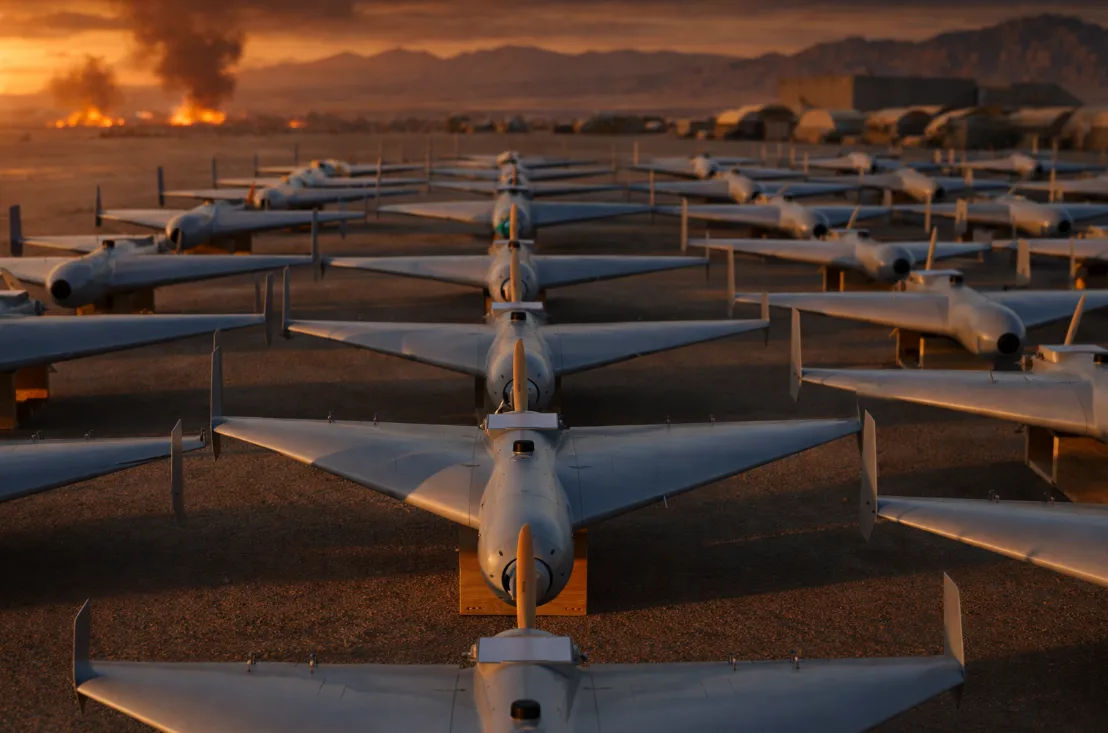
2.2 Advanced Connectivity and AI Integration
Where the LUCAS outpaces its Iranian predecessor is in its "orchestration."
Satellite Links: The LUCAS utilizes highly secure, jam-resistant satellite communications, including SpaceX's Starshield and Viasat, ensuring continuous links even in heavy electronic warfare environments.
Swarm Coordination: Utilizing software developed by defense startups, LUCAS drones can communicate with one another autonomously. This allows for dynamic target acquisition meaning the swarm can redirect itself mid-flight based on real-time battlefield intelligence, rather than relying strictly on pre-programmed GPS coordinates.
3.0 The Strategic Shift: Decision Compression
The integration of these drones on both sides points to a broader technological shift in warfare known as Decision Compression.
With thousands of low-cost drones in the air, human operators can no longer process targets fast enough. US forces have integrated AI models to shorten the "kill chain." Machine learning algorithms analyze satellite imagery, drone feeds, and radar data in real-time, instantly recommending targets and matching them to the appropriate drone swarm. This allows for strikes at the "speed of thought," fundamentally altering how quickly a modern war escalates.
4.0 Conclusion
The 2026 Gulf conflict will be studied for decades, not for the dominance of traditional fighter jets, but as the moment inexpensive, autonomous drones officially leveled the playing field of modern warfare. The evolution from the $20,000 Shahed to the $35,000 AI-networked LUCAS proves that the future of military supremacy belongs to those who can produce mass, autonomous capability at the lowest possible cost.
Test Your Knowledge!
Click the button below to generate an AI-powered quiz based on this article.
Did you enjoy this article?
Show your appreciation by giving it a like!
Conversation (0)
Cite This Article
Generating...