Technology
The Developer’s Dilemma: Is React.js Enough, or Do You Need the Next.js Powerhouse?
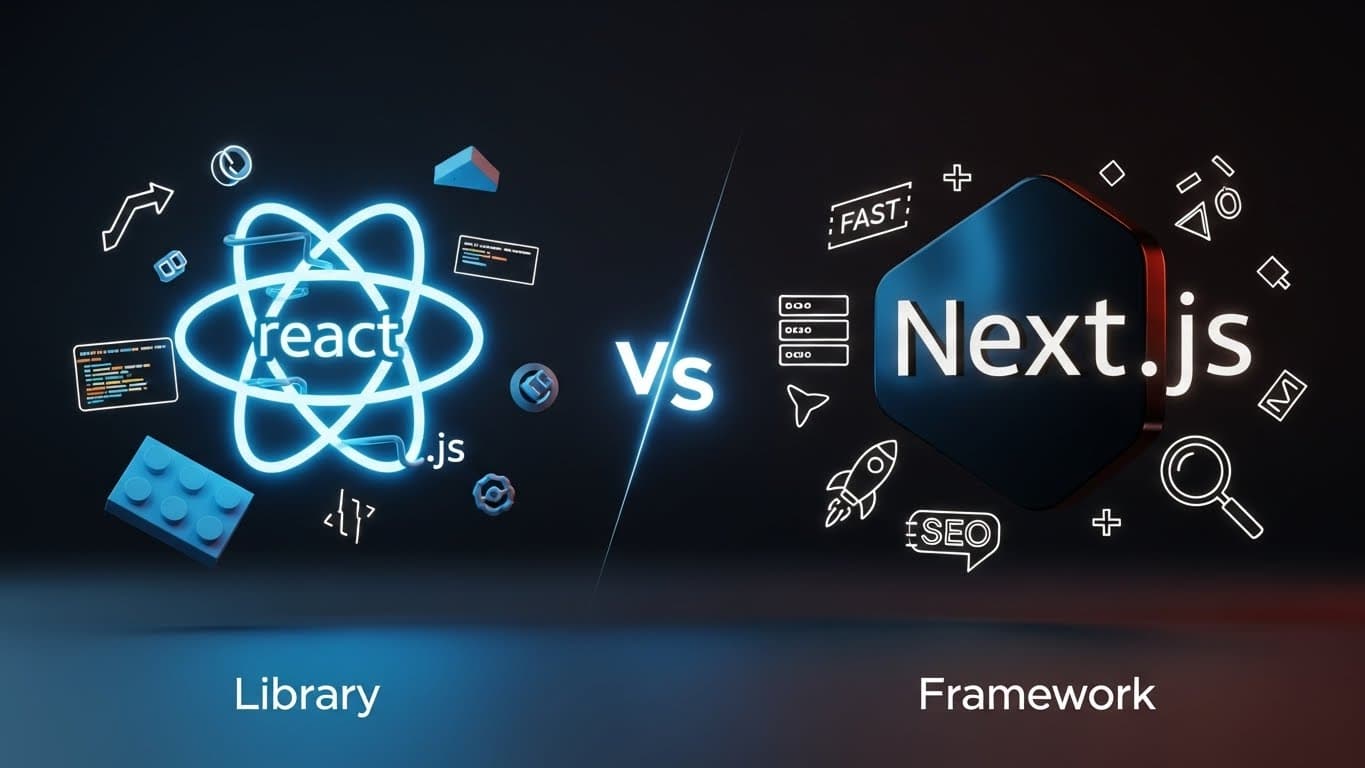
Choosing between React and Next.js isn't just about picking a tool; it’s about deciding how you want your users to experience the web. While the industry often pits them against each other, the truth is more nuanced. One is a foundational library, and the other is a production-ready framework built on top of that very foundation.
1. React.js: The Ultimate Lego Set
React changed the game by introducing a component-based architecture. Think of it as a massive, high-quality box of Legos. You have all the pieces (hooks, state management, virtual DOM) to build anything you can imagine.
The Freedom (and the Cost): Because React is a library, it stays out of your way. However, this means you are the architect. You have to manually pick your routing library (like React Router), manage your own SEO hacks, and figure out how to optimize your bundle sizes.
The SPA King: React shines in building Single Page Applications (SPAs). It’s perfect for dashboards or internal tools where the user stays on one page and expects lightning-fast, "app-like" interactions without full-page reloads.
2. Next.js: The "Batteries-Included" Evolution
If React is the Lego set, Next.js is the pre-assembled, high-performance sports car. It takes the best of React and adds a layer of professional-grade engineering right out of the box.
The End of the "Blank Page" Problem: In a standard React app (Client-Side Rendering), the browser gets a blank HTML file and then has to download the JavaScript before the user sees anything. Next.js solves this with Server-Side Rendering (SSR) and Static Site Generation (SSG). The server "pre-renders" the page, so the user (and Google’s search bots) sees content instantly.
Zero-Config Routing: Forget manual setup. With Next.js, your file structure is your routing. Create a file in the pages or app directory, and it’s live.
3. The Performance Verdict: SEO & Speed
Research into web vitals shows that First Contentful Paint (FCP) is significantly better on Next.js for content-heavy sites.
Next.js is built for the public web. If you are building an e-commerce site, a blog, or a landing page where SEO and organic traffic are your lifeblood, Next.js is the non-negotiable choice.
React is built for interaction. If you are building a complex web-based software (like a photo editor or a private CRM) where SEO doesn't matter, the simplicity of a pure React SPA is often more than enough.
Final Thoughts: Which One Should You Choose?
Don't choose based on hype. Choose based on your User's Journey.
If your goal is to be discovered on Google and provide a millisecond-fast landing experience, Next.js is your best friend. If you’re building a gated application where the user is already "in" and needs a fluid, dynamic interface, React.js gives you the most control.
Test Your Knowledge!
Click the button below to generate an AI-powered quiz based on this article.
Did you enjoy this article?
Show your appreciation by giving it a like!
Conversation (0)
Cite This Article
Generating...