Science
The Microbe That Can Survive Temperatures That Should Kill Almost Everything
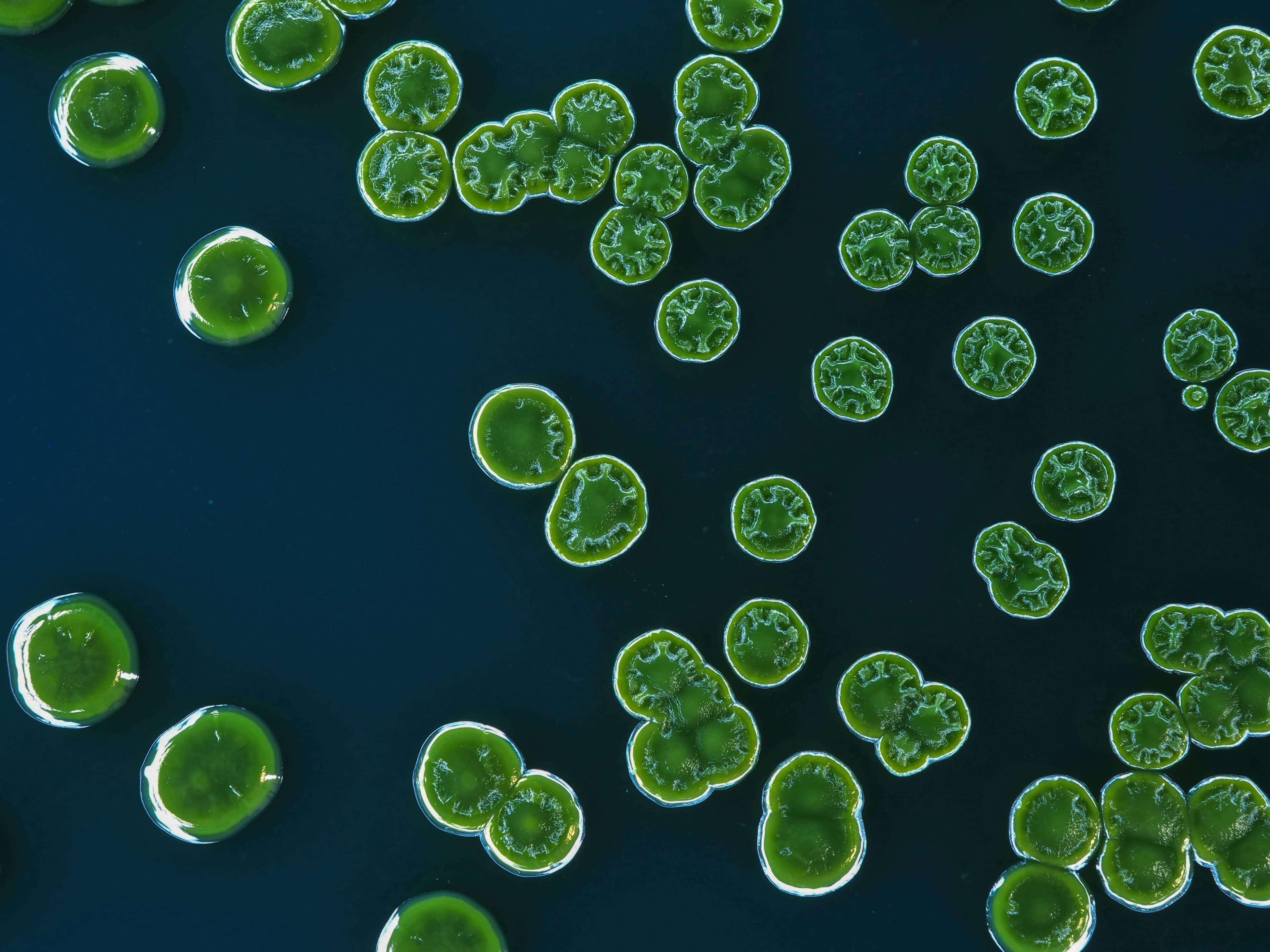
There is a creature living in the boiling water of Yellowstone's hot springs that should not exist.
By every intuition we have about life, about the chemical fragility of proteins, the vulnerability of DNA, the narrow temperature range within which biological processes function, this organism should be dead. The water around it reaches temperatures of 80, 90, sometimes over 100 degrees Celsius. These are temperatures at which most proteins unfold and lose their function, at which cell membranes dissolve, at which the molecular machinery of life should simply fall apart.
And yet it thrives. It feeds. It reproduces. It has been doing so for billions of years, long before any human being stood at the edge of a hot spring and wondered how that was possible.
The organisms that live at temperature extremes, called thermophiles if they prefer heat, hyperthermophiles if they require it, are among the most scientifically fascinating life forms on Earth. They have overturned fundamental assumptions about the limits of life. They have reshaped our understanding of where life might exist elsewhere in the universe. They have given us biotechnology tools that have transformed medicine, forensics, and molecular biology. And they raise the question that is both ancient and urgently modern- what exactly is the upper limit of life, and have we found it yet?
Meeting the Extremists
The scientific study of temperature-tolerant life began in earnest in the 1960s and 1970s, when a microbiologist named Thomas Brock began systematically sampling the hot springs of Yellowstone National Park, a landscape of geothermally heated water that most researchers had assumed was biologically sterile at its highest temperatures.
Brock found life. Everywhere he looked in the hot springs, at temperatures that should have been lethal, he found microorganisms, bacteria forming colorful mats on the floors and edges of the springs, living in water that was too hot for any previously known organism.
One of his most important discoveries was a bacterium he named Thermus aquaticus, a rod-shaped organism isolated from a Yellowstone hot spring in 1969 that grew optimally at around 70 degrees Celsius (Brock and Freeze, 1969). At the time, this was remarkable enough. It was the most heat-tolerant bacterium ever discovered, surviving temperatures that would cook most food and kill most pathogens.
But Thermus aquaticus turned out to be only the beginning. As researchers explored more extreme environments, deeper hot springs, submarine hydrothermal vents, acidic volcanic pools, they found organisms thriving at temperatures that Brock's discovery had not prepared them for.
The current record holder for heat tolerance is Methanopyrus kandleri, a microorganism discovered in hydrothermal vents on the ocean floor that can survive and reproduce at 122 degrees Celsius, well above the boiling point of water at sea level (Kashefi and Lovley, 2003). At the pressures found at deep ocean hydrothermal vents, water remains liquid above 100 degrees, and Methanopyrus kandleri has occupied that scalding, pressurized niche for what appears to be an immense span of geological time.
How Do They Do It? The Molecular Secrets of Heat Survival
The question of how thermophiles survive temperatures that destroy ordinary biology is not just scientifically fascinating, it has driven some of the most important discoveries in molecular biology of the past half century.
At the heart of the answer is a set of molecular adaptations that are elegant in their simplicity and profound in their implications.
Heat-Stable Proteins
In ordinary organisms, proteins are folded into precise three-dimensional shapes that determine their function. Heat disrupts this folding, the molecular bonds that maintain the protein's shape weaken and break, the protein unfolds, and it loses its ability to function. This is why cooking denatures food proteins and why high fever is dangerous.
Thermophile proteins resist this denaturation through several mechanisms. Their amino acid compositions are subtly different from those of their heat-sensitive counterparts, with more charged amino acids on their surfaces that maintain favorable electrical interactions at high temperatures, and fewer of the amino acids that tend to unfold under thermal stress. Their internal structures are more tightly packed, with stronger hydrophobic cores that resist the thermal agitation that would unfold a less compact protein. And many thermophile proteins are stabilized by additional disulfide bonds, chemical bridges between different parts of the protein chain that act like molecular staples, holding the structure together when heat would otherwise pull it apart (Vieille and Zeikus, 2001).
The result is proteins that perform their biochemical functions at temperatures that would instantly destroy equivalent proteins from a human cell, and that remain stable, folded, and active across a temperature range that would seem impossibly hostile to any organism we previously understood.
Specialized Cell Membranes
Every cell is enclosed by a membrane, a barrier made of lipid molecules that separates the cell's interior from its environment and regulates what enters and exits. In ordinary organisms, high temperatures cause these membranes to become excessively fluid, the lipid molecules move too freely, the membrane loses its integrity, and the cell effectively melts.
Thermophiles have evolved membranes with different lipid compositions that maintain appropriate fluidity across their operating temperature range. Some thermophilic bacteria incorporate more saturated fatty acids in their membranes, making them stiffer and more resistant to the fluidising effects of heat. The most extreme heat-tolerant organisms, the archaea, a distinct domain of life separate from bacteria and eukaryotes, have evolved an entirely different membrane chemistry, using ether-linked lipids rather than the ester-linked lipids found in other organisms, and in some cases creating membranes in which the two lipid layers are actually fused into a single monolayer spanning the full width of the membrane (Albers and Jarrell, 2015). This monolayer membrane is extraordinarily resistant to disruption by heat.
Heat Shock Proteins- The Emergency Response
Even organisms adapted to extreme heat face situations where temperatures exceed their normal operating range. To handle these excursions, thermophiles employ heat shock proteins, molecular chaperones that help stabilize and refold other proteins that begin to denature under excessive thermal stress.
Heat shock proteins are not unique to thermophiles, they exist in virtually all living organisms, including humans, as a response to fever and thermal stress. But in thermophiles, they are more numerous, more varied, and more thermally stable than in organisms adapted to lower temperatures. They form a molecular safety net that catches unfolding proteins before they aggregate irreversibly, and either refolds them back to their functional conformation or marks them for disposal.
DNA Stability at High Temperatures
DNA, the molecule that carries genetic information, is itself vulnerable to heat. At high temperatures, the two strands of the DNA double helix separate, a process called denaturation, and the DNA can also sustain direct chemical damage including depurination, in which the chemical bases that encode genetic information are lost from the backbone.
Thermophiles address DNA stability through multiple mechanisms. Many hyperthermophiles use a specialized enzyme called reverse gyrase, found exclusively in thermophilic organisms, that introduces positive supercoiling into DNA, increasing its melting temperature and making it more resistant to heat-induced strand separation (Forterre, 2002). Others maintain high concentrations of certain ions or small molecules that stabilize DNA at elevated temperatures. And many thermophilic archaea have DNA-binding proteins that compact and protect the genome at temperatures that would otherwise damage it.
Pyrococcus furiosus- The Fireball That Changed Science
Among the thousands of thermophilic organisms that have been discovered and characterized, one deserves particular attention for the scientific impact it has had.
Pyrococcus furiosus, whose name translates, with appropriate drama, as "rushing fireball", is a hyperthermophilic archaeon discovered in geothermally heated marine sediments off the coast of Vulcano Island, Italy, in 1986 (Fiala and Stetter, 1986). It grows optimally at approximately 100 degrees Celsius and can tolerate temperatures up to 105 degrees.
What makes Pyrococcus furiosus particularly significant is the set of enzymes it produces, molecular machines optimized to function at boiling point temperatures that have turned out to be extraordinarily useful for biotechnology applications.
The enzymes of P. furiosus include highly thermostable versions of the metabolic machinery found in all organisms, but stable at temperatures where no ordinary enzyme could function. Researchers have used these enzymes as tools for industrial biochemistry, for studying the fundamentals of metabolism, and for developing new biotechnology applications ranging from hydrogen production to biofuel synthesis.
The organism has also attracted attention as a potential platform for metabolic engineering, a chassis organism in which new biosynthetic pathways can be engineered to produce chemicals of commercial value at high temperatures, where the risk of contamination from other organisms (which cannot survive the conditions) is minimal.
The Discovery That Transformed Biotechnology
The most consequential scientific application of thermophile biology did not come from Pyrococcus furiosus. It came from the far less dramatically named Thermus aquaticus, Thomas Brock's Yellowstone discovery from 1969.
The key was an enzyme that T. aquaticus uses to replicate its DNA. In all living organisms, DNA replication requires a protein called DNA polymerase, an enzyme that reads the existing DNA strand and synthesizes a complementary new strand. In ordinary organisms, DNA polymerase works at body temperature and denatures when heated.
In T. aquaticus, the DNA polymerase, now universally known as Taq polymerase, is thermostable. It functions at temperatures up to 95 degrees Celsius and remains active through repeated heating and cooling cycles that would destroy any conventional DNA polymerase.
This property turned out to be exactly what was needed for a technique called the Polymerase Chain Reaction (PCR), a method for amplifying specific sequences of DNA that requires cycling through high temperatures to separate DNA strands and lower temperatures to synthesize new ones. Before Taq polymerase was isolated, PCR required adding fresh enzyme at each cycle, making it slow and impractical. Taq polymerase, stable through the heating cycles, made PCR automated, fast, and practical (Saiki et al., 1988).
The impact of this discovery is difficult to overstate. PCR is now one of the most widely used techniques in all of biology and medicine. It is the basis of DNA fingerprinting used in criminal forensics. It is how paternity tests work. It is how COVID-19 tests work. It is how researchers detect genetic mutations in cancer. It is how ancient DNA from archaeological specimens is sequenced. Essentially every application of DNA analysis in medicine, forensics, agriculture, and research relies on PCR, and PCR relies on an enzyme from a microorganism living in a Yellowstone hot spring.
The economic value generated by Taq polymerase, and the biotechnology companies built around it, is measured in hundreds of billions of dollars. The scientific value is incalculable. And it all began with Thomas Brock wading into a hot spring that everyone else assumed was devoid of life.
What Thermophiles Tell Us About the Origin of Life
Beyond their biotechnology applications, thermophiles have profoundly influenced how scientists think about the origin of life on Earth.
The deepest branches of the tree of life, the lineages that diverged earliest from the common ancestor of all living things, are populated by thermophiles. The hyperthermophilic archaea and bacteria that live in the most extreme thermal environments appear to be among the most ancient life forms on Earth, suggesting that the last universal common ancestor, the organism from which all life descended, may itself have been a thermophile adapted to a hot early Earth (Woese, 1987).
This inference is supported by geological evidence suggesting that the early Earth was substantially hotter than it is today, and that the first environments hospitable to life may have been hydrothermal systems, submarine hot springs and surface volcanic pools where the chemistry necessary for the emergence of life could occur at elevated temperatures.
If life on Earth originated in hot, chemically rich hydrothermal environments, then the thermophiles living in those environments today may be the closest living relatives of the first life, organisms that have, in some sense, never left the conditions in which life began.
The Astrobiology Connection- Life Beyond Earth
The discovery that life can thrive at temperatures previously considered incompatible with biology has dramatically expanded the range of environments where life might potentially be found, both on Earth and beyond it.
On Earth, the ongoing exploration of deep ocean hydrothermal vent systems continues to reveal new thermophilic organisms in environments that would have been considered sterile a generation ago. The deep subsurface, kilometers below the surface, where temperatures rise with depth and the rock is saturated with superheated water, harbors thermophilic communities that may collectively represent a significant fraction of Earth's total biomass.
Beyond Earth, the implications are profound. Enceladus, a moon of Saturn, has hydrothermal activity on its ocean floor, evidenced by the plumes of water vapor and ice particles that erupt from its south polar region and that have been found to contain silica nanoparticles characteristic of high-temperature water-rock interactions (Waite et al., 2017). If life can exist in Earth's deep sea hydrothermal systems, the possibility that life could exist in Enceladus's subsurface ocean, where hydrothermal vents may provide both heat and chemical energy, is scientifically serious.
Europa, a moon of Jupiter, has a similar subsurface ocean, likely in contact with a rocky seafloor and potentially with hydrothermal activity. The discovery that thermophilic life can thrive precisely in such environments on Earth makes the search for life in these extraterrestrial oceans not merely speculative but scientifically motivated by analogy with known biology.
The extremophiles of Earth's hot springs and hydrothermal vents have not just expanded what we know about life here. They have transformed how we think about where life might be out there.
The Pharmaceutical Frontier
The hunt for biotechnology applications of thermophilic organisms has not slowed since Taq polymerase's discovery. If anything, the tools of modern genomics, which allow researchers to sequence the genomes of thermophilic organisms and identify potentially useful enzymes without ever culturing the organisms in a laboratory, have accelerated it.
Thermophilic enzymes are attractive for industrial applications because their heat stability translates into stability under the chemically harsh conditions often found in industrial processes. An enzyme that works at 90 degrees is typically also more resistant to chemical denaturants, organic solvents, and pH extremes than an equivalent enzyme from a mesophilic organism, making thermophilic enzymes useful in applications ranging from laundry detergents to food processing to pharmaceutical synthesis.
Researchers are also exploring thermophilic organisms for novel antibiotics, compounds evolved to combat competing microorganisms in the hostile environment of hydrothermal systems, where chemical warfare between organisms has produced a different arsenal of bioactive molecules than the temperate environments where most antibiotic discovery has historically focused.
The Bottom Line
The microbe that survives temperatures that should kill almost everything is not a scientific curiosity living at the edge of the possible. It is a window into the deep history of life, a source of tools that have transformed medicine and forensics, a model for understanding the molecular mechanisms of thermal stability, and a guide to where life might exist beyond our planet.
Thermus aquaticus gave us PCR and changed biology forever. Methanopyrus kandleri told us that life can persist at 122 degrees and made the ocean floors of Europa and Enceladus more interesting. Pyrococcus furiosus is teaching us how to engineer biology at extreme conditions. And the hydrothermal communities in which all these organisms live may be as close as anything on Earth to a portrait of life's beginnings.
The next time you take a COVID test, or submit a DNA sample for analysis, or watch a documentary about the search for life on other moons, remember the hot spring. Remember Thomas Brock, wading into water that should have been biologically empty, finding it teeming with life.
The most transformative scientific discoveries are often the ones that begin with the willingness to look where everyone else has assumed there is nothing to find.
Cover Image by Freepik [www.freepik,com]
References
Albers, S.V. and Jarrell, K.F. (2015) 'The archaellum- how Archaea swim', Frontiers in Microbiology, 6, article 23. doi-10.3389/fmicb.2015.00023.
Brock, T.D. and Freeze, H. (1969) 'Thermus aquaticus gen. n. and sp. n., a nonsporulating extreme thermophile', Journal of Bacteriology, 98(1), pp. 289–297. doi-10.1128/jb.98.1.289-297.1969.
Fiala, G. and Stetter, K.O. (1986) 'Pyrococcus furiosus sp. nov. represents a novel genus of marine heterotrophic archaebacteria growing optimally at 100°C', Archives of Microbiology, 145(1), pp. 56–61. doi-10.1007/BF00413022.
Forterre, P. (2002) 'A hot story from comparative genomics- reverse gyrase is the only hyperthermophile-specific protein', Trends in Genetics, 18(5), pp. 236–237. doi-10.1016/S0168-9525(02)02650-1.
Kashefi, K. and Lovley, D.R. (2003) 'Extending the upper temperature limit for life', Science, 301(5635), p. 934. doi-10.1126/science.1086823.
Mullis, K.B. (1990) 'The unusual origin of the polymerase chain reaction', Scientific American, 262(4), pp. 56–65. doi-10.1038/scientificamerican0490-56.
Saiki, R.K., Gelfand, D.H., Stoffel, S., Scharf, S.J., Higuchi, R., Horn, G.T., Mullis, K.B. and Erlich, H.A. (1988) 'Primer-directed enzymatic amplification of DNA with a thermostable DNA polymerase', Science, 239(4839), pp. 487–491. doi-10.1126/science.2448875.
Vieille, C. and Zeikus, G.J. (2001) 'Hyperthermophilic enzymes- sources, uses, and molecular mechanisms for thermostability', Microbiology and Molecular Biology Reviews, 65(1), pp. 1–43. doi-10.1128/MMBR.65.1.1-43.2001.
Waite, J.H., Glein, C.R., Perryman, R.S., Teolis, B.D., Magee, B.A., Miller, G., Grimes, J., Perry, M.E., Miller, K.E., Bouquet, A., Lunine, J.I., Brockwell, T. and Bolton, S.J. (2017) 'Cassini finds molecular hydrogen in the Enceladus plume- evidence for hydrothermal processes', Science, 356(6334), pp. 155–159. doi-10.1126/science.aai8703.
Woese, C.R. (1987) 'Bacterial evolution', Microbiology and Molecular Biology Reviews, 51(2), pp. 221–271. doi-10.1128/mr.51.2.221-271.1987.
Test Your Knowledge!
Click the button below to generate an AI-powered quiz based on this article.
Did you enjoy this article?
Show your appreciation by giving it a like!
Conversation (0)
Cite This Article
Generating...