Science
The Strange Animals That Defy Everything We Thought We Knew About Biology
If someone told you there's an animal that can hit rewind on its own life, a creature that can survive being frozen, boiled, and shot into space, and a rodent that almost never gets cancer and barely seems to age, you'd probably assume they were describing something from a science fiction movie.
They're not. These animals are real, they're alive on Earth right now, and scientists have spent decades trying to understand how they pull it off. What makes their stories so compelling isn't just the wow factor, it's that each one is quietly rewriting what we thought were fixed laws of biology, that aging is inevitable, that death is permanent, and that bodies can only take so much punishment before they give out.
Let's meet nature's rule breakers.
The Jellyfish That Can Turn Back Time
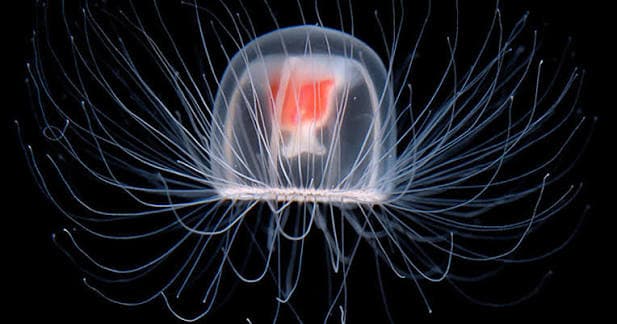
Somewhere in the world's oceans right now, there's a jellyfish smaller than your fingernail that may be the closest thing biology has to immortality.
Turritopsis dohrnii, nicknamed the immortal jellyfish, was first discovered in the Mediterranean Sea in 1883, but its strangest trick wasn't noticed until over a century later, in the 1990s. Under stress, injury, starvation, or sudden changes in temperature, this jellyfish doesn't just heal. It reverses its own aging process entirely, transforming its specialized adult cells back into an earlier developmental stage and restarting its life cycle from scratch. Scientists call this process transdifferentiation, and the closest comparison anyone has come up with is a butterfly turning back into a caterpillar.
Here's the part that should make you sit up: this ability to reverse its own life cycle in response to adverse conditions is unique in the entire animal kingdom, allowing the jellyfish to effectively bypass death and become potentially biologically immortal. Researchers studying the species have found that it maintains the length of its telomeres, the protective caps on the ends of chromosomes that normally shorten as we age, through specific cellular processes during its life cycle reversal, effectively resetting its own cellular aging.
Before you get too excited, there's an important caveat, immortal doesn't mean invincible. The jellyfish can still be eaten by predators or killed by disease, it just doesn't appear to die of old age. Most individuals never actually get the chance to reset, because the ocean is a dangerous place long before biological immortality becomes relevant.
So why does this matter beyond being a fun trivia fact? Because scientists studying this jellyfish are mapping exactly which genes switch on and off during its reversal, hoping the insight could one day inform research into wound healing, tissue regeneration, and age-related disease in humans (Doolly, 2025). It's not going to lead to human immortality anytime soon, but it is a real, living proof that the biological "rules" around aging aren't as fixed as we once assumed.
The Microscopic Animal That Can Survive Almost Anything
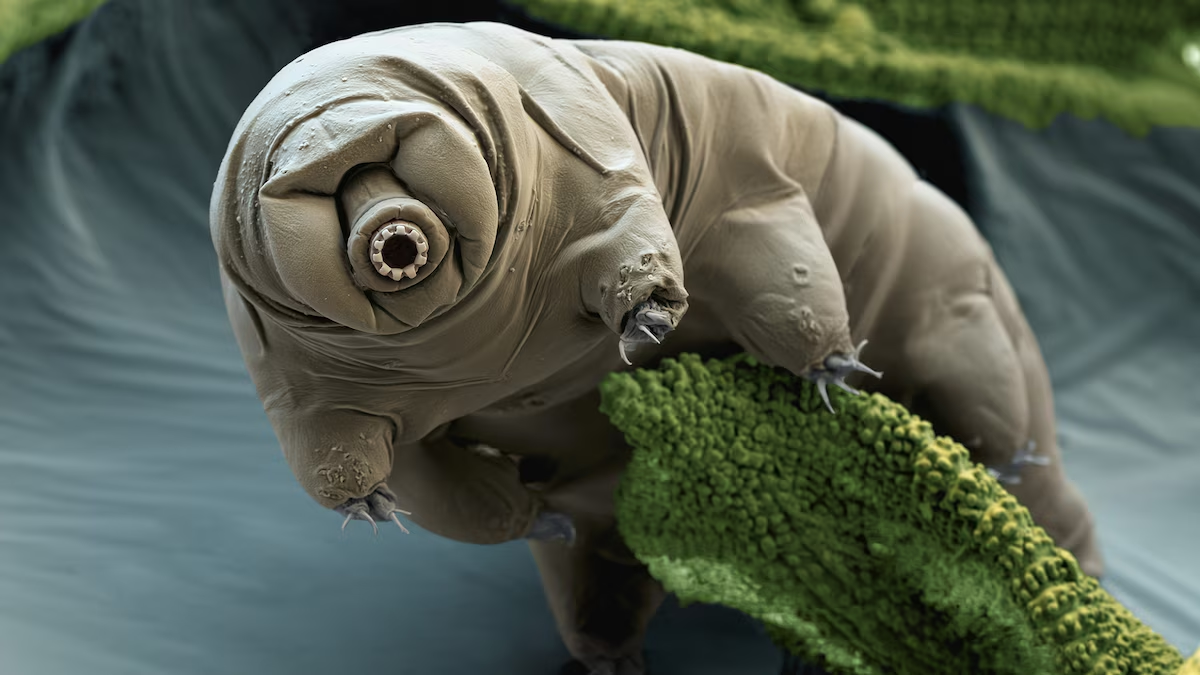
Tardigrades, affectionately known as water bears, are microscopic animals, most less than a millimeter long, found almost everywhere on Earth, in moss, in soil, in lakes, on mountaintops, and in the deep sea. What makes them famous isn't where they live, but what they can survive.
When their environment dries out, tardigrades enter a state called cryptobiosis, essentially, they shut down their own metabolism almost entirely and shrivel into a dehydrated form called a tun. In this state, the numbers get almost absurd. Tardigrades have been recorded surviving temperatures ranging from -130°C to well above the boiling point of water, exposure to the vacuum of outer space, extreme pressure, near-total dehydration, and high levels of radiation. Some have even been revived from museum moss samples after being dried out for over a century (Carolina Knowledge Center, 2025).
How does an animal survive conditions that would instantly kill almost anything else alive? Part of the answer lies in specialized proteins. Tardigrades produce intrinsically disordered proteins that help stabilize their cells during extreme dehydration by forming a glass-like protective state, alongside a unique damage-suppressor protein that binds to their DNA and shields it from the kind of molecular damage caused by radiation. They also rely on heat shock proteins that prevent damaged proteins from clumping together and help repair or remove them when they do.
There's a poetic trade-off buried in all of this. Researchers estimate a tardigrade would only survive around 18 months if it never entered cryptobiosis, but by repeatedly pausing and resuming its life, it can live for over 50 years. In other words, the secret to its incredible lifespan isn't constant activity, it's knowing exactly when to stop.
The Salamander That Regrows What It Loses
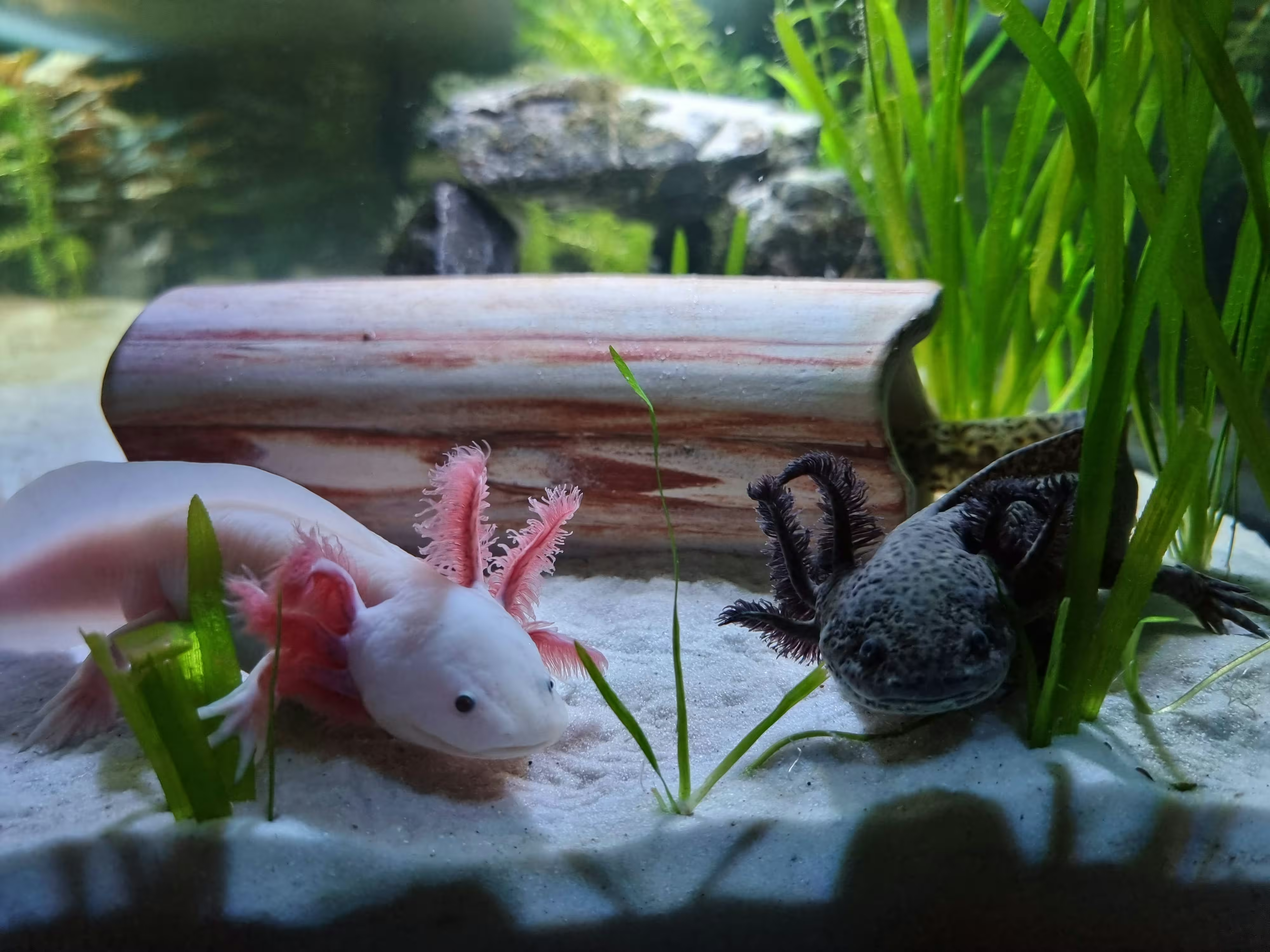
Cut off a human finger, and it's gone for good. Cut off an axolotl's leg, and within weeks, it grows an entirely new one back, bone, muscle, nerves, blood vessels, skin, all perfectly formed, with no scar.
The axolotl, a salamander native to a handful of lakes in Mexico, is one of the most studied animals in regenerative biology, and for good reason. When a limb is amputated, the surrounding cells don't just patch the wound, they revert to a more flexible, less specialized state and form a structure called a blastema, essentially a living construction site of cells that knows exactly what needs rebuilding and in what order. Skin cells migrate to close the wound first, while cells from deeper tissue layers like the dermis and muscle de-specialize, move beneath the new skin, and multiply to form the blastema that will become the new limb.
What's genuinely remarkable is the precision involved. Cells near the amputation site appear to retain a kind of positional memory along the length of the limb, which helps guide the blastema to rebuild exactly the right structures in exactly the right place, nothing more, nothing less. And the result, as researchers studying the process have noted, is striking, the missing or wounded part of the limb is regenerated perfectly, without any scar forming between the original stump and the newly regrown structure.
This single trait has made the axolotl one of the most important animals in modern medical research. Scientists studying its regeneration aren't just curious about salamanders, they're trying to understand why humans lost this ability somewhere along our evolutionary path, and whether any part of that process could ever be reactivated in human tissue.
The Rodent That Doesn't Seem to Age the Way It Should
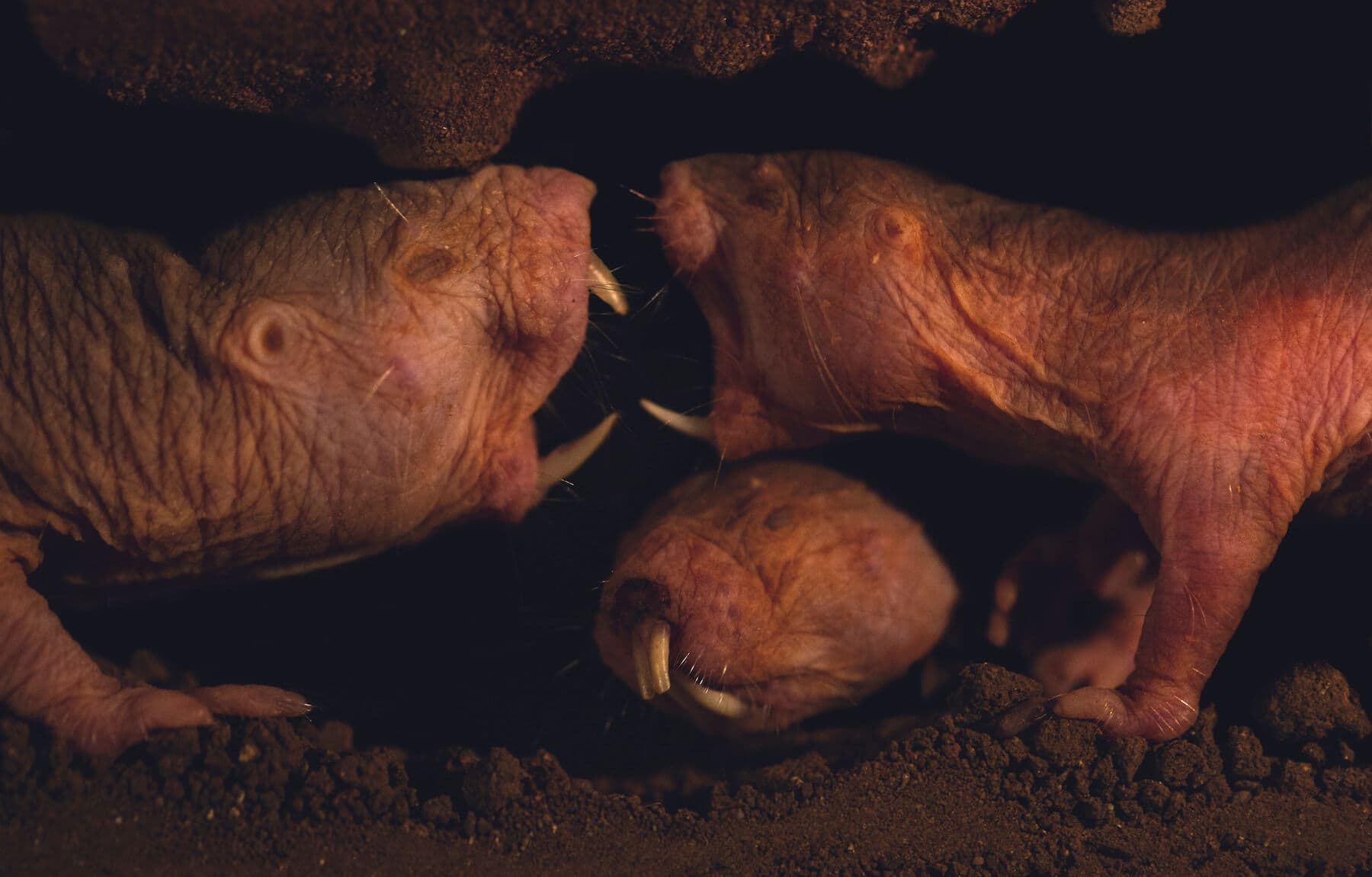
That's the naked mole-rat, and biologists have been fascinated by it for decades because almost nothing about its aging process fits the normal mammalian pattern. It shows no age-associated exponential increase in its risk of dying, and large, multi-year studies of naked mole-rat colonies have failed to detect a single case of cancer. For comparison, a naked mole-rat can live for more than 30 years despite being roughly the same size as a house mouse, which typically lives only about four.
Researchers have traced part of this resistance to an unusual molecule in the animal's tissue. Naked mole-rats produce an unusually high concentration of a high molecular weight form of hyaluronan, a substance that appears to have been originally useful for keeping their skin elastic for life underground, but which scientists now believe doubles as a powerful anti-cancer mechanism.
It isn't just one trick, either. Other studies have found the species shows unusual resilience in its skin and cellular maintenance systems, with researchers from the University of Cambridge noting that naked mole-rats can live for up to 37 years and are highly cancer-resistant, with only a handful of cases ever recorded in captive populations. Their immune systems even appear to have evolved differently from other mammals to support this resistance (Nature Communications, 2024).
For a species literally built to live a long, cancer-resistant life, the naked mole-rat has become one of the most closely studied animals in aging research, not because it's unusual for its own sake, but because understanding why it doesn't age the way we expect might eventually tell us something about why we do.
What These Animals Have in Common
None of these species are related to each other. A jellyfish, a microscopic water bear, a salamander, and a burrowing rodent don't share an evolutionary playbook, yet each one independently arrived at a different way of breaking a rule most of life seems bound by.
- The jellyfish breaks the rule that aging only moves forward.
- The tardigrade breaks the rule that life requires constant, stable conditions.
- The axolotl breaks the rule that lost tissue is lost for good.
- The naked mole-rat breaks the rule that size and lifespan have to track together, and that aging and cancer are simply inevitable costs of living long.
Studying animals like these isn't just a way to collect impressive facts for trivia night. Each one offers scientists a working, living example of something biology textbooks once treated as a fixed law, proof that the rules of life are really just patterns most species happen to follow, not laws every species is required to obey.
And if these creatures have already found their own workarounds, the real question worth sitting with is this: how many more biological impossibilities are quietly happening in nature right now, simply waiting for someone to notice?
Cover Image by Unsplash [https://unsplash.com/]
References
Carolina Knowledge Center (2025) Tardigrades: little water bears. Available at: https://knowledge.carolina.com/timeless-tips/tardigrades-little-water-bears/ (Accessed: 23 June 2026).
Doolly (2025) Turritopsis dohrnii: how the immortal jellyfish defies aging. Available at: https://www.doolly.com/blog/turritopsis-dohrnii-how-the-immortal-jellyfish-defies-aging (Accessed: 23 June 2026).
GROW Magazine (2021) Seven things everyone should know about… tardigrades. Available at: https://grow.cals.wisc.edu/departments/front-list/seven-things-everyone-should-know-about-tardigrades (Accessed: 23 June 2026).
Nature Communications (2024) 'Evolution of T cells in the cancer-resistant naked mole-rat', Nature Communications. Available at: https://www.nature.com/articles/s41467-024-47264-x (Accessed: 23 June 2026).
PMC (2013) 'High molecular weight hyaluronan mediates the cancer resistance of the naked mole-rat', PMC. Available at: https://pmc.ncbi.nlm.nih.gov/articles/PMC3720720/ (Accessed: 23 June 2026).
PMC (2008) 'Transforming growth factor: β signaling is essential for limb regeneration in axolotls', PMC. Available at: https://www.ncbi.nlm.nih.gov/pmc/articles/PMC2082079/ (Accessed: 23 June 2026).
PMC (2019) 'Epithelial to mesenchymal transition is mediated by both TGF-β canonical and non-canonical signaling during axolotl limb regeneration', PMC. Available at: https://www.ncbi.nlm.nih.gov/pmc/articles/PMC6362101/ (Accessed: 23 June 2026).
PMC (2025) 'Modeling proximalisation in axolotl limb regeneration', PMC. Available at: https://www.ncbi.nlm.nih.gov/pmc/articles/PMC12290015/ (Accessed: 23 June 2026).
The Scientist (2025) 'Tardigrade research on extreme survival mechanisms', The Scientist. Available at: https://www.the-scientist.com/tardigrade-research-on-extreme-survival-mechanisms-73816 (Accessed: 23 June 2026).
University of Cambridge (2020) Secrets of naked mole-rat cancer resistance unearthed. Available at: https://www.cam.ac.uk/research/news/secrets-of-naked-mole-rat-cancer-resistance-unearthed (Accessed: 23 June 2026).
Wikipedia (2026) Naked mole-rat. Available at: https://en.wikipedia.org/wiki/Naked_mole-rat (Accessed: 23 June 2026).
Wikipedia (2007) Turritopsis dohrnii. Available at: https://en.wikipedia.org/wiki/Turritopsis_dohrnii (Accessed: 23 June 2026).
Test Your Knowledge!
Click the button below to generate an AI-powered quiz based on this article.
Did you enjoy this article?
Show your appreciation by giving it a like!
Conversation (0)
Cite This Article
Generating...