Engineering
Tyre Degradation in Formula 1
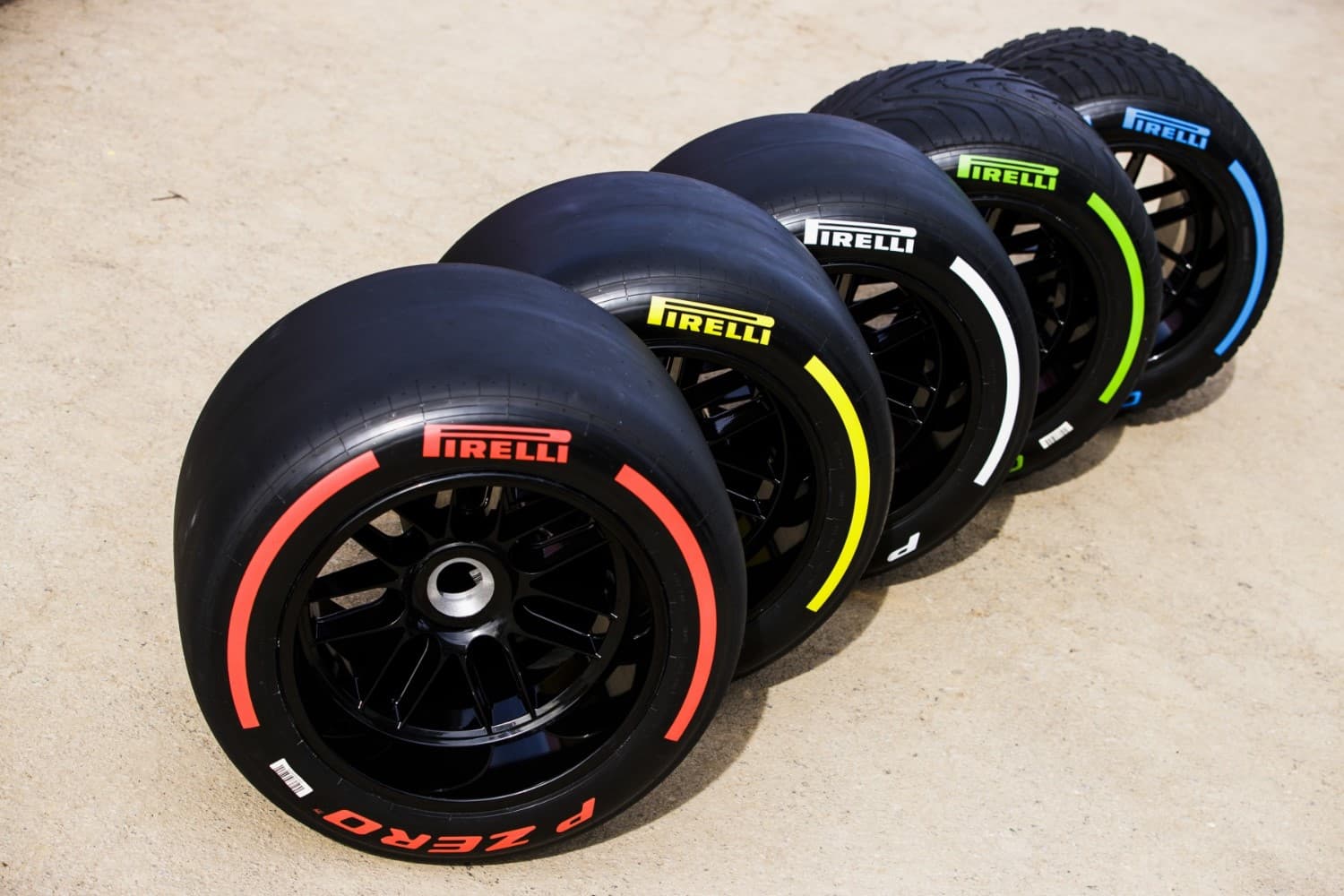
Every Sunday, the team radio lights up with the same complaint: "The tyres are gone." But evaluating this logically, stepping past the broadcast drama to look purely at the materials science, tyre degradation is a highly calculated engineering variable that defines modern Grand Prix strategy.
Here is the deep-dive technical reality behind what is actually happening at the contact patch.
1.0 The Molecular Recipe
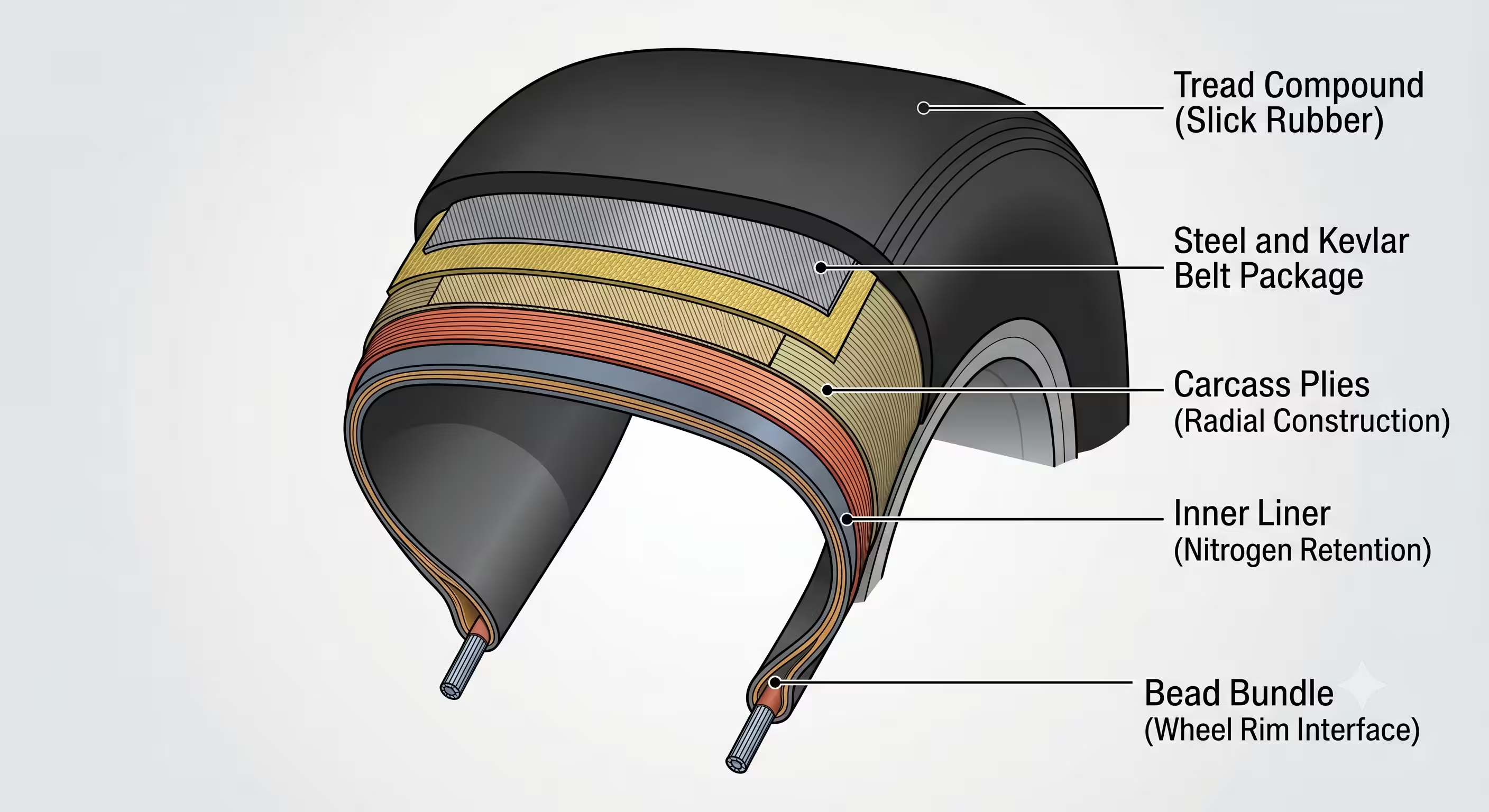
An F1 tyre is a complex polymer matrix, and every ingredient serves a precise telemetry function.
1. Styrene-Butadiene Rubber (SBR):
The primary synthetic rubber that provides grip and allows the tyre to deform into the track's micro-texture.
2. Polybutadiene (BR):
Blended with SBR to absorb and release energy efficiently, keeping internal temperatures in check during long stints.
3. Carbon Black & Silica:
Carbon black reinforces the polymer network for tensile strength, while silica is used for lower heat-buildup to extend longevity.
4. Sulphur (Vulcanisation):
This creates cross-links between polymer chains, turning the rubber from a plastic that would simply melt under heat into an elastomer that deforms and recovers under 6G cornering loads.
2.0 The Thermal Gradient & The "Goldilocks" Window
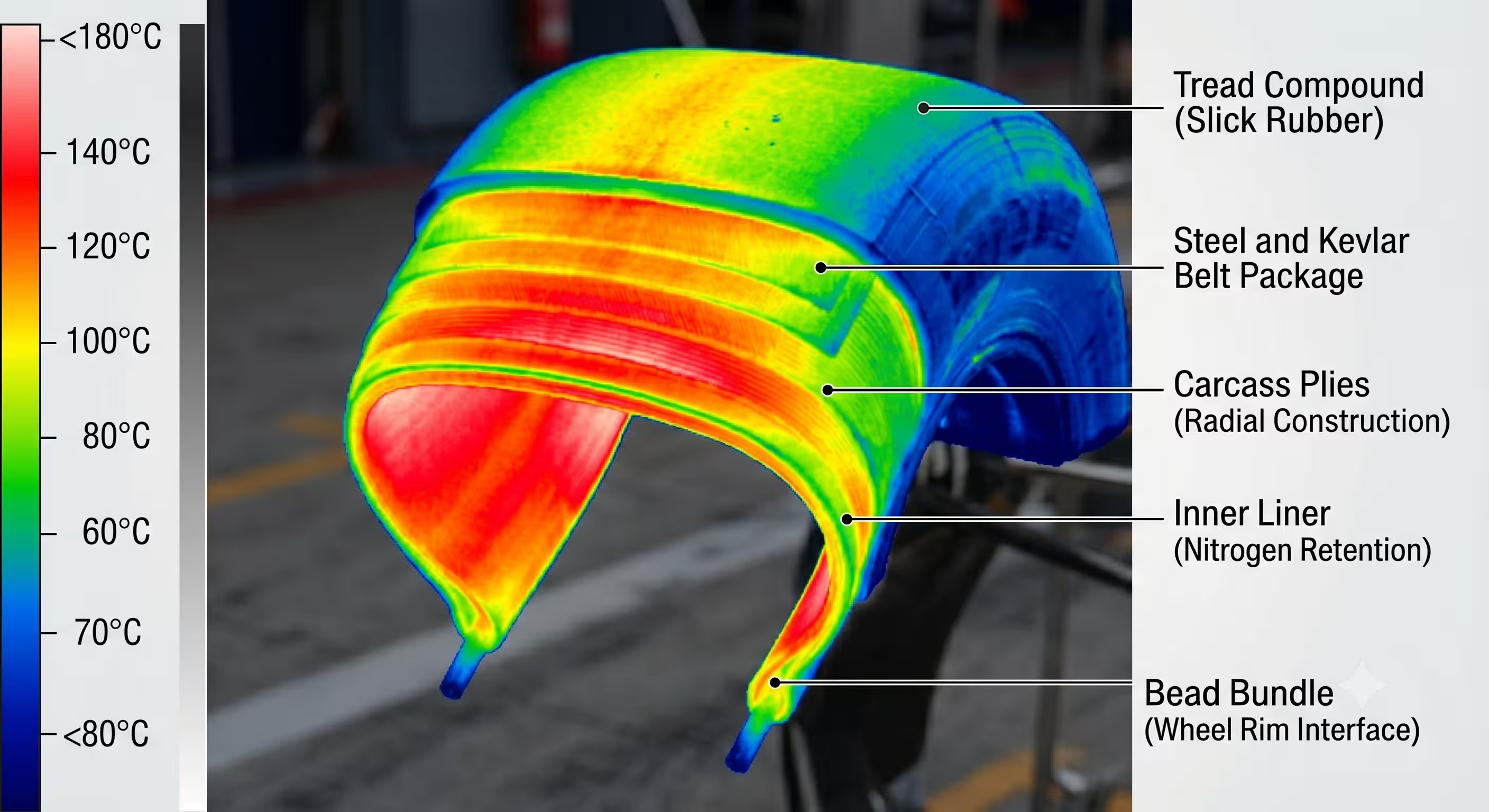
To maintain predictable pressure during massive temperature swings, teams inflate tyres with dry nitrogen rather than standard atmospheric air, which contains unpredictable water vapour.
Performance is entirely dictated by a strict thermal window, but tyres do not heat uniformly. In high-speed corners, the outer shoulder can run 80–100°C hotter than the inner shoulder.
- Optimal (85–140°C): The rubber behaves perfectly, softening just enough to conform to the asphalt for peak grip.
- Too Cold (< 85°C): The compound remains too stiff, sliding across the track rather than biting into it.
- Too Hot (> 140°C): The polymer chains within the rubber begin to break down, resulting in chemical and structural failure.
3.0 The Three Modes of Destruction
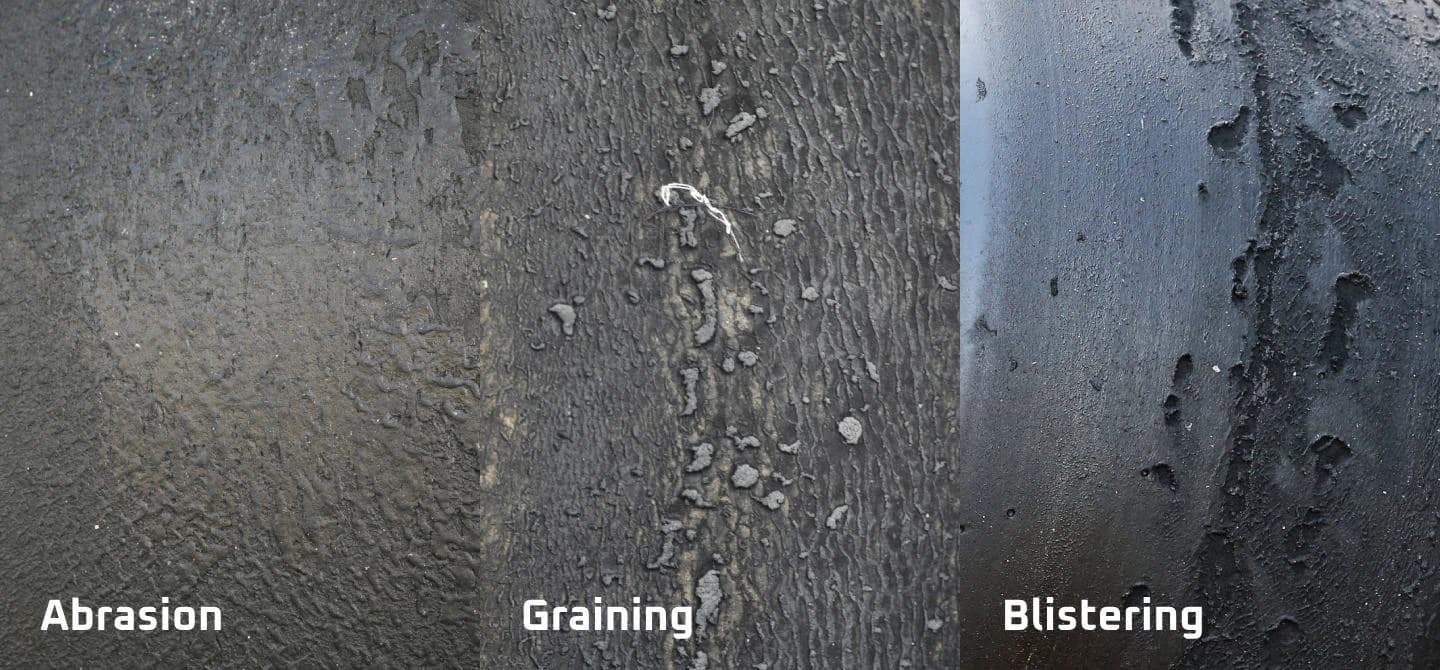
Tyres fail via three specific mechanical modes:
1. Abrasion (Mechanical Wear): The baseline degradation. As the tyre slides against abrasive asphalt, the tread gradually and predictably thins out. 2. Graining (Surface Shear): This occurs when a driver pushes a cold tyre too hard. The stiff rubber shears off, rolls into rough nodules, and sticks back onto the tread, heavily reducing grip. It can sometimes be "healed" if the driver manages to generate heat without further sliding. 3. Blistering (Internal Heat Failure): Sustained, heavy cornering loads (like Suzuka's 130R) cause the inside of the tyre to overheat faster than the surface can cool. Gas pockets form beneath the tread, expand, and eventually burst, blowing permanent craters into the rubber.
4.0 How Setup Dictates Survival
Car setup choices in the garage directly engineer how the tyre will die:
Camber Angle: Aggressive negative camber increases peak cornering grip but concentrates load on the inner shoulder, accelerating blistering.
Tyre Pressures: Higher pressures reduce the contact patch and increase stiffness, generating less heat. Lower pressures generate more heat, which aids cold-lap grip but increases blistering risks over a full stint.
Aero Load & Brake Bias: More downforce means higher normal load and more friction heat. Shifting brake bias forward or backward allows the driver to actively manage which axle takes the brunt of the thermal stress.
5.0 Track-Specific Strategic Execution
The data models change drastically depending on the circuit layout:
- Extreme Wear (e.g., Bahrain): High heat and abrasive surfaces mandate the hardest compounds (C1/C2) to survive rear thermal degradation.
- High Load (e.g., Silverstone): Sustained high-speed corners create massive blistering risks on the rear inner shoulders.
- Low Wear (e.g., Monaco): Low-speed street circuits mean tyres barely reach their operating temperature, requiring the absolute softest compounds available.
- The "Cliff" & The Undercut: Teams continuously model the "deg slope" (lap time lost per lap). Hitting the "cliff" a sudden loss of grip due to severe graining or blistering is strategically fatal. Teams use this data to calculate the exact lap to pit, attempting to undercut rivals on fresh rubber.
Key takeaway Every F1 race is, at its core, a race against molecular breakdown. The teams that win are not always the ones with the fastest car — they are the ones who understand, at a chemical and thermal level, exactly how much stress their tyres can endure before the compound crosses from performance to failure. The materials science and thermal dynamics of tyre degradation are not a footnote to the sport. They are the sport.
Test Your Knowledge!
Click the button below to generate an AI-powered quiz based on this article.
Did you enjoy this article?
Show your appreciation by giving it a like!
Conversation (0)
Cite This Article
Generating...