Technology
Understanding the 6 Phases of the Software Development Life Cycle (SDLC)
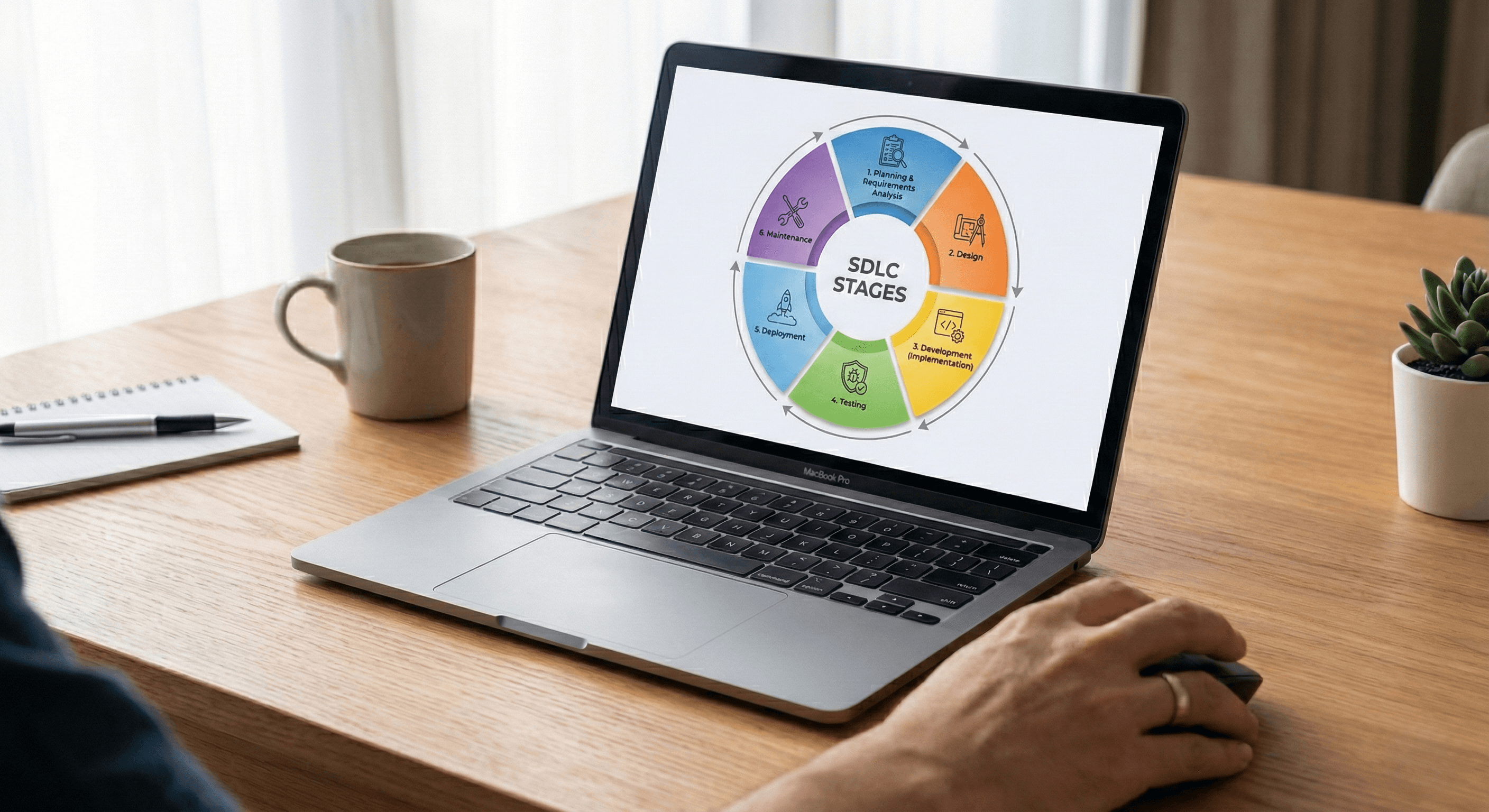
6 Phases of the Software Development Life Cycle (SDLC)
Magical software will not appear. Whether it’s a simple food delivery app you use daily or a complex banking system you trust with your finances, it is the results of calculated or a purposeful structured process. In the early days of computing, the development was disorganized. Because over the budget projects ran widely, critical deadlines were missed, and worst of all generated products which neglected to solve the user’s problem. And then this chaos led to a vital question,
How can we bring order, predictability, and quality to the art of building software?
The answer is the Software Development Life Cycle (SDLC).
The key steps of this method are divided into six steps
1. Planning & Requirements Analysis
This is the first step where the answer to this question is, What problem are we solving? The team collects the requirements of all stakeholders to develop the scope, goals and feasibility of the project and the information is documented in the Software Requirement Specification (SRS).
2. Design
The question that this stage will answer is, how will we build it? SRS is translated into technical specifications (High-Level Design (HLD)) of the general architecture and Low-Level Design (LLD) of individual components and UI.
3. Development (Implementation)
Since the blueprint is available, this is the coding phase during which programmers create the actual program, which is the first version of the software.
4. Testing
This stage posits, "Does it work as expected? To achieve quality, the Quality Assurance (QA) team searches some bugs with different techniques such as Unit, Integration, and User Acceptance Testing (UAT).
5. Deployment
When the software passes the test/approval phase, it is transported to the production environment thereby becoming live and accessible to actual users.
6. Maintenance
The last and commonly most long phase, this is maintenance which includes correcting bugs found, issue releases which could be based on feedback in which the user may give commentary on the product and security patches which help in keeping the product alive and applicable.
Finally, SDLC is not a set of rules but a flexible framework. It doesn't matter whether it is a strict Waterfall model or a modern Agile one, the main principles do not change: Plan first, build, test extensively, and listen to users. It is the crucial process, which renders order to the anarchy of development.
Test Your Knowledge!
Click the button below to generate an AI-powered quiz based on this article.
Did you enjoy this article?
Show your appreciation by giving it a like!
Conversation (0)
Cite This Article
Generating...