Technology
Why CI/CD is a Must-Have Skill for Junior Developers
The Shift from Manual Shipping to Automated Flow
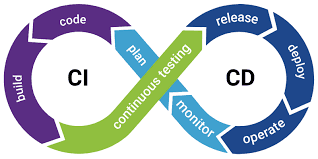
In the earlier eras of software development, the process of moving code from a local machine to a live environment was often a source of significant anxiety for engineering teams. Developers would frequently work in isolation for weeks before attempting a massive "big bang" integration where every piece of code was merged at once. This outdated approach often resulted in what industry professionals called "Integration Hell," a state where conflicting code changes created endless bugs and manual deployment errors that could stall a project for days. Continuous Integration and Continuous Deployment were created to solve this specific problem by turning the manual labor of shipping code into a high-speed, automated assembly line that ensures quality at every step of the journey.
Continuous Integration - The Automated Quality Guard
Continuous Integration serves as the primary safety net for a modern development team. It is the practice where every developer on a project merges their code into a central repository several times a day to prevent the buildup of conflicting changes. Once a developer pushes their code to a platform like GitHub or GitLab, a dedicated CI server takes over to perform a series of rigorous, automated checks. This process involves building the project from scratch to verify that the code compiles, running a suite of automated tests to ensure no existing features were broken, and checking for styling errors. Because these checks happen automatically and immediately, any issues are caught and fixed long before they ever reach a user, keeping the main codebase in a constant state of health.
Defining the CD- From Delivery to Deployment
The second half of the equation is the CD component, which can represent either Continuous Delivery or Continuous Deployment depending on the needs of the organization. Continuous Delivery ensures that every change that passes the automated testing phase is automatically built and packaged into a release-ready state, though it requires a human to perform a final check and click a button to push the code live. In contrast, Continuous Deployment removes the human element entirely, meaning that if a code change passes every automated hurdle in the pipeline, it is instantly deployed to the production environment. While Continuous Deployment is the gold standard for speed, many companies in sensitive sectors like finance or healthcare prefer Continuous Delivery to maintain a final layer of manual oversight before changes affect live users.
Breaking Down the Pipeline Stages
The actual structure of a CI/CD system is best understood as a linear pipeline where code must pass through several distinct stages of validation. The journey begins at the source stage when a developer triggers the pipeline by pushing their code changes to a version control system. This immediately moves into the build phase where the environment is prepared and dependencies are installed to create a clean, executable version of the software. From there, the code enters the testing stage, which is the most critical part of the process where the automated "judges" evaluate the quality and logic of the work. If the code survives this rigorous examination, it reaches the final deployment stage where it is seamlessly transferred to a hosting provider or cloud infrastructure to be consumed by the end-user.
The Value of Automation for New Engineers
For university students and junior developers, learning to implement these pipelines is one of the most effective ways to bridge the gap between academic theory and professional reality. Setting up a CI/CD pipeline for a personal project demonstrates to recruiters that you understand the importance of quality control and automation in a production environment. It effectively removes the common "it works on my machine" excuse because the software is forced to prove its stability in a neutral, automated environment. Beyond the professional prestige, it also creates a faster feedback loop for your own learning, allowing you to see exactly where your logic failed within seconds of saving your work.
Starting Your Journey with Modern DevOps Tools
Entering the world of CI/CD might seem intimidating at first, but modern tools have made it more accessible than ever before. You do not need a complex enterprise setup to begin reaping the benefits of automation simple configurations on platforms like GitHub Actions or Vercel can get your first pipeline running in under an hour. By starting with a single automated test or a basic build check, you are laying the foundation for a professional workflow that prioritizes speed without sacrificing stability. As you continue to build and grow as an engineer, these automated systems will become your most trusted partners in shipping reliable, high-quality software to the world.
Test Your Knowledge!
Click the button below to generate an AI-powered quiz based on this article.
Did you enjoy this article?
Show your appreciation by giving it a like!
Conversation (0)
Cite This Article
Generating...