Technology
An Essential Guide to React, Vue, Svelte, and Angular
The Paradigm Shift to Component-Driven Architecture
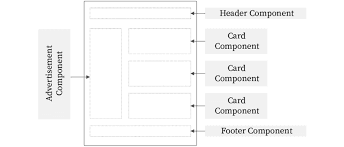
In the early days of web development, building user interfaces required writing sprawling HTML documents, independent CSS files, and manual JavaScript code to manipulate the Document Object Model directly. As web applications grew into complex, interactive platforms, this manual approach quickly became unsustainable, leading to codebases that were incredibly fragile and difficult to maintain. Modern frontend frameworks solved this crisis by introducing component-driven architecture, a paradigm where a user interface is broken down into small, self-contained, and reusable building blocks. By encapsulating structure, style, and logic within individual components, these frameworks allow developers to manage state changes predictably and build scalable applications that feel as responsive as desktop software.
React and Vue - The Dominance of the Virtual DOM
To manage data updates efficiently, early modern frameworks looked for ways to minimize the performance costs of updating the browser screen. React pioneered the concept of the Virtual DOM, an innovative approach where a lightweight copy of the user interface is kept in computer memory. When an application's data changes, React calculates the exact difference between the old state and the new state, updating only the specific elements on the screen that actually changed. Vue adopted a similar concept but paired it with a highly intuitive, template-based syntax that dramatically lowered the learning curve for beginners. Together, these two tools established a standard where developers focus purely on managing data states, leaving the heavy lifting of UI updates to an automated reconciliation engine under the hood.
Svelte - Redefining Performance at Compile Time
While the Virtual DOM provided a massive performance leap over traditional methods, it still requires the browser to run complex comparison algorithms at runtime, which consumes processing power. Svelte entered the ecosystem with a completely revolutionary philosophy by discarding the Virtual DOM entirely. Instead of doing the heavy architectural work inside the user's browser, Svelte shifts that work to a compilation step that happens when the developer builds the project. The Svelte compiler analyzes the application code and outputs highly optimized, vanilla JavaScript that directly modifies the browser DOM exactly when data changes. This compile-time approach results in smaller bundle sizes, faster initial page loads, and a highly performant application experience, especially on lower-powered mobile devices.
Angular - The Complete Enterprise Ecosystem
While React, Vue, and Svelte often market themselves as flexible libraries that allow developers to choose their own routing, state management, and build tools, Angular takes a radically different approach. Maintained by Google, Angular is a comprehensive, highly opinionated framework that provides an all-in-one ecosystem for building large-scale, enterprise applications. It enforces strict architectural guidelines, natively integrates TypeScript, and includes built-in solutions for form validation, HTTP communication, and routing out of the box. While this rigid structure introduces a steep learning curve for university students, it offers unmatched consistency across massive engineering teams, ensuring that any developer can step into a large codebase and immediately understand the project layout.
Framework Selection Strategy for Modern Engineers
For software engineering students and junior developers, the sheer variety of frontend choices can easily lead to decision paralysis. The secret to choosing the right tool lies in evaluating the specific constraints of your project rather than chasing the latest industry trend. If your goal is maximum job market alignment and a massive ecosystem of third-party libraries, React remains an excellent starting point. If you want to launch a highly interactive project quickly with minimal boilerplate, Vue or Svelte offer unparalleled developer velocity and clean code syntax. Ultimately, mastering frontend development is not about memorizing the syntax of a specific framework, but about understanding the core architectural concepts of state management, component lifecycles, and rendering performance that apply to all of them.
Test Your Knowledge!
Click the button below to generate an AI-powered quiz based on this article.
Did you enjoy this article?
Show your appreciation by giving it a like!
Conversation (0)
Cite This Article
Generating...