Engineering
Beyond Lithium-Ion: The Race to Build "Solid-State" Batteries
Introduction
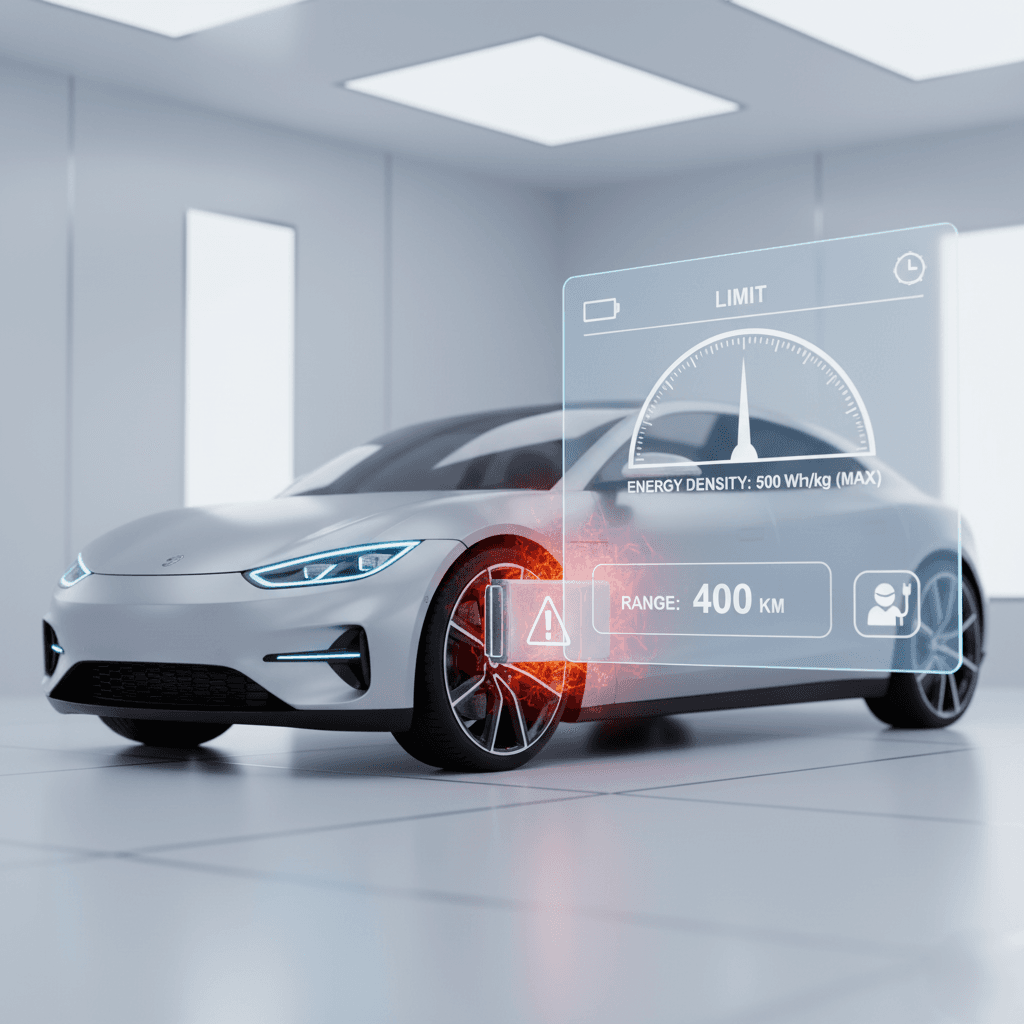
For the last three decades, one technology has powered our modern world: the lithium-ion (Li-ion) battery. It’s in your phone, your laptop, and in millions of devices and electric vehicles (EVs) around the globe. But this amazing technology is reaching its limit. The problem is that traditional Li-ion batteries have two major flaws. First, they are a safety risk. They use a flammable liquid electrolyte to move energy around, which in rare cases, it can leak, catch fire, or lead to "thermal runaway" (a chain reaction that can cause explosions) (Battery Power Tips, 2024). Second, they are limited by their energy density how much power they can store in a certain amount of space. This is why EV range is still a concern and why your phone still dies after a long day. To solve this, engineers and scientists do research to build the "holy grail" of energy storage: the solid-state battery (SSB). This technology promises to be safer, smaller, and far more powerful by changing one single, critical part (Battery Power Tips, 2024).
How SSB is different
To understand this revolution, let's first look at a simple battery. Every battery has three main parts:
- Anode: The negative (-) side (often made of graphite in Li-ion).
- Cathode: The positive (+) side (made of metal oxide).
- Electrolyte: The material in the middle that allows lithium ions (energy) to move from the anode to the cathode. In a normal Li-ion battery, this electrolyte is a flammable liquid, and the anode is a heavy block of graphite that "holds" the lithium, like a sponge holds water (FlashBattery, 2022). A solid-state battery throws out this design. It replaces the flammable liquid electrolyte with a thin, solid piece of material, often a ceramic or a special polymer (Britannica, 2024). This single change unlocks two "magic" benefits,
- It is not flammable, which makes the battery incredibly safe.
- Because the solid electrolyte is stable and strong, it allows engineers to get rid of the heavy graphite "sponge" and use a pure lithium metal anode (Ossila, 2025). This is the key. By using a pure lithium metal anode, the battery becomes much lighter and can store far more energy in the same amount of space. This is a perfect topic. It’s a huge subject in mechanical engineering, chemistry, and material science, and it’s critical for the future of electric cars, electronics, and grid-scale energy storage. In a normal Li-ion battery, this electrolyte is a flammable liquid, and the anode is a heavy block of graphite that "holds" the lithium, like a sponge holds water (FlashBattery, 2022). A solid-state battery throws out this design. It replaces the flammable liquid electrolyte with a thin, solid piece of material, often a ceramic or a special polymer (Britannica, 2024). This single change unlocks two "magic" benefits:
- It is not flammable, which makes the battery incredibly safe.
- Because the solid electrolyte is stable and strong, it allows engineers to get rid of the heavy graphite "sponge" and use a pure lithium metal anode (Ossila, 2025). This is the key. By using a pure lithium metal anode, the battery becomes much lighter and can store far more energy in the same amount of space.
The Promise: Why This is a Revolution
If engineers can perfect this technology, it will change everything from consumer electronics to national defense (City Labs, 2024).
- Massive Energy Density: By removing the non-energy-storing graphite, SSBs can have an energy density 2 to 2.5 times higher than current Li-ion batteries (FlashBattery, 2022). For an EV, this could mean jumping from a 400-kilometer range to a 1,000-kilometer range on a single charge.
- Extreme Safety: This is the biggest selling point. The solid electrolyte is not flammable and is far more stable at high temperatures. This completely removes the risk of "thermal runaway" that has plagued Li-ion batteries (City Labs, 2024).
- Stopping "Dendrites": A major reason Li-ion batteries fail is the growth of "dendrites." These are tiny, sharp needles of lithium that grow like pins inside the battery. They can pierce the separator between the anode and cathode, causing a short-circuit and a fire (FlashBattery, 2022). The physically strong solid electrolyte acts as a wall, blocking these dendrites from ever forming (Battery Power Tips, 2024).
- Wider Operating Temperatures: SSBs can also work in much more extreme conditions, from as low as -40°C to as high as 170°C, making them perfect for aerospace, defense, and demanding industrial uses (Renewables Advice, 2025).
The Big Challenges: Why We Don't Have Them Yet
If this technology is so good, why isn't it in your phone right now? Because it presents some of the hardest engineering challenges in modern science.
- The Solid-Solid Interface: In a liquid battery, the electrolyte "wets" the anode and cathode, making perfect contact. But in an SSB, you are pressing two solids together. It's almost impossible to get perfect contact, and tiny gaps form (Ossila, 2025). This "high interfacial resistance" stops ions from moving easily, which slows down the battery.
- They Crack: Many of the best solid electrolytes (like ceramics) are very brittle, like a thin dinner plate. When the battery charges and discharges, the lithium metal anode expands and contracts, which can form tiny cracks in the brittle electrolyte. This makes the battery fail over time, giving it a poor cycle life (Ossila, 2025).
- Manufacturing and Cost: Making a perfect, paper-thin sheet of a ceramic material with no defects is extremely difficult and expensive. The new factories and tools needed to build SSBs at a large "giga-factory" scale simply do not exist yet (Coherent Market Insights, 2025).
The Future: The Race to the Finish Line
These challenges are not stopping anyone. The race to solve them is one of the most competitive in the world. New breakthroughs are happening every month. For example, researchers at the University of Texas at Dallas recently discovered that mixing two different solid electrolytes can create a "space charge layer" at the interface that actually boosts ion movement, helping to solve the high-resistance problem (UT Dallas News, 2025). Meanwhile, companies like Samsung have developed new anodes using a "silver-carbon-composite" that have allowed their test batteries to last for over 1,000 charge cycles (MDPI, 2024). Automakers like Nissan are investing billions, with the goal of having mass-produced solid-state batteries in their EVs by 2028 (MDPI, 2024). The first group to create an SSB that is cheap, durable, and scalable will not just win the EV market—they will power the next generation of technology.
Refferences
Battery Power Tips (2024). What are the main challenges in developing solid-state batteries for EVs?. [online] Available at: https://www.batterypowertips.com/what-are-the-main-challenges-in-developing-solid-state-batteries-for-evs/ [Accessed 10 Nov. 2025].
Britannica (2024). Solid-state battery. [online] Available at: https://www.britannica.com/technology/solid-state-battery [Accessed 10 Nov. 2025].
City Labs (2024). Lithium-Ion vs. Solid-State Batteries. [online] Available at: https://citylabs.net/solid-state-batteries-vs-lithium-ion/ [Accessed 10 Nov. 2025].
Coherent Market Insights (2025). Challenges in Scaling Solid-State Battery Production and Solutions. [online] Available at: https://www.coherentmarketinsights.com/blog/challenges-in-scaling-solid-state-battery-production-and-solutions-719 [Accessed 10 Nov. 2025].
FlashBattery (2022). Solid-state batteries: how they work. [online] Available at: https://www.flashbattery.tech/en/blog/how-solid-state-batteries-work/ [Accessed 10 Nov. 2025].
MDPI (2024). Solid-State Lithium Batteries: Advances, Challenges, and Future Perspectives. [online] MDPI. Available at: https://www.mdpi.com/2313-0105/11/3/90 [Accessed 10 Nov. 2025].
Ossila (2025). Solid-State Battery vs Lithium-ion | Differences. [online] Available at: https://www.ossila.com/pages/solid-state-battery-vs-lithium-ion [Accessed 10 Nov. 2025].
Renewables Advice (2025). 10 Benefits of Solid-State Batteries: Future of Efficiency. [online] Available at: https://renewablesadvice.com/battery/benefits-solid-state/ [Accessed 10 Nov. 2025].
UT Dallas News (2025). Researchers' Discovery Could Boost Solid-State Battery Performance. [online] The University of Texas at Dallas. Available at: https://news.utdallas.edu/science-technology/su-solid-state-battery-performance-2025/ [Accessed 10 Nov. 2025].
Test Your Knowledge!
Click the button below to generate an AI-powered quiz based on this article.
Did you enjoy this article?
Show your appreciation by giving it a like!
Conversation (0)
Cite This Article
Generating...