Engineering
The Ram Air Turbine (RAT): Aviation's Last Line of Defence
1.0 What is a Ram Air Turbine?
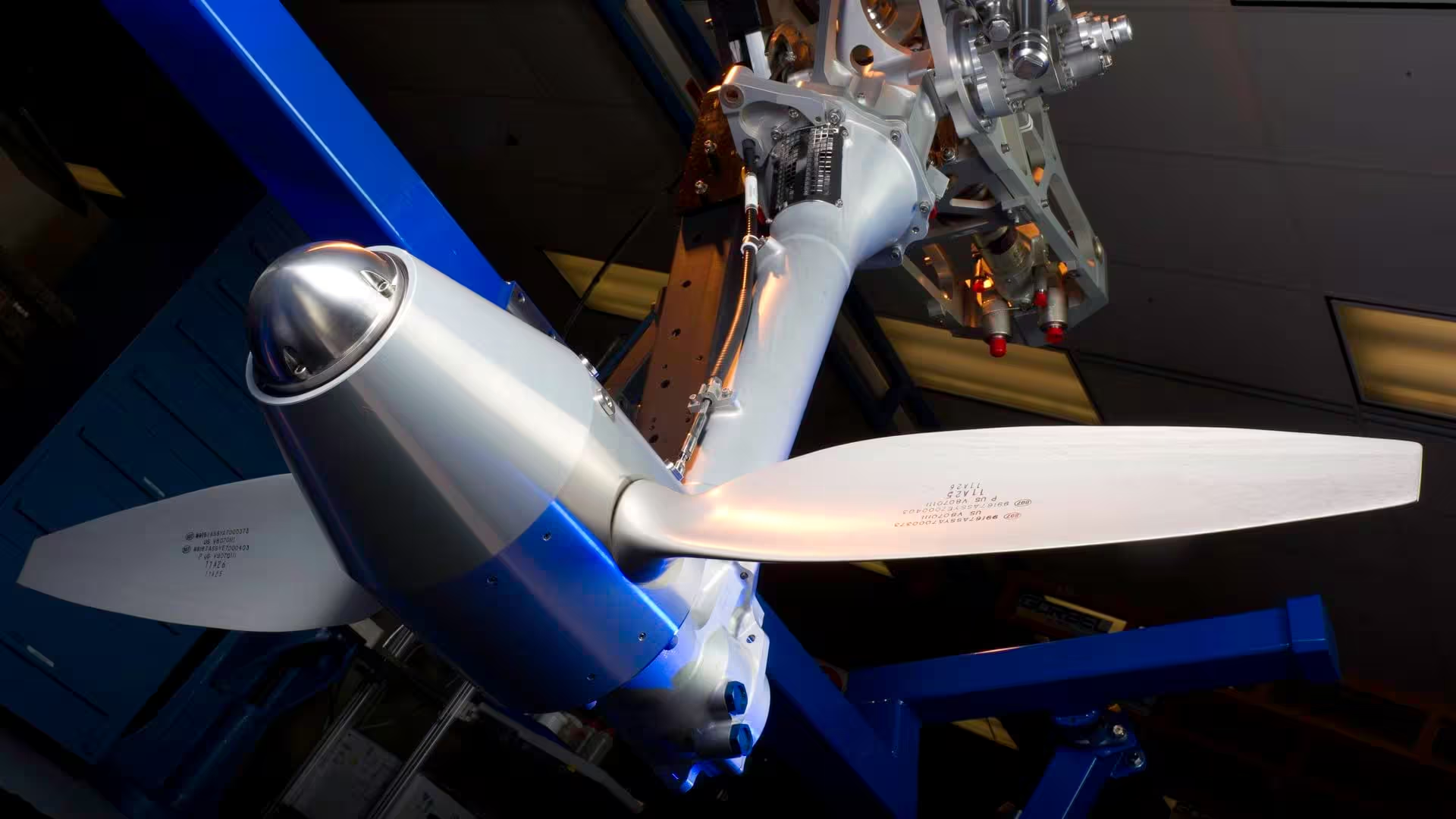
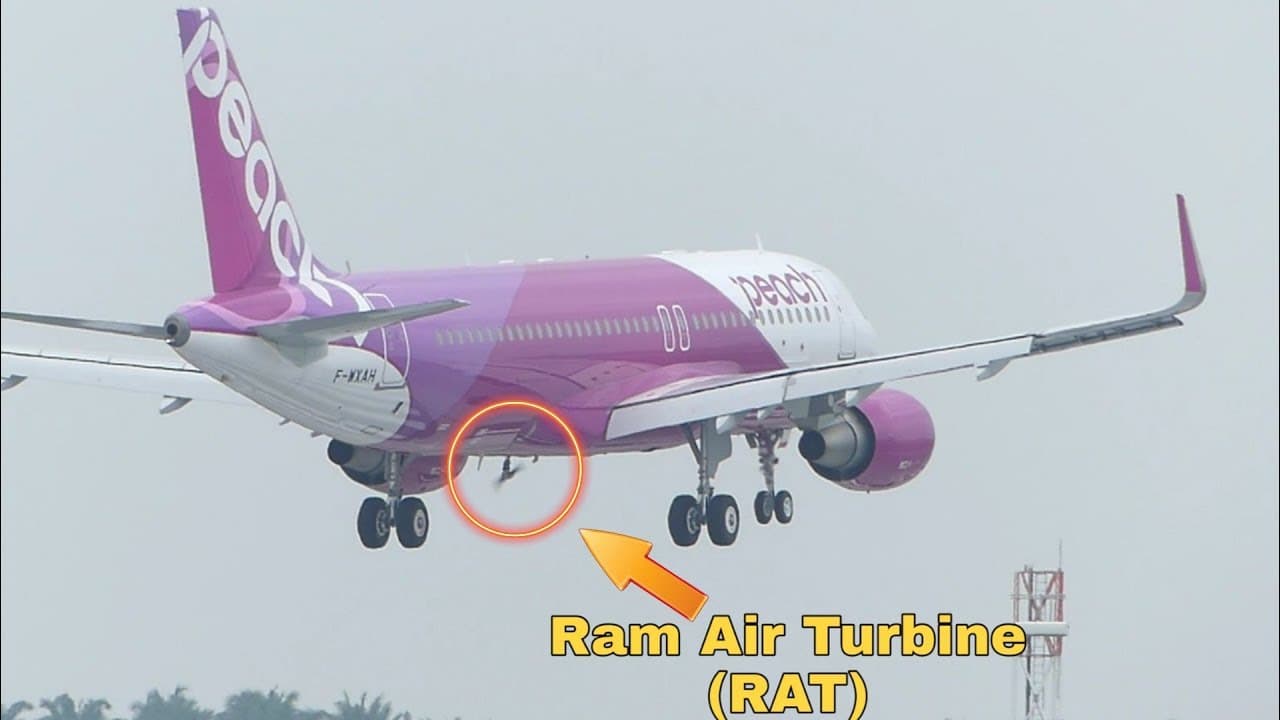
A Ram Air Turbine — universally known by its acronym, RAT — is a compact, wind-driven emergency device that sits stowed inside the wing or fuselage of a modern aircraft throughout its normal service life. It is, by design, a device most crews hope they will never need to use.
When an aircraft suffers a catastrophic loss of primary power both engines failing, or the complete failure of its electrical and hydraulic systems the RAT swings out into the airstream. As the plane moves forward through the air, wind forces the turbine blades to spin. That rotational energy is converted into electrical power, hydraulic pressure, or both, depending on the aircraft's design. The output is limited and targeted exclusively at keeping essential systems alive: flight controls, core avionics, communications.
Think of the RAT as a bicycle dynamo strapped to the outside of a commercial jetliner. It produces just enough electricity to keep the lights on but in aviation, those "lights" are the flight control computers, the attitude indicators, and the radio. Enough to land safely. Exactly enough. Nothing more.
2.0 How does it work?
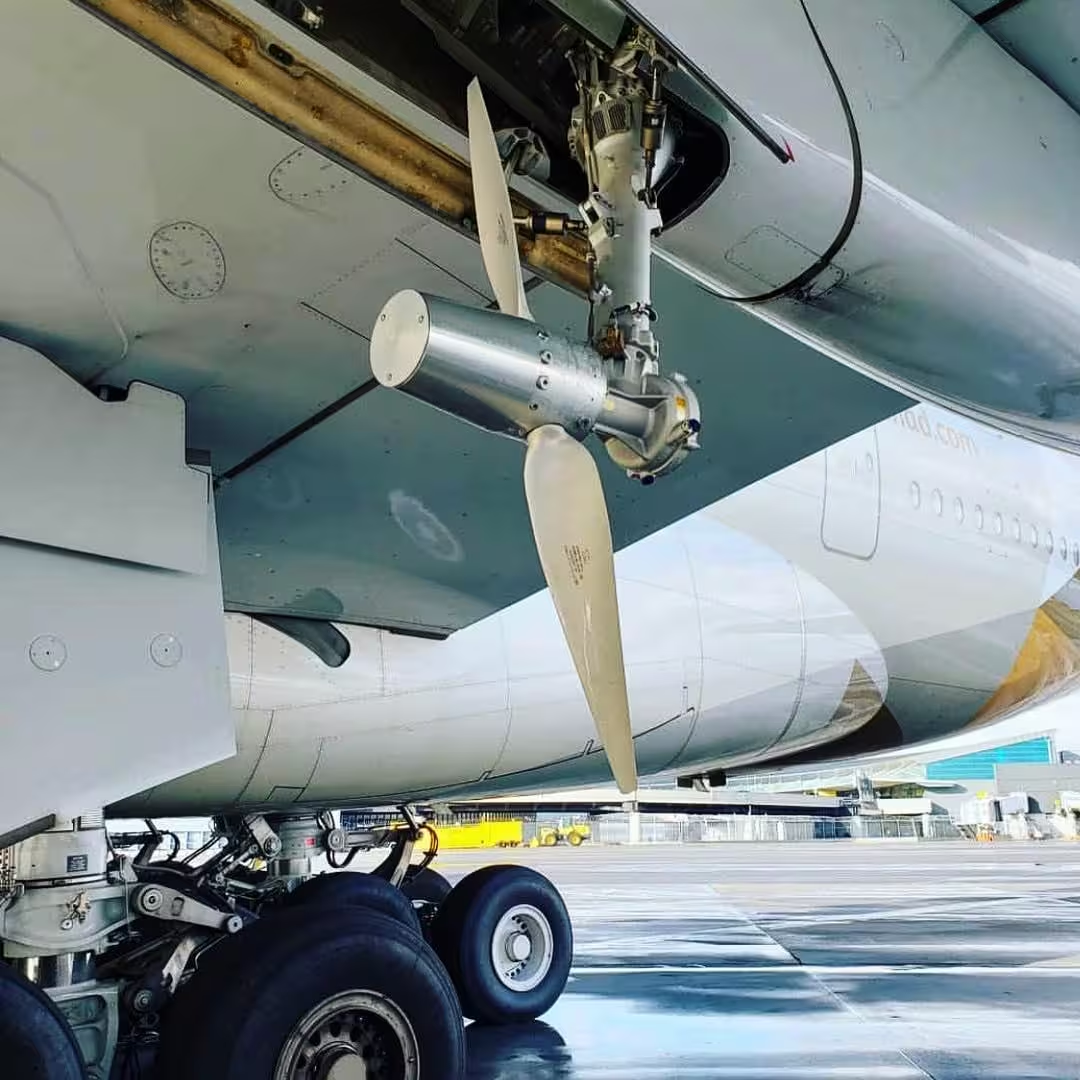
The physics behind the RAT are elegantly simple. As a plane flies forward, it rams into the surrounding air hence the name. This airflow, channelled across the blades of a small propeller-like turbine, creates rotational force. The faster the aircraft is flying, the more power the RAT generates. At typical commercial airliner speeds, even a small turbine can produce enough energy to maintain critical systems.
This principle is known as ram pressure: the increase in pressure that results when a moving fluid (in this case, air) is brought to rest against a surface. The RAT exploits this pressure gradient to spin its blades, converting kinetic energy from the aircraft's own forward momentum into usable electrical or hydraulic power without any fuel, without any engine, without any external source.
Some modern RATs use variable-pitch blades with built-in governors. These automatically adjust the blade angle to maintain an optimal rotational speed regardless of how fast the aircraft is flying, ensuring a consistent power output across a wide range of emergency conditions. Smaller RATs may produce as little as 400 watts, while the large units fitted to commercial widebody jets can generate between 5 and 70 kilowatts.
3.0 Key components explained
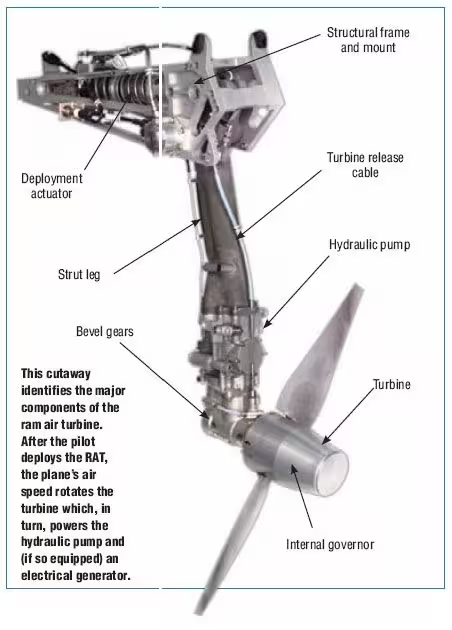
1. Turbine blades and hub Two or four shaped blades attached to a central hub, designed to capture oncoming air and spin rapidly. Modern variants feature variable-pitch adjustment for consistent output.
2. Power unit The spinning blades connect to a hydraulic pump, an electric generator, or both. Some aircraft use the hydraulic output to drive an emergency electrical generator as a second stage.
3. Speed governor A self-governing device that limits maximum turbine speed to prevent over-voltage or structural damage, regardless of the aircraft's airspeed at the time of deployment.
4. Anti-icing system On aircraft certified for ETOPS or polar routes, internal heaters prevent ice accumulation on the blades critical as RAT deployment may occur in extreme cold at altitude.
5. Materials Built from titanium or advanced composite materials to balance high strength, minimal weight, and resistance to the forces of high-speed airflow during deployment.
6. Stowage door A flush-fitting door in the fuselage or wing root keeps the RAT hidden during normal flight. On deployment, a spring-loaded or pyrotechnic mechanism blows it open in under one second.
4.0 When and how it deploys
Under normal flight conditions, the RAT spends its entire service life invisible and inert. It only enters the picture when the aircraft's primary and secondary power sources have both been exhausted a scenario so serious that the RAT represents the last engineered safety layer before the crew is left with no options.
- Trigger condition is detected Sensors detect a loss of primary electrical bus power or critical hydraulic pressure. The aircraft's power management system confirms the failure is not a transient fault.
- Auto-deployment fires (or crew deploys manually) A spring-loaded or pyrotechnic mechanism releases the stowage door in under a second. The RAT swings into the airstream. On many aircraft, the crew can also deploy it manually via a dedicated cockpit switch.
- Blades spin up Ram air pressure immediately causes the turbine to rotate. The governor brings blade pitch and RPM to the optimal operating point within seconds, stabilising power output.
- Essential buses energised The RAT powers only the essential electrical bus and/or emergency hydraulic circuit. On the Airbus A320, the RAT drives a hydraulic pump that in turn powers an emergency generator, energising AC and DC essential buses.
- Crew manages emergency descent With essential systems restored, the crew retains flight control authority, core navigation, and communications enough to manoeuvre, communicate with ATC, and configure for an emergency landing.
Important limitation: A deployed RAT increases aerodynamic drag and reduces the aircraft's glide range. Crews must factor this into their emergency calculations — every second the RAT is deployed, the aircraft descends slightly faster than it would without it.
5.0 What it powers and what it doesn't
Understanding the RAT's limits is as important as understanding its capabilities. The RAT is not a miracle device that restores full aircraft function. It is a carefully scoped emergency system designed to preserve one thing above all else: the crew's ability to fly and land the aircraft.
What the RAT powers Primary flight controls (elevator, rudder, ailerons), core avionics and flight instruments, attitude and navigation displays, radio communications, and emergency lighting. On hydraulically driven RATs, the output also provides limited braking capability on some aircraft types.
What the RAT does not power Cabin pressurisation, air conditioning, most lighting, galleys, in-flight entertainment, full flap and slat extension, thrust reversers, and the majority of normal electrical load. Crews conducting a RAT-powered approach may have limited or no flap availability, which significantly raises landing speed and the required runway length — a critical factor in emergency planning.
6.0 Real incidents where the RAT saved lives
The RAT is not a theoretical safety net. It has been called upon in real emergencies and its performance in those moments has shaped aviation history.
1. The Gimli Glider — Air Canada Flight 143
A Boeing 767 ran out of fuel at 41,000 feet over western Ontario after a unit conversion error caused the ground crew to load roughly half the required fuel. Both engines flamed out simultaneously. The RAT automatically deployed, restoring backup instruments and radio communications, and providing limited hydraulic power. The crew successfully glided the aircraft down to an emergency landing at a former RCAF base in Gimli, Manitoba — which, unknown to the crew, had been converted to a drag racing strip. All 69 passengers and crew survived with only ten minor injuries.
2. The Azores Glider — Air Transat Flight 236
An Airbus A330 flying from Toronto to Lisbon developed a fuel leak caused by an improperly installed hydraulic line chafing against a fuel line in the engine pylon. Both engines flamed out over the open Atlantic, approximately 65 nautical miles from Lajes Air Base in the Azores. The RAT deployed automatically, providing essential power for critical sensors and flight instruments, and enough hydraulic pressure to operate primary flight controls. Without it, the aircraft would have been uncontrollable. Captain Robert Piché an experienced glider pilot guided the aircraft to a safe landing. All 306 people on board survived, setting the record for the longest successful airliner glide: over 120 kilometres without engine power.
3. Air India Flight AI117 — Unexpected RAT Deployment
A Boeing 787-8 Dreamliner on approach to Birmingham Airport from Amritsar experienced the unexpected automatic deployment of its RAT at approximately 500 feet altitude during final approach. The aircraft's Health Monitoring system later indicated a possible fault in the Bus Power Control Unit. Critically, all electrical and hydraulic parameters remained normal throughout and the aircraft landed safely. Air India grounded the aircraft for inspection, and India's DGCA ordered fleet-wide inspections of the same system underscoring how precisely the RAT's automatic trigger logic must be calibrated to avoid false deployments.
7.0 Which aircraft carry a Ram Air Turbine?
The RAT is a standard feature on the vast majority of modern commercial jet airliners, as well as many military aircraft, business jets, and high-performance fighters. Its design and output vary considerably between platforms.
- Airbus A320 family
- Airbus A330 / A340
- Airbus A350 / A380
- Boeing 787 Dreamliner
- Boeing 767 / 777
8.0 Why the RAT matters
Modern commercial aviation is extraordinarily safe in large part because of layered redundancy: systems designed to back up other systems, which in turn back up other systems. The RAT sits at the very end of that chain. It is what remains when every other layer has failed.
Its genius lies in its simplicity. It needs no fuel. It requires no external power. It has no dependency on any other aircraft system that may have already failed. As long as the aircraft is moving forward through the air which it will be, even in a total engine failure, because an aircraft is always gliding the RAT can generate power. It exploits the one resource that is always available: the wind.
According to Collins Aerospace, the world's largest manufacturer of RAT systems, these small devices have contributed to saving more than 2,400 lives over five decades of commercial aviation. That number will continue to grow not because emergencies are becoming more frequent, but because the RAT continues to be fitted to every new aircraft that rolls off the production line.
Key takeaway
The Ram Air Turbine is a masterclass in emergency engineering: simple in principle, demanding in execution, invisible in normal operation, and utterly indispensable in a crisis. The next time you board a flight, somewhere in the fuselage or wing root, a small spinning device is waiting patiently and hoping, as much as you are, that it never needs to deploy.
Test Your Knowledge!
Click the button below to generate an AI-powered quiz based on this article.
Did you enjoy this article?
Show your appreciation by giving it a like!
Conversation (0)
Cite This Article
Generating...